













Understanding ADA Accessibility and Maintenance Together
Designing ADA compliant bottle fillers and drinking fountains is only the first step. Long-term accessibility depends just as much on how we maintain those fixtures and the spaces around them. I look at ADA accessibility and maintenance as one system: good design makes maintenance easier, and good maintenance keeps ADA design working as intended.
Over time, even perfectly installed ADA compliant hydration stations can drift out of compliance. Common examples you’ve probably seen:
- Trash cans, recycling bins, or carts pushed into ADA clear floor space
- New furniture, vending, or signage blocking accessible routes
- Filters or valves that are hard to reach, leading staff to shut off a unit instead of fixing it
- Unverified adjustments that change fixture heights or reduce knee and toe clearance
When this happens, the unit still “looks” compliant on paper, but users in wheelchairs and people with limited mobility lose real access. That creates three major risks for any public facility:
- Legal risk: ADA complaints, investigations, and potential settlements
- Financial risk: unplanned retrofits, relocation of units, and emergency repairs
- Reputation risk: students, staff, visitors, and the public lose trust in the building’s accessibility
Everyone who touches the building has a stake in this: facility managers, architects, building owners, maintenance and custodial teams. If we plan locations and service access correctly from day one, we:
- Protect ADA clearances from clutter and future changes
- Make it easy to keep knee space, reach ranges, and accessible routes open
- Reduce unexpected costs from moving noncompliant fixtures later
- Cut down on ADA complaints by keeping real-world usability front and center
Smart planning and routine ADA re-inspection turn hydration stations from one-time projects into durable, long-term ADA compliance assets that keep working for every user, year after year.
Core ADA Requirements for Hydration Stations
ADA compliant hydration station design starts with getting the basics right: height, clearances, and controls. If we miss on any of these, long‑term ADA compliance falls apart fast.
Essential ADA Rules for Drinking Fountains and Bottle Fillers
For public U.S. facilities, I always design and maintain to at least these ADA standards:
| ADA Element | Basic Guideline (Typical) | Why It Matters |
|---|---|---|
| Spout height (wheelchair) | Max 36″ above finished floor | Allows seated users to drink independently |
| Spout height (standing) | 38″–43″ typical | Comfortable for most adults and kids |
| Knee clearance | 27″ high, 8″ deep min | Wheelchairs roll under without hitting the bowl |
| Toe clearance | 9″ high, 17″–25″ deep | Lets users pull in close to the unit |
| Clear floor space | 30″ x 48″ min | Space to park and operate facing or alongside |
| Turning space | 60″ diameter circle (or T‑shape) | Users can turn, back out, and reposition |
| Reach range (front) | 15″–48″ above floor | Controls usable from seated or standing |
| Reach range (side) | 15″–48″ typical if fully reachable | Prevents overreaching or twisting |
(Always confirm with the latest ADA Standards and local code.)
ADA Spout Heights for Wheelchair and Standing Users
For ADA compliant drinking fountain layout and bottle fillers:
- I set at least one “low” unit with the spout at or below 36″ for wheelchair users.
- I use a “hi-lo” or bi‑level configuration so both seated users and taller standing users have a comfortable option.
- I verify spout height with a tape measure during install and again during routine ADA fixture height verification.
ADA Knee and Toe Clearance Protection
Knee and toe clearances are where maintenance can quietly kill compliance over time:
- Keep the area under the bowl open: no panels, pipes, or covers added later that shrink the 27″ knee height or toe depth.
- Don’t block toe space with caulked-in trash cans, floor signs, or boxes.
- Include these spaces in every ADA clearance maintenance checklist and daily janitorial walk‑through.
Clear Floor Space and Turning Space
Wheelchair accessible water fountain design lives or dies by maneuvering room:
- Maintain a flat, stable 30″ x 48″ clear floor space in front or next to the unit.
- Protect a 60″ turning circle (or equivalent T‑turn) along the accessible route.
- Keep this area free of recycle bins, benches, signage stands, or temporary displays that creep in over time.
Reach Ranges and Operable Parts
For long‑term ADA compliant bottle filler maintenance:
- Place push buttons, sensor eyes, and bottle filler controls between 15″ and 48″ above the floor, within easy forward reach.
- Use controls that need less than 5 lbs of force and don’t require tight grasping, pinching, or twisting.
- Re‑check reach ranges after any flooring change, platform addition, or wall finish update that can raise or recess the unit.
Bottle Filler Controls, Locations, and Obstructions
To keep bottle fillers accessible for the long run:
- Avoid placing controls behind deep counters, trash enclosures, or railings.
- Keep wall‑mounted signage, paper towel dispensers, and nearby fixtures out of the forward reach zone.
- Design service panels so techs don’t disable the low unit “temporarily” when repairs get hard to reach. Good service access matters as much here as in low‑maintenance water filter setups.
Why “Installed Once and Forgotten” Fails ADA Compliance
Even a perfect ADA compliant water fountain installation can drift out of compliance if we ignore it:
- Floor build‑ups, new tile, or added mats can push spout heights and reach ranges out of spec.
- New trash cans, vending machines, and benches slowly eat into clear floor space and turning circles.
- Poorly planned service access leads to out‑of‑service low units, forcing wheelchair users to rely on non‑compliant fixtures.
That’s why I treat ADA as an operating standard, not a one‑time project. We install right, then protect those clearances and heights with ongoing inspections, maintenance impact checks, and regular public facility ADA re‑inspections.
Design Flaws That Break ADA Compliance Over Time
Even a perfectly installed ADA compliant drinking fountain or bottle filler can slide out of compliance fast if the location is poorly planned. The biggest problems I see all come back to design, not the fixture itself.
Common Placement Mistakes Blocking ADA Clearances
The fastest way to lose ADA compliance is to squeeze hydration stations into leftover space. Typical mistakes:
- Mounting units too close to corners, columns, or returns so the ADA forward approach clear space overlaps walls or trim
- Installing in narrow hallways where the 30″ x 48″ clear floor space doubles as a circulation bottleneck
- Allowing doors to swing into the required clear space or ADA knee clearance zone
- Placing units where queues naturally form and block the accessible route
These issues make it impossible to maintain safe wheelchair accessible water fountain design as traffic grows.
High-Traffic And Clutter-Prone Areas
Busy locations are great for usage, but terrible if you don’t plan for clutter:
- Corridors that attract recycling bins, janitorial carts, and personal items
- Lobby areas where pop-up displays and event tables creep into accessible routes
- Break rooms where boxes, deliveries, or storage roll into the fountain zone
If custodial staff doesn’t have a clear ADA clearance maintenance checklist, everyday clutter slowly erases your ADA clearances.
Bad Alcove And Wall Recess Design
Alcoves and recesses protect fixtures from impacts, but bad dimensions kill maneuverability:
- Alcoves too shallow, forcing users to angle in rather than approach straight-on
- Sidewalls that pinch turning space so 180° wheelchair turns aren’t possible
- Recessed units without enough width for a full ADA forward approach clear space
A “clean look” isn’t worth it if users in wheelchairs can’t line up and operate the fountain independently.
Ignoring Future Furniture, Vending, Trash, And Signage
ADA compliance isn’t just about day one. Over time, people add:
- Vending machines or coolers that narrow the route
- Trash, recycling, and towel bins pushed under fountains, wiping out ADA knee clearance protection
- Benches, planters, or new signage posts installed right in the approach area
If you don’t plan a “no-obstruction zone” around each hydration station, normal operations will slowly create ADA accessibility barriers.
Poor Service Access = Out-Of-Service Units
When techs can’t easily reach filters, shut-off valves, or internal components, they take shortcuts:
- Units left “temporarily” shut off that stay that way for months
- Bottle fillers disabled while only the higher spout works, cutting off accessible access
- Panels blocked by millwork or furniture that no one wants to move
Good bottle filler location service access design keeps equipment working, supports regular filter changes, and preserves water quality, which matters just as much as reliable water filtration itself.
Overlooking Wheelchair Users And People With Limited Mobility
Finally, some locations simply ignore how real users move:
- Long detours off the main accessible route to reach the only low unit
- Tight spots that require backing up, multi-point turns, or help from others
- Controls placed at the far edge of reach ranges, especially tough for users with limited strength
If someone can’t roll up, reach the control, fill a bottle, and roll away independently, the ADA compliant hydration station design has failed—no matter what the drawings say.
Designing Locations That Stay ADA Compliant
When I design ADA compliant hydration station locations, I treat layout, service access, and long-term maintenance as one package. The goal is simple: keep ADA clearances, reach ranges, and fixture heights compliant without constant rework.
Best Practices for ADA-Compliant Hydration Station Locations
For long-term ADA compliant hydration station design, I focus on:
- Positioning units directly on an accessible route, not tucked in dead-end corners.
- Keeping ADA forward approach clear space and turning space open, even during busy times.
- Verifying ADA fixture height, spout locations, and controls during layout, not just at install.
This same mindset applies when I’m planning higher-end water equipment like a best-in-class soda water dispenser setup, where consistent access and service space matter just as much as the specs.
Recessed Units to Protect ADA Clearances
To maintain ADA clear floor space over time, I often choose:
- Recessed or semi-recessed drinking fountains and bottle fillers to avoid protruding into circulation paths.
- Low-profile bottle filler designs that keep projections under ADA limits while still easy to use.
This keeps wheelchair accessible water fountain design safer in tight hallways and school corridors.
Positioning Along Accessible Routes
I avoid placing units:
- Behind door swings, at the end of narrow corridors, or directly across from stair doors.
- In corners where wheelchairs can’t line up for a forward approach.
Instead, I place ADA compliant drinking fountains:
- Along main accessible routes with at least 36 in. clear width.
- Near restrooms and break areas where accessible route preservation over time is realistic.
Space for Wheelchairs to Turn and Park
To keep ADA clearances usable, I plan:
- 30 in. x 48 in. clear floor space in front of each unit for forward approach.
- Enough surrounding area for a 60 in. turning circle or T-shaped turn where possible.
- Wall protection or corner guards so carts and luggage don’t slowly shrink the usable space.
Designing Easy Service Access
Maintenance access directly affects long-term ADA compliance. I make sure:
- Filters, shutoff valves, and bottle filler components are reachable from the accessible side.
- Service panels open fully without blocking the ADA clear floor space permanently.
- Technicians don’t have to park carts or tools in the accessible route to work on the unit.
If service is a hassle, units get shut off, taped over, or blocked, which kills accessibility.
Durable, Vandal-Resistant Materials
To reduce out-of-service time and ADA issues, I specify:
- Heavy-gauge stainless or similar durable materials for public schools, parks, and transit hubs.
- Vandal-resistant push bars, bottle filler actuators, and drains that hold up to abuse.
- Components with strong warranty support and easy replacement parts.
Fewer breakdowns mean less risk of people losing their only ADA accessible water source on that floor.
Planning Hi-Lo and Bi-Level Configurations
For ADA compliant hi-lo drinking fountains and bottle fillers, I:
- Pair a lower wheelchair-height unit with a higher standing-height unit in the same alcove.
- Keep both units within ADA reach ranges and clear floor space, not just one.
- Make sure bottle filler controls are reachable from the wheelchair side, not only on the high unit.
This supports kids, adults, and wheelchair users without additional retrofits.
Coordinating ADA Design With Operations Teams
ADA compliance falls apart if operations aren’t on board. So I:
- Walk janitorial and maintenance staff through the ADA clearance maintenance checklist.
- Mark “no storage” zones on floors and walls around hydration stations.
- Align cleaning routes, trash can placement, and signage so they don’t creep into clear floor space.
That mix of smart location design, accessible routes, and service access planning is what actually keeps bottle fillers ADA compliant over time, not just on inspection day.
Maintenance Strategies for Long-Term ADA Compliance
Keeping hydration stations ADA compliant is not a one-time project. I treat ADA compliant bottle filler maintenance as an ongoing operations program, just like fire safety or HVAC. The goal is simple: build routines that protect clearances, verify fixture heights, and keep every unit usable for wheelchair users and people with limited mobility year after year.
Build an ADA Maintenance Plan for Hydration Stations
I start with a written ADA compliance maintenance plan that covers all drinking fountains and bottle fillers in the building:
- List every ADA compliant hydration station by location and type (hi-lo, bottle filler, outdoor, etc.).
- Assign clear ownership: who inspects, who documents, who approves repairs.
- Define inspection frequencies (daily, weekly, quarterly, annually).
- Tie ADA checks into existing facility audit and work order systems so nothing is “extra.”
When we add new stations or upgrade to more efficient units, like an under-sink chiller-based dispenser, I fold them into the same plan to keep long-term ADA compliance consistent.
Create an ADA Clearance and Height Checklist
To make ADA fixture height verification and clearance checks easy for staff, I break everything into a quick checklist:
- Heights: Spout heights, bottle filler controls, and operable parts meet ADA ranges for wheelchair and standing users.
- Knee and toe clearance: No trash cans, boxes, or supplies under the bowl or within the knee space.
- Clear floor space: Required forward or side approach clear space remains open and level.
- Reach range: Users can reach bottle filler sensors, buttons, and bottle platforms without stretching around obstacles.
I laminate this ADA clearance maintenance checklist and post it in custodial closets and maintenance shops so it’s always visible.
How Often to Re-Check Clearances and Obstructions
In busy U.S. schools, offices, and public buildings, conditions change fast. I use a simple cadence for long-term ADA compliance for hydration stations:
- Daily: Visual walk-through in high-traffic areas to catch obvious obstructions or leaks.
- Weekly: Quick tape-measure spot checks of clearances and a few fixture heights per floor.
- Quarterly: More formal ADA compliance re-inspection for all hydration stations, including full measurements and photos.
- After any layout change: Re-check ADA clearances after moving furniture, vending machines, or adding signage.
This approach catches small issues early before they become formal ADA complaints.
Train Custodial and Maintenance Teams on ADA Basics
Maintenance impact on ADA clearances is huge, so I make sure front-line teams know what to watch for:
- Short ADA training in onboarding for custodial and maintenance staff.
- Simple visuals showing compliant vs. blocked wheelchair accessible water fountain design.
- Clear rules: no placing bins, carts, cones, or signage in front of hydration stations or in knee space.
- Guidance on how to log an ADA issue as a priority work order.
When the people who clean and repair the building understand ADA basics, compliance becomes part of daily habits.
Daily and Weekly Checks to Keep Routes Clear
For accessible route preservation over time, I build ADA into daily and weekly routines:
- Check that accessible routes to drinking fountains stay open (no carts, no stacked boxes).
- Make sure knee and toe clearances are not blocked by trash cans or recycling bins.
- Confirm bottle filler controls and push bars operate with low force and no stuck buttons.
- Wipe up spills quickly to avoid slip hazards that effectively block access for users with mobility devices.
These quick checks take minutes but prevent most ADA barriers from showing up in the first place.
Handle Seasonal Issues and Outdoor Access
In the U.S., seasonal weather can quietly break ADA accessibility:
- Snow and ice: Clear accessible routes and turning spaces around outdoor fountains and bottle fillers, not just the main walkways.
- Wet floors: Place mats where needed, but never block ADA forward approach clear space or knee clearance.
- Outdoor shutoffs: If outdoor drinking fountains are winterized, post clear signage to the nearest accessible indoor unit.
I treat outdoor hydration like any other ADA fixture: it needs a seasonal plan to stay usable and safe.
Document Inspections and Repair Logs
To protect the facility and show good-faith ADA efforts, I keep clean documentation:
- Inspection checklists with date, time, inspector name, and findings.
- Photos of recurring issues (blocked clearances, damaged push bars, etc.).
- Work orders and completion dates for all ADA-related repairs.
- Notes on any temporary measures (e.g., signage directing users to another ADA compliant drinking fountain).
This documentation is critical during a facility audit for ADA compliance and helps defend against claims of neglect.
Coordinate Repairs Quickly to Avoid Long-Term Non-Compliance
Finally, I treat ADA-related repairs as priority work:
- Flag any issue that affects reach, clearance, or usability as high priority in the CMMS/work order system.
- Coordinate with plumbers and vendors so drinking fountains and bottle fillers aren’t left out of service for weeks.
- When units repeatedly fail, consider upgrading to more durable, low-maintenance hydration solutions that are easier to keep ADA compliant over time.
With a clear maintenance plan, simple checklists, regular re-inspection, and fast repair response, maintaining ADA compliance over time becomes a manageable part of everyday facility operations—not a crisis waiting to happen.
Real-World ADA Compliance Examples
School Hydration Stations That Stay ADA Compliant
In K–12 schools and colleges, the busiest hallways are where ADA issues show up first. The schools that keep ADA-compliant hydration stations working year after year all do the same things:
- Place hi-lo drinking fountains and bottle fillers on wide, accessible corridors, not crammed in alcoves.
- Use a simple ADA clearance maintenance checklist for custodial staff so trash cans, recycle bins, and displays never block wheelchair access.
- Re-check fixture heights and ADA knee clearance every summer during building refresh and after any flooring changes or wall repairs.
That kind of routine verification is just like how we treat filter performance in a system; if you’re serious about water access, you’re serious about ongoing ADA access too.
Office Building Fountains That Lost ADA Access
I’ve seen office buildings start out with perfect ADA compliant water fountain installation and slowly lose compliance:
- New furniture blocks the accessible route to a bottle filler.
- A copy machine or coffee station creeps into the forward approach clear space.
- Carpet overlays or new flooring subtly change effective spout height.
The fix is usually targeted and affordable: move or downsize furniture, restore clear floor space, confirm ADA fixture height with a tape measure, and adjust or re-install where needed. A quick facility audit for ADA compliance once or twice a year prevents these surprises from turning into formal complaints.
Public Parks and Outdoor Bottle Fillers
In U.S. parks and trails, outdoor ADA-compliant drinking fountains and bottle fillers fight weather as much as wear-and-tear:
- Snow piles, mud, and landscaping rocks drift into clear floor space and block wheelchair users.
- Seasonal shut-offs leave only the higher, standing-height fountain working.
- Erosion or new concrete overlays slowly reduce ADA knee clearance at wheelchair units.
The parks that stay compliant assign seasonal checks: after storms, after snow plowing, and at spring start-up. Crews verify reach ranges, remove obstructions, and document repairs as part of their public facility ADA re-inspection routine.
Lessons Learned From Facilities That Redesigned Locations
When facilities do have to redesign locations, the big lesson is always this: it’s cheaper and easier to fix the layout once than to fight daily workarounds.
Successful redesigns usually:
- Move hydration stations to straight, unobstructed sections of accessible routes.
- Use recessed or semi-recessed units to protect ADA knee and toe clearance from carts and bags.
- Plan true wheelchair accessible water fountain design with clear turning space instead of squeezing units near doors or corners.
Many of these teams also upgrade nearby water access with dedicated products such as a bathroom faucet water filter that supports better quality while they’re already improving the space.
How Proactive Audits Prevent ADA Problems
The strongest pattern across schools, offices, and parks is that proactive ADA audits save money:
- A simple quarterly walk-through catches blocked clearances and broken push bars early.
- Annual ADA compliance re-inspections verify that bottle filler locations, heights, and reach ranges still match drawings.
- Basic staff training on maintenance impact on ADA clearances keeps carts, signage, and storage out of accessible routes.
That kind of ongoing, documented approach turns ADA from a one-time construction requirement into an everyday operations standard that avoids complaints, fines, and expensive retrofits.
Working With Manufacturers for Sustainable ADA Compliance
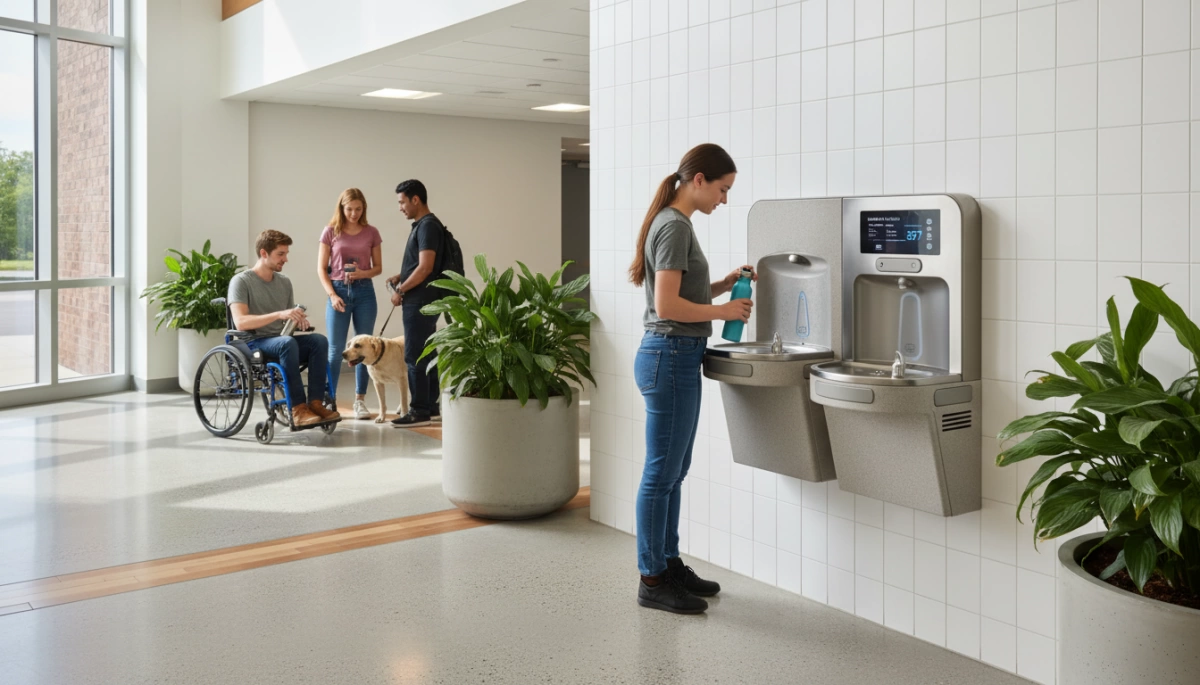
When I’m planning long-term ADA compliance for hydration stations, I treat manufacturers as core partners, not just equipment vendors. The right supplier makes it much easier to keep ADA compliant bottle fillers and drinking fountains within spec for years, not just at final inspection.
Choosing ADA-Aligned Bottle Fillers and Drinking Fountains
I start by narrowing down to manufacturers that:
- Publish clear ADA data: spout heights, knee/toe clearance, reach ranges, and operating force in plain numbers.
- Provide ADA-compliant hi-lo drinking fountains and bottle fillers designed as a single, integrated station.
- Offer shop drawings and BIM/Revit files with exact ADA dimensions, so my team can verify wheelchair accessible water fountain design before install.
I also look for product lines that work in high-use U.S. environments like schools, airports, and office corridors, similar to how we plan school corridor bottle filling station placement for class-change traffic.
Product Features That Make ADA Maintenance Easier
To maintain ADA compliance over time, I focus on features that simplify upkeep and re-inspection:
- Front or side service access so techs don’t block accessible routes or knee space while working.
- Tool-less filter and strainer changes to reduce the chance of units being left “temporarily” shut off.
- Clear, durable level markings for fixture height verification during recurring ADA inspections.
- Vandal-resistant panels and bottle filler nozzles that stand up to heavy public use.
The goal is simple: maintenance should not require moving the unit, altering finishes, or blocking ADA clearances.
Design Support for Location Planning
Manufacturers that offer real design support make ADA-compliant hydration station design much more reliable:
- Pre-checking our layouts for reach range, forward approach clear space, and turning radius.
- Flagging risky locations like behind doors, near vending, or in narrow corridors where future clutter could choke off ADA clearances.
- Helping plan service access so valves, shutoffs, and filters are reachable without violating accessible route preservation.
I share drawings early so the manufacturer can catch ADA issues before we pour concrete or frame walls.
Specifying Durable, Low-Maintenance Hydration Solutions
For public spaces, I specify sustainable ADA hydration solutions that can handle abuse and still stay compliant:
- Stainless or heavy-gauge metal cabinets that don’t warp, sag, or loosen over time.
- Recessed or semi-recessed units that protect clear floor space from hallway traffic.
- Simple, proven bottle filler controls with minimal electronic failure points in outdoor or semi-conditioned areas.
This reduces the maintenance impact on ADA clearances and keeps units in service instead of bagged or shut off.
Partnering With Suppliers for Long-Term ADA Upkeep
Finally, I choose suppliers that understand ongoing ADA standards for public spaces and support long-term maintenance planning:
- Multi-year parts availability and clear guidance on replacement components that keep the unit ADA compliant.
- Training for facility and maintenance staff on ADA basics, fixture adjustments, and recurring public facility ADA re-inspection.
- Support for facility audits for ADA compliance, including checklists for ADA knee clearance protection, operable parts, and accessible route design and upkeep.
When my manufacturers act like partners, it’s much easier to maintain ADA compliance over time for every bottle filler and drinking fountain in the building.
Action Plan for Staying ADA Compliant Over Time
Keeping hydration stations ADA compliant over the long haul takes a simple, repeatable plan. I design every location assuming we’ll need to maintain ADA clearances, heights, and service access for years—not just pass inspection once.
Quick ADA Self-Audit Checklist
Use this fast self-audit for existing ADA-compliant bottle fillers and drinking fountains:
- Measure fixture heights: Verify spout height, bottle filler controls, and operable parts match ADA fixture height requirements for wheelchair and standing users.
- Check clear floor space: Confirm a 30″ x 48″ forward approach space is open and not blocked by trash cans, furniture, displays, or signage.
- Verify knee and toe clearance: Make sure nothing is stored under the unit and the wall or piping hasn’t reduced ADA knee clearance.
- Test reach ranges and controls: Ensure users in wheelchairs can reach and operate push bars, buttons, and sensors without stretching or twisting.
Steps To Fix Problem Areas Without Full Renovation
You don’t always need a full rebuild to get back to long-term ADA compliance:
- Relocate trash, vending, benches, or planters that are blocking accessible routes or clearances.
- Swap in recessed or semi-recessed units where corridors feel tight to protect maneuvering space.
- Adjust mounting heights or change to ADA-compliant hi-lo configurations where existing units are out of spec.
- Improve lighting and signage so users can see and access the station without obstacles.
If you’re also upgrading water quality, pairing location fixes with better filtration (like an undersink system similar to an undersink reverse osmosis setup) can make the project more cost-effective.
Aligning Design, Facility, and Maintenance Teams
Long-term ADA compliance fails when teams work in silos. I keep everyone on the same playbook:
- Design teams: Own ADA-compliant hydration station layout, fixture selection, and accessible route planning.
- Facility managers: Own ongoing ADA compliance checks, public facility ADA re-inspections, and repair priorities.
- Maintenance and custodial staff: Own the day-to-day ADA clearance maintenance checklist, including not blocking routes or knee space.
Simple shared tools—like a one-page ADA checklist taped inside the janitor’s closet—go a long way.
When To Bring In ADA Consultants or Manufacturers
Bring in extra help when:
- You’re touching multiple floors, high-traffic public spaces, or schools and healthcare facilities.
- Existing conditions make ADA compliant drinking fountain layout tricky (narrow corridors, structural columns, old wall recesses).
- You’ve had ADA complaints, injuries, or repeat failures at the same location.
Manufacturers that understand sustainable ADA hydration solutions can help you position units, verify reach ranges, and plan for long-term service access.
Turning One-Time Projects Into Ongoing Programs
To maintain ADA compliance over time, I treat it as an ongoing accessibility program, not a one-off task:
- Build ADA checks into your regular facility audit for hydration stations—quarterly at minimum.
- Make ADA clearance and fixture height verification part of standard operating procedures for moves, adds, and changes.
- Track issues, work orders, and repairs so you can see patterns and fix root causes, not just symptoms.
This is how you prevent new ADA barriers, avoid surprise retrofits, and keep every hydration station usable for all users year after year.