

















What Is a Bathroom Water Filter?
A bathroom water filter is a compact, point-of-use filter installed right where you use water in the bathroom—on the showerhead, bathroom sink faucet, or tub spout. Its job is simple: make your shower, bath, and face-washing water feel better on your skin and hair by reducing chlorine, odor, and visible impurities.
Point-of-use vs whole-house
- Bathroom water filter (point-of-use)
- Installed at a single outlet: shower, bathroom sink, or tub
- Focused on comfort: skin-friendly shower water, better hair feel, less odor
- Ideal for apartments, rentals, and condos where you can’t change the building plumbing
- Whole-house filter (point-of-entry)
- Installed where water enters the home
- Treats all faucets, showers, laundry, and appliances
- Higher cost, usually needs professional installation
Key features of a bathroom water filter
A good bathroom shower filter or bathroom faucet filter is designed to:
- Reduce chlorine and chloramine that dry out skin and hair
- Improve odor so your shower doesn’t smell like a swimming pool
- Capture sediment, rust, and small particles from older pipes
- Sometimes use carbon, KDF, or vitamin C media for multi-stage comfort-focused filtration
How bathroom filters differ from kitchen filters
- Not drinking-focused:
A bathroom water filter is a non-drinking water filter—it’s built for bathing and hygiene, not for purifying tap water for drinking. - Different performance goals:
- Kitchen filters and under-sink drinking systems target taste, contaminants, and safety.
- Bathroom filters target skin comfort, hair health, and chlorine removal during hot showers and baths.
Common setups in real homes
You’ll typically see:
- Shower water filter or bathroom shower filter in rentals and city apartments
- Bathroom sink water filter or bathroom faucet filter for face washing and sensitive skin
- Bath tub water filter or dechlorinator for bath in homes with babies, kids, or eczema-prone users
In short, a bathroom water filter is a targeted, easy-to-install solution to upgrade your shower and bathroom water quality without re-plumbing your entire home.
Why You Need a Bathroom Water Filter
If you’re showering, washing your face, or bathing in unfiltered tap water, you’re taking in more than just water. A bathroom water filter or shower water filter is one of the simplest ways to protect your skin, hair, and overall comfort at home.
Chlorine and Your Skin & Hair
Most city water in the U.S. is disinfected with chlorine or chloramine. That’s great for safety, but not for comfort:
- Strips natural oils from your skin, making dryness, tightness, and flakiness worse
- Irritates sensitive skin, and can flare up issues like eczema, acne, and redness
- Roughs up the hair cuticle, leading to brittle, frizzy hair and faster color fading
- Aggravates itchy scalp and can make dandruff harder to manage
A good bathroom shower filter or KDF/carbon shower filter helps cut down chlorine so your skin and hair don’t get hammered every time you shower.
Chlorine Absorption and Steam
Chlorine doesn’t just sit on your skin:
- Your body absorbs chlorine through your skin during hot showers
- You inhale chlorine vapors in steam, which can irritate your nose, throat, and lungs
That’s why a chlorine removal shower filter or vitamin C shower filter at the bathroom outlet makes more sense than only filtering drinking water in the kitchen.
Skin Problems and Sensitive Conditions
If you or your family deal with:
- Dry skin, eczema, or keratosis pilaris
- Body acne or “bacne” that flares after hot showers
- Kids or babies with delicate, reactive skin
then a water filter for sensitive skin in the bathroom can make daily showers and baths a lot more comfortable. Many of our customers with eczema and easily irritated skin notice calmer, less reactive skin after switching to filtered water for bathing.
Hair Health, Color, and Scalp Comfort
Chlorine and certain metals can trash your hair routine:
- Color-treated hair fades faster and looks dull
- Curly and textured hair gets dry, frizzy, and harder to manage
- Itchy, flaky scalp can worsen with harsh, chlorinated water
That’s why so many people install a water filter for colored hair or hard water shower filter to protect salon results and keep hair softer with fewer products.
Odor and Shower Experience
If your shower has:
- A strong pool-like smell
- A slight metallic or musty odor
a bathroom water filter or showerhead chlorine reducer helps cut that smell so your bathroom doesn’t feel like a locker room. A quality bathroom shower filter with carbon media is especially effective at odor reduction.
For a deeper look at how shower filtration works at the fixture, I walk through options in this guide on choosing a shower head that filters water.
Mineral Buildup and Hard Water Issues
Even though bathroom filters for non-drinking use aren’t full water softeners, they can still help with:
- Sediment and rust that stain tubs, tiles, and grout
- Slowing mineral buildup on glass doors and fixtures
- Reducing how often you have to scrub soap scum and spots
If your water is extremely hard, you’ll need a softener, but a multi-stage bathroom water filter or 5-micron prefilter (like the type explained in our 5-micron water filter breakdown) can still take the edge off visible buildup.
When Bathroom Water Becomes a Real Problem
You know your bathroom water is an issue if you notice:
- Skin always feels tight, itchy, or red after a shower
- Hair looks dull, rough, or breaks easily, even with good products
- Strong chlorine smell as soon as the shower runs
- White or orange crust around faucets and showerheads
- Guests or kids complain about itchy skin or irritated eyes after bathing
At that point, a point-of-use bathroom filter—whether a bathroom faucet filter, inline shower filtration, or bath tub dechlorinator—stops being a “nice-to-have” and becomes a basic comfort upgrade for your home.
Types of Bathroom Water Filters
Not all bathroom water filters work the same way. Here’s a quick breakdown so you can pick what actually fits your bathroom and your lifestyle.
Showerhead Water Filters
A shower water filter or bathroom shower filter screws directly onto your shower arm and either replaces the showerhead or sits right before it.
What they are:
- Compact showerhead chlorine reducer
- Often use carbon, KDF, or vitamin C media
- Perfect as an apartment bathroom water filter (easy to remove when you move)
Pros:
- Easiest DIY install
- Great for chlorine effects on skin and hair
- Good option for shower filter for eczema and water filter for colored hair
Cons:
- Limited internal space = limited media volume
- Some models may slightly reduce water pressure if your home pressure is already low
If you want more detail on shower-focused designs and filter media, I break that down in our shower filter manufacturing overview.
Faucet-Mounted Bathroom Water Filters
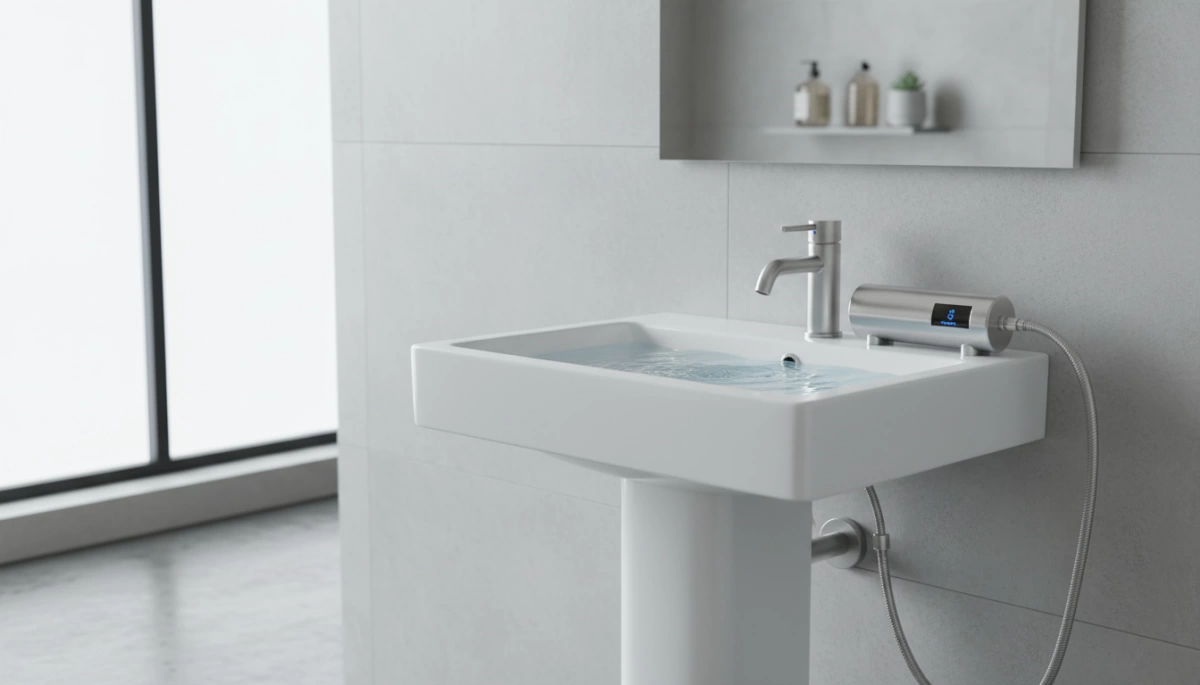
A bathroom faucet filter or bathroom sink water filter attaches directly to the faucet or under the sink.
What they are:
- Great for face washing, brushing teeth, and quick rinses
- Often used as a bathroom sink purifier for people with sensitive or acne-prone skin
Pros:
- Very targeted filtration at the sink
- Easy to install and replace
- Nice option if you don’t want a whole-house or kitchen system
Cons:
- Can be bulky on small faucets
- Only treats water at that one sink
Inline Bathroom Water Filters
An inline bathroom water filter sits hidden between the water line and the shower or faucet.
What they are:
- Installed behind the wall trim or under the sink
- Can support multiple bathroom fixtures (e.g., shower + handheld)
Pros:
- Cleaner look, no bulky housing on the wall
- Often more filter media = better multi-stage bathroom filter potential
- Good for long-term setups and homeowners
Cons:
- Installation may need a plumber if you’re not handy
- Not as renter-friendly as a simple showerhead filter
Bath Tub Filters and Bath Ball Dechlorinators
For people who love soaking, a bath tub water filter or dechlorinator for bath is the go-to.
What they are:
- “Bath balls” you hang under the tub spout
- Or inline bath tub dechlorinators connected to the fill spout
Pros:
- Great for babies, kids, and sensitive skin
- Focused on chlorine removal for full-body soaking
- Easy to set up and remove
Cons:
- Mostly target chlorine, not full contaminant removal
- Only work for tub water, not shower or sink
Portable vs Fixed Bathroom Water Filters
You can choose between portable filters and fixed systems depending on how often you move or travel.
Portable bathroom water filters:
- Travel shower water filter attachments
- Bath balls you can take to hotels or Airbnbs
Pros:
- Perfect for renters and frequent travelers
- No tools required
- Great backup when you don’t control building plumbing
Cons:
- Usually smaller capacity and shorter lifespan
- Not as sleek as permanent installs
Fixed bathroom water filters:
- Permanently installed showerhead, inline, or faucet filters
Pros:
- Better long-term value
- Cleaner look and stronger construction
- Ideal for homeowners and long-term leases
Cons:
- Less flexible if you move often
- Some units require basic tools and install time
Quick Pros and Cons Comparison
| Filter Type | Best For | Key Pros | Main Cons |
|---|---|---|---|
| Showerhead water filter | Showers, renters, sensitive skin | Fast DIY, strong chlorine reduction | Limited media space |
| Faucet-mounted bathroom filter | Face washing, sink use | Compact, targeted, easy to replace | Only treats sink water |
| Inline bathroom water filter | Clean look, multi-outlet support | Hidden install, more media, better performance | Harder install, not ideal for renters |
| Bath tub / bath ball dechlorinator | Soaking, babies, eczema, sensitive skin | Strong tub chlorine reduction, portable | Tub-only, limited contaminant removal |
| Portable bathroom filter | Travel, short-term rentals | No-commitment, easy to pack | Shorter lifespan, less robust |
Once you know your setup (shower only, shower + tub, renters vs owners), it’s easy to lock in the bathroom water filter type that fits your space and your skin.
What Bathroom Water Filters Remove (and What They Don’t)
A good bathroom water filter is designed for comfort, not survival. It cleans up shower and sink water so it’s nicer on your skin, hair, and nose—but it’s not a full-blown drinking water system.
Chlorine & Chloramine Reduction
Most bathroom and shower water filters focus on chlorine removal (and in some cases chloramine):
- Carbon, KDF, and vitamin C media can cut chlorine levels sharply, which helps with:
- Less dry, tight skin after showers
- Less color fade on dyed hair
- Reduced “pool smell” in small bathrooms
- Some multi-stage systems also target chloramine, but not all. Always check the product specs if your city uses chloramine.
Odor & Taste Improvement
Even if you’re not drinking from the bathroom faucet, odor reduction matters:
- Carbon-based filters help remove that bleach-like chlorine smell in the shower.
- If you rinse your mouth or occasionally sip from the bathroom sink water filter, it will usually taste cleaner and less metallic than straight tap.
For more targeted tap filtration at other sinks, a dedicated water filter for tap system is often better suited than a bathroom-only setup (see our tap water filter options for comparison).
Sediment, Rust & Particulate
Most bathroom filters add at least a basic sediment stage:
- Catches sand, rust flakes, and visible particles
- Helps protect your showerhead, faucet aerator, and glass from buildup
- Keeps water clearer, especially in older buildings with aging pipes
If your water often looks cloudy or you see orange/brown stains, a bathroom filter with sediment + carbon is a smart move.
Some Heavy Metals & VOCs
Higher-end multi-stage bathroom filters may help reduce:
- Some heavy metals (like lead or mercury)
- Some VOCs (volatile organic compounds) tied to old plumbing or local contamination
But here’s the key:
- Reduction is often partial, and performance can vary a lot by brand.
- If heavy metals or chemicals are your main concern, you should be looking at a certified drinking water system, not just a shower filter.
Hard Water Scale & Limescale
A hard water shower filter can help—but it’s not magic:
- Some units use KDF or “scale control” media that can:
- Slightly reduce visible limescale on doors, tiles, and fixtures
- Make water feel a bit “softer” on skin and hair
- They do not fully soften hard water the way a real water softener (with salt or resin) does.
If you have serious scale problems on appliances throughout the house, you’re in whole-house or softener territory, not just a bathroom fix.
What Bathroom Water Filters Can’t Reliably Do
Most bathroom shower filters and faucet filters are not designed to:
- Remove all bacteria, viruses, or parasites
- Fully treat heavy industrial contamination
- Turn highly polluted water into safe drinking water
They’re built to improve comfort and basic quality, not to handle disaster-level water issues.
Bathroom Filters vs Drinking Water Purification
Here’s the bottom line:
Bathroom water filters
- Point-of-use, for non-drinking water
- Target chlorine, odor, and light sediment
- Focus on skin, hair, and comfort
Drinking water systems (under-sink filters, dedicated taps, etc.)
- Designed for safe consumption
- Often certified for lead, cysts, PFAS, and more
- Higher performance and stricter standards
If you want better shower water for skin and hair, a bathroom water filter or shower water filter is exactly what you need.
If you want safer, cleaner water to drink and cook with, pair it with a true drinking water purifier at the kitchen or main tap.
Bathroom Water Filter vs Whole-House System
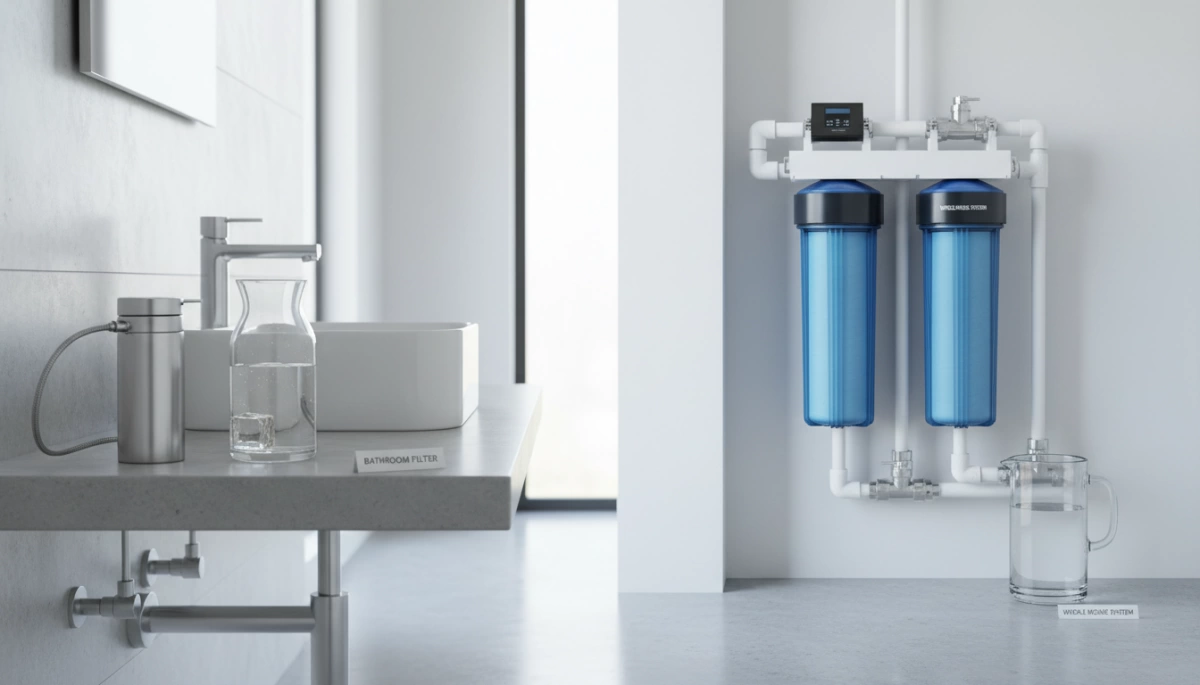
When you’re deciding between a bathroom water filter and a whole-house system, it really comes down to your living situation, budget, and how sensitive you are to your water.
Who Point-of-Use Bathroom Filters Are Best For
A bathroom shower filter or bathroom sink water filter makes more sense if you:
- Rent an apartment or move often
- Mainly care about skin-friendly shower water and hair health
- Want a low-commitment, DIY upgrade
- Only need chlorine removal in the shower and better water for face washing and brushing teeth
These point-of-use bathroom filters (showerhead filters, bathroom faucet filters, inline bathroom water filters) target the spots that actually touch your skin and hair every day.
When a Whole-House Filter Makes Sense
A whole-house water filtration system is better if you:
- Own your home and plan to stay long term
- Want filtered water at every outlet (showers, kitchen sink, laundry, appliances)
- Want to protect plumbing, water heaters, and fixtures from buildup
- Have overall water quality issues (sediment, discoloration, odors) throughout the house
Point-of-entry systems cost more up front but treat everything, not just the bathroom.
Cost: Upfront vs Ongoing
- Bathroom water filter
- Low upfront cost per unit
- Cartridges usually replaced every 3–6 months
- Easy to budget and upgrade one fixture at a time
- Whole-house system
- High upfront cost (system + installation)
- Larger, less frequent filter changes
- Better long-term value if you want full-home coverage
If you just want better shower and sink water, a bathroom shower filter or bathroom sink purifier is usually the smarter first move.
Installation: DIY vs Professional
Bathroom filters:
- Most shower water filters and bathroom faucet filters install with basic tools (wrench, plumber’s tape)
- True DIY projects, no plumber needed
- If you ever upgrade to an under-sink solution, a system like an under-sink distribution filter can still be installed with minimal disruption
Whole-house systems:
- Typically require cutting the main line and adding bypass valves
- Usually need a licensed plumber
- More time, higher labor cost
Coverage: What Each Option Actually Treats
Bathroom water filter
- Targets showers, tubs, and bathroom sinks
- Great for filtered water for bathing, shaving, face washing, and brushing teeth
- Doesn’t cover kitchen, laundry, or outdoor faucets
Whole-house filter
- Treats every water outlet: showers, kitchen faucets
How to Choose the Right Bathroom Water Filter
Picking the right bathroom water filter comes down to your setup, your water, and your skin/hair needs. Here’s how I’d simplify it.
1. Match Filter Type to Your Bathroom Setup
Start with where you need filtration most:
| Bathroom Setup | Best Filter Type |
|---|---|
| Standard wall shower | Shower head water filter / inline filter |
| Handheld shower | Inline shower filter |
| Small bathroom sink | Faucet-mounted bathroom sink filter |
| Under-sink space available | Inline bathroom faucet filter |
| Bathtub for soaking (kids/babies) | Bath tub dechlorinator / bath ball |
| Rentals / moving often | Screw-on shower filter (tool-free) |
2. Check Compatibility First
Before buying any shower water filter or bathroom faucet filter, confirm:
- Thread size: Most U.S. showers use 1/2″ NPT – your bathroom shower filter should match.
- Faucet style: Filters rarely fit pull-out or designer faucets.
- Space & clearance: Inline filters need room between the wall and shower arm or under the sink.
- Finish & style: Brushed nickel, chrome, matte black, etc., so it doesn’t look out of place.
3. Flow Rate & Water Pressure
You don’t want a great filter that ruins your shower.
- Look for: 1.75–2.5 GPM (gallons per minute) for a standard U.S. shower.
- If your home already has low pressure, choose:
- A high-flow shower filter
- A low-restriction inline filter
- If pressure drops suddenly, it usually means the cartridge is clogged and needs changing.
4. Filter Media Types (What’s Inside Matters)
Different bathroom water filters use different media. Quick breakdown:
| Media Type | Best For | Notes |
|---|---|---|
| Activated Carbon | Chlorine, odor, some chemicals | Great basic choice, needs regular replacement |
| KDF (Copper/Zinc) | Chlorine, some metals, scale control | Works well in hot water (showers) |
| Vitamin C | Chlorine/chloramine neutralization | Great for sensitive skin, kids, and hair |
| Multi-Stage Filters | Combo of carbon, KDF, sediment, etc. | Best overall performance for bathrooms |
For deeper filtration and smarter water treatment in the rest of the home, many customers pair bathroom filters with smart purifiers similar to those used for drinking water systems, like the ones discussed in this guide on smart water purifiers and their benefits.
5. Filter Lifespan & Replacement Frequency
Always check real usage, not just marketing.
- Typical shower filter life: 3–6 months (or ~10,000–15,000 gallons)
- Faucet filters: often 2–3 months, depending on use
- Shorter lifespan if:
- Water has high chlorine
- Water is dirty or sediment-heavy
- Large family / high shower frequency
Tip: Pick a system with easy, tool-free cartridge swaps so you’ll actually keep up with it.
6. Total Cost of Ownership
Don’t just look at the upfront price; the cartridges are where the real cost sits.
| Option | Upfront Cost | Annual Cartridge Cost (Approx.) | Good For |
|---|---|---|---|
| Basic shower filter | Low | Low–Medium | Small households, renters |
| Multi-stage premium shower | Medium | Medium | Families, sensitive skin |
| Inline sink filter | Medium | Medium–High | Daily face washing / brushing use |
- Look for bundle packs or multi-cartridge deals.
- Avoid systems that need proprietary cartridges with inflated pricing unless the performance is worth it.
7. Filters for Sensitive Skin, Kids, and Hair Care
If you’re dealing with eczema, sensitive skin, or fragile hair, be stricter:
- Choose:
- Vitamin C shower filter (for chlorine/chloramine)
- Multi-stage bathroom shower filter with carbon + KDF
- Avoid:
- Super cheap single-stage filters with no test data
- Look for:
- Claims focused on water filter for sensitive skin
- Good reviews from users with eczema, psoriasis, or colored hair
Filtered bathing water also pairs well with mineral-balanced drinking water; if that’s important to you, you may want to look into how to add minerals back into purified water for your kitchen use.
8. Special Cases: High Chlorine, Hard Water, Rentals, Travel
High Chlorine (Typical in Many U.S. Cities)
- Go for vitamin C + KDF or multi-stage chlorine removal shower filters.
- Make sure the product clearly states chlorine reduction, not just “improves water.”
Hard Water (White Spots, Soap Scum, Crunchy Hair)
- A standard bathroom water filter may reduce scale, but it’s not a full softener.
- Look for:
- KDF or anti-scale media
- Marketing terms like hard water shower filter or scale reduction
Rentals & Apartments
- Choose:
- Tool-free shower head water filter
- Faucet-mounted bathroom sink water filter
- No drilling, no plumber, and easy to remove when you move out.
Travel & Hotels/Airbnb
- Use:
- A compact portable shower water filter you can screw on and off quickly
- A bath tub dechlorinator (bath ball) for kids and longer soaks
If you keep these points in mind—setup, compatibility, media type, and ongoing cost—it’s easy to land on a bathroom water filter that actually fits your daily routine and solves real problems instead of just looking good on the box.
Installation and Maintenance Tips for a Bathroom Water Filter
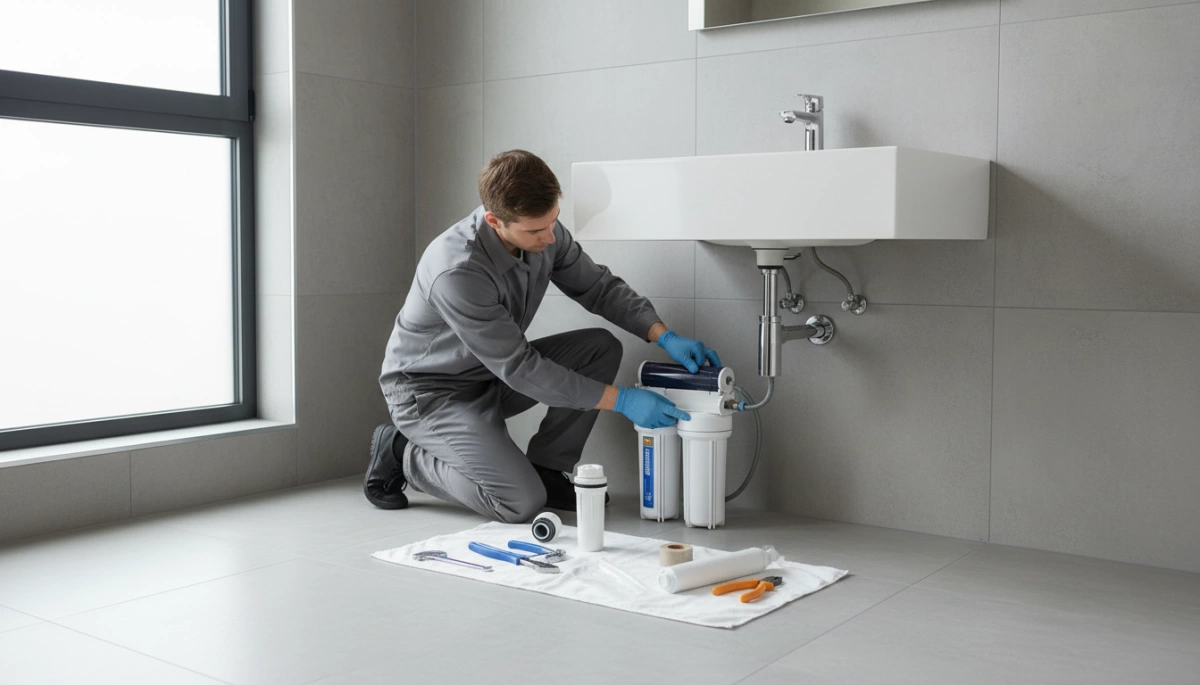
How to Install a Showerhead Bathroom Water Filter
For most shower water filters, installation is fast and fully DIY:
- Turn off the shower and unscrew the existing showerhead (use a wrench if it’s tight).
- Wrap 2–3 layers of plumber’s tape on the shower arm threads.
- Screw the showerhead bathroom water filter onto the shower arm by hand.
- Attach your existing or new showerhead to the outlet side of the filter.
- Tighten gently with a wrench if needed—don’t overtighten.
How to Install a Faucet-Mounted Bathroom Filter
For a bathroom sink water filter that attaches to the faucet:
- Unscrew the aerator from the faucet spout.
- Check included adapters and choose the one that matches your faucet.
- Wrap threads with plumber’s tape if recommended by the manufacturer.
- Screw the bathroom faucet filter body onto the faucet.
- Make sure the diverter or switch moves easily between filtered and unfiltered.
Inline Bathroom Filter Installation Basics
Inline bathroom water filters stay hidden but protect showers and faucets:
- Turn off the water supply to the bathroom or specific fixture.
- Disconnect the flex hose from the shutoff valve or wall outlet.
- Install the inline bathroom water filter between the valve and hose.
- Make sure the flow direction arrow matches the water flow.
- Turn water back on and check all joints for leaks.
Basic DIY Tools You’ll Need
Most bathroom water filter installs can be done with:
- Adjustable wrench or pliers (with a cloth to protect finishes)
- Plumber’s tape (Teflon tape)
- Small bucket or towel
- Flashlight for tight spaces
You don’t need power tools, and in most US apartments this is within normal DIY limits.
Flushing a New Filter Cartridge
Always flush a new cartridge before you use it:
- Turn on the water slowly after install.
- Run water through the new bathroom filter for 3–5 minutes (or per manual).
- Let any carbon dust or air bubbles run clear before showering or washing.
When to Replace Your Bathroom Filter
To know when it’s time to change a shower or faucet filter:
- Follow the stated gallon rating or month rating (commonly 3–6 months).
- Watch for noticeable drop in flow or pressure.
- If chlorine smell or skin irritation returns, the cartridge is likely exhausted.
- Mark your install date on a sticker or phone reminder to stay on schedule.
Fixing Low Water Pressure After Installing a Filter
If your new bathroom shower filter or faucet filter feels weak:
- Make sure the shutoff valves are fully open.
- Remove the showerhead and check for clogged screens or debris.
- Soak the showerhead in vinegar to clear mineral buildup.
- If your area has very hard water, consider pairing with a soft water system for better flow and long-term performance.
Dealing With Leaks, Cross-Threading, and Loose Fittings
If you see drips after installing your bathroom water filter:
- Unscrew the connection and realign threads carefully to avoid cross-threading.
- Add fresh plumber’s tape and reinstall, hand-tight first.
- Use a wrench only for a gentle final snug; overtightening can crack plastic.
- Check O-rings and seals inside the filter housing and replace if damaged.
How to Maintain Performance and Extend Filter Life
To get the most out of your bathroom water filter:
- Stick to regular cartridge changes—don’t push them far past spec.
- Wipe the filter housing and fittings monthly to prevent scale buildup.
- In high-chlorine or hard water cities, choose a multi-stage bathroom filter (carbon + KDF + optional vitamin C) for longer life.
- If you’re away for weeks, run the water for a couple of minutes when you return to freshen the filter media before use.
Proper installation and simple maintenance keep your bathroom shower filter and bathroom sink water filter working smoothly, so your skin and hair actually feel the difference every day.
Real-Life Uses and Benefits of a Bathroom Water Filter
A good bathroom water filter changes the way your water feels every day, not just how it tests on paper. Here’s what that looks like in real life.
Daily Shower Routine Upgrades
A shower water filter or bathroom shower filter makes your shower feel softer and cleaner:
- Less chlorine smell and “pool” odor
- Gentler on eyes, skin, and scalp
- Less dry, tight feeling after hot showers
| Without Bathroom Filter | With Bathroom Water Filter |
|---|---|
| Strong chlorine smell | Noticeably fresher water |
| Skin feels tight/dry | Skin feels softer, calmer |
| Hair feels rough | Hair feels smoother, easier to manage |
Better for Babies, Kids & Sensitive Skin
For babies, kids, and anyone with eczema, acne, or sensitive skin, a water filter for sensitive skin or shower filter for eczema can make a visible difference:
- Less redness and post-shower irritation
- Gentler water for baby baths and face washing
- Fewer flare-ups from harsh chlorine exposure
Support for Color-Treated & Curly Hair
Chlorine is brutal on color-treated hair and natural curls. A hard water shower filter or chlorine removal shower filter helps:
- Slows color fading and brassiness
- Reduces frizz and dryness in curly or textured hair
- Makes conditioners work better instead of just “fighting” the water
Use Less Lotions, Conditioners & Treatments
Once chlorine and some impurities are out of the way, you usually don’t need to “fix” your skin and hair as much:
- Less body lotion after showers
- Lower need for heavy masks and deep conditioners
- Fewer “repair” products for dryness and irritation
Over time, a multi-stage bathroom filter often offsets what you’d spend trying to undo the damage.
Perfect for Apartments, Rentals & Travel
If you’re renting or moving often, a portable bathroom water filter or apartment bathroom water filter is an easy lifestyle upgrade:
- Tool-free or simple DIY install
- Take it with you when you move
- Great for small bathrooms where space is tight
For hotels and Airbnb stays, a compact inline shower filtration unit or small vitamin C shower filter is a smart travel add-on:
- More consistent shower quality on the road
- No guessing what’s in the local water
Long-Term Comfort & Visible Changes
Most people notice changes within a few weeks:
- Smoother skin with less itching and flaking
- Softer hair that styles easier and feels less brittle
- Less odor from chlorine and other tap-water smells
You feel the difference every day, and your bathroom stays cleaner with less mineral and chlorine buildup on glass and fixtures. If you’re focused mainly on shower and bath comfort, a dedicated shower filter system is one of the fastest, most affordable upgrades you can make to your water.
Choosing a Bathroom Water Filter Brand
What to Look for in a Bathroom Filter Manufacturer
When I pick a bathroom water filter brand, I focus on a few non‑negotiables:
| Priority | What Matters | Why It Matters |
|---|---|---|
| Reliability | Stable factory, real production capacity | Ensures consistent quality and supply |
| Materials | NSF-compliant plastics, food‑grade metals | Safe for daily skin and hair contact |
| Design | Fits US showers & faucets, easy DIY install | No plumber, no hassle |
A solid bathroom water filter brand should understand U.S. bathroom setups (thread sizes, water pressure, rental-friendly installs) and build around that.
Product Testing, Certifications, and Quality
For any shower water filter or bathroom faucet filter, I look for:
- Material safety: BPA-free, lead-free components
- Third‑party testing: Chlorine reduction, flow rate, and pressure tests
- Stable performance: Multi-stage media (carbon, KDF, vitamin C) that actually lasts
If you also care about drinking water at the sink, pairing a bathroom filter with a certified countertop or RO system from a specialist (check detailed comparisons like these countertop RO system features and comparisons) is a smart setup.
Warranty, Support, and Replacement Parts
A good bathroom shower filter brand should make ownership simple:
- Clear warranty (at least 1 year on housings)
- Easy‑to-buy cartridges with clear change intervals
- Fast support via email/chat for leaks, low pressure, or compatibility questions
If you can’t quickly get replacement cartridges, the brand isn’t worth your time.
Bulk Orders for Hotels and Property Managers
For hotels, short‑term rentals, and multifamily buildings, bathroom water filters are an easy comfort upgrade:
- Standardized shower and bathroom sink water filter models
- Bulk cartridge supply and scheduled replacement cycles
- Options for white-label branding to match your property image
Guests notice softer-feeling water and less chlorine smell immediately, especially in showers.
OEM and Private Label Bathroom Water Filter Options
If you’re building your own brand, OEM/private label matters:
- Custom cartridge media: KDF + carbon + vitamin C, or tailored to high chlorine areas
- Housing customization: Colors, finishes, and packaging that fit your market
- Compliance help: Support with documents for US import and retail channels
This is where a specialized Chinese bathroom water filter manufacturer can give you price and design flexibility at scale.
How Driplife Fits into the Bathroom Filter Market
As driplife, we position ourselves as a focused bathroom water filter manufacturer and supplier, especially for:
- Apartment and rental-friendly shower and faucet filters
- Inline bathroom water filters that stay hidden but cover multiple outlets
- Multi-media cartridges tuned for chlorine, odor, and basic sediment reduction
We support:
- OEM/private label bathroom water filter projects
- Bulk supply for hotels, Airbnb operators, and property managers
- US‑market‑oriented designs (thread compatibility, easy DIY install, clear instructions)
If you’re building a product line or upgrading multiple bathrooms, we’re structured to handle both development and ongoing cartridge supply so your bathroom water filter program scales smoothly.
Bathroom Water Filter FAQs
Do bathroom water filters reduce water pressure?
Most bathroom water filters are designed to keep normal shower pressure. If you feel a drop, it’s usually because:
- The cartridge is clogged and needs to be replaced
- Your showerhead or faucet already had low flow
- The filter wasn’t installed straight or the washers aren’t seated right
A quick check, re-install, or new cartridge usually fixes it.
How often should I replace a shower or faucet filter?
On average, every 3–6 months for most showerhead water filters and bathroom sink filters, or roughly 10,000–15,000 gallons of use.
Replace sooner if you notice:
- Chlorine smell coming back
- Itchy skin or dry hair returning
- Visible discoloration on the filter or a big pressure drop
Are bathroom water filters safe for colored and treated hair?
Yes — a bathroom shower filter is actually one of the best things you can add if you color or chemically treat your hair. By cutting down chlorine and some metals, a water filter for colored hair can help:
- Reduce fading
- Keep hair softer and less brittle
- Make color treatments last longer
Will a bathroom filter help with dandruff or itchy scalp?
A shower filter for eczema and sensitive skin won’t cure medical conditions, but it often helps:
- Reduce chlorine and harsh byproducts that dry out your scalp
- Calm irritation from frequent hot showers
Many users see less itch and flakiness once they switch to a skin-friendly shower water filter.
Can I use a bathroom filter for drinking water?
Most bathroom water filters are designed as non-drinking water filters for showers, baths, and sinks, mainly to improve comfort, not to fully purify water.
If you want safe, great-tasting drinking water, use a dedicated drinking water system or a compact water filter made for tap water consumption.
What is the difference between a shower filter and a bathroom water filter?
- Shower water filter / bathroom shower filter: Installed at the shower arm, mainly for chlorine, odor, and some sediment.
- Bathroom water filter: Broader term that includes shower filters, bathroom faucet filters, bath tub water filters, and inline bathroom water filters.
In short, all shower filters are bathroom filters, but not all bathroom filters are just for showers.
Do bathroom filters remove hard water?
Most hard water shower filter products can:
- Reduce some scale buildup
- Help with limescale on glass and fixtures
But they do not fully soften water like a real water softener. If your water is extremely hard, you may need a separate softening system plus a multi-stage bathroom filter for chlorine and odor.
How much money can I save on hair and skin products with a filter?
Once you cut down chlorine and harsh impurities, many people find they use:
- Less conditioner, hair masks, and leave-in products
- Less body lotion and treatment creams
Over a year, it’s common to save hundreds of dollars in hair and skin products, especially for families, while enjoying better filtered water for bathing and daily routines.