













The Science of Adsorption: ACF vs. GAC
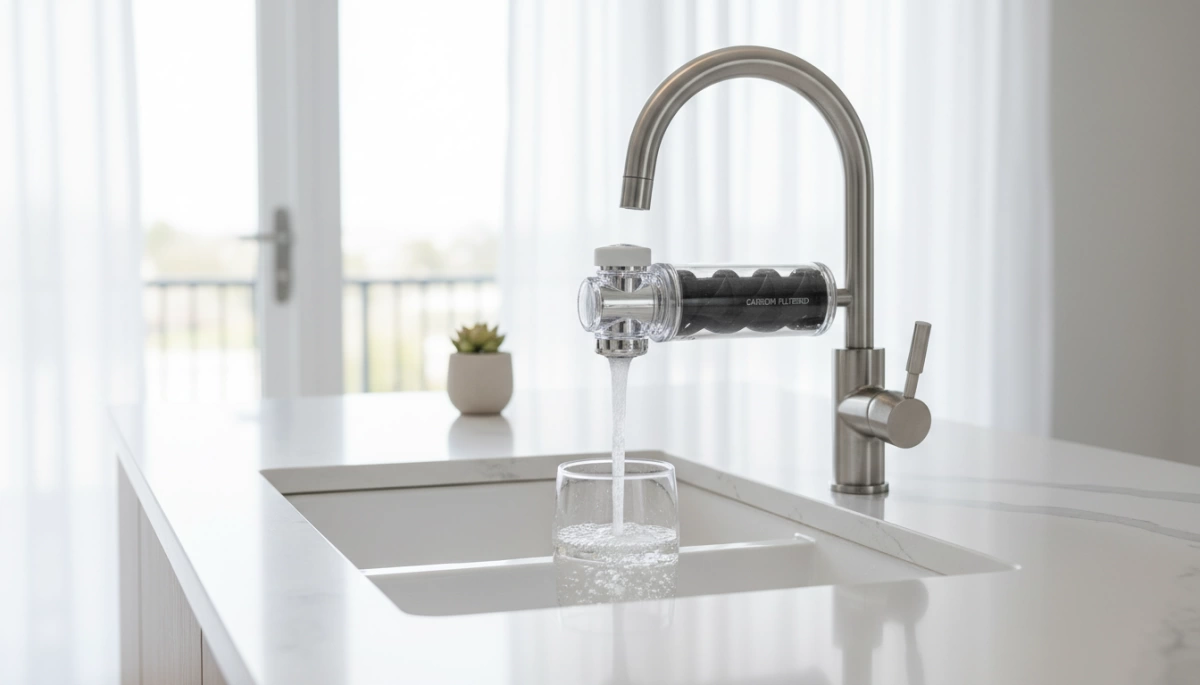
When we engineered the DripLife DL-001, we knew that standard filtration media just wouldn’t cut it for the modern home. The core of our Carbon Fiber Filtration Performance in Faucet Mounted Filters lies in the shift from traditional Granular Activated Carbon (GAC) to advanced Activated Carbon Fiber (ACF) technology. While GAC relies on loose granules that can allow water to channel through untreated, our ACF media creates a unified, dense matrix. This isn’t just a minor upgrade; it represents a fundamental change in how we strip contaminants from your tap water.
Surface Area & Structure: Microporous structure and 10x higher absorption capacity
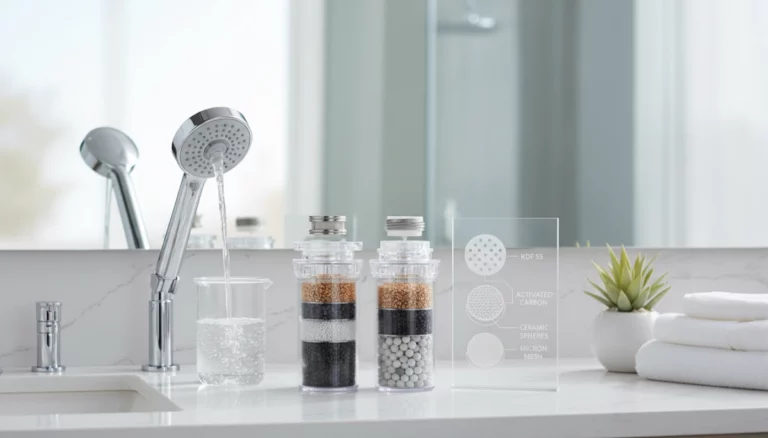
The secret to our filter’s efficiency is the microscopic architecture of the material. Traditional carbon filters often suffer from limited surface area, but our Japan-imported carbon fiber features a complex, microporous structure. This design drastically increases the available surface area for capturing impurities.
- Massive Surface Area: The fiber network provides significantly more contact points for contaminants than granular coal-based carbon.
- High-Density Trapping: The 0.5-micron density effectively blocks microscopic particles that slip through standard filters.
- Superior Capacity: We achieve an absorption capacity that is 10 to 12 times higher than ordinary carbon filters.
Adsorption Kinetics: Rapid contact time via fiber structure
In the world of water purification, speed matters. Adsorption kinetics refers to how quickly the filter media can grab onto and hold contaminants like chlorine and volatile organic compounds (VOCs). Because tap water flows quickly, the contact time between the water and the filter is brief.
Our fiber carbon structure filtration excels here because the distance from the outer surface to the inner adsorption pores is incredibly short. This allows for rapid diffusion and adsorption. Unlike GAC, which requires longer contact time to be effective, our ACF technology captures pollutants almost instantly upon contact, ensuring that even at high flow rates, the water exiting your faucet is thoroughly purified.
Solving the “Trickle” Problem: Achieving 0.5 GPM flow rate without compromising quality
One of the biggest complaints I hear about high-density filters is the dreaded “trickle”—where better filtration equals a frustratingly slow stream. We solved this with the unique properties of ACF. By utilizing a high-flow faucet filter design, we maintain a fast flow rate of 2.0 Liters per minute (approx. 0.5 GPM) without sacrificing the 0.5-micron filtration accuracy.
- No Pressure Drop: The organized fiber structure allows water to pass through efficiently while still trapping contaminants.
- Instant Access: You get filtered water immediately for drinking or cooking, rather than waiting for a pitcher to fill.
- Consistent Performance: The flow remains steady throughout the filter’s 320-gallon lifespan, unlike granular filters that can clog and slow down unevenly.
Filtration Performance: What Actually Gets Removed?
When we analyze Carbon Fiber Filtration Performance in Faucet Mounted Filters, the results go far beyond simple clarity. We focus on a balance of high-speed adsorption and microscopic precision to ensure every drop is safe and refreshing.
0.5-Micron Precision: Targeting Lead, Mercury, and VOCs
Our Activated Carbon Fiber (ACF) technology is engineered with a strict 0.5-micron filtration accuracy. This specific density is critical for effective heavy metal adsorption. While standard filters might let microscopic contaminants pass through, our ACF media traps dangerous elements like lead and mercury within its intricate fiber network.
This precision also targets Volatile Organic Compounds (VOCs) and other dissolved chemicals. By understanding exactly what a carbon filter does for water, it becomes clear why a 0.5-micron rating is the industry benchmark for safety without sacrificing water pressure.
Physical Filtration: Removing Rust and Sediment
Aging plumbing infrastructure across the United States often introduces physical particulates into the water supply. Our filters act as a robust physical barrier against these visible contaminants.
- Rust: Traps oxidized iron particles flaking off old pipes.
- Sediment: Blocks sand and silt often found in municipal water lines.
- Suspended Solids: Captures floating debris that affects water clarity.
Selective Filtration: Retaining Beneficial Minerals
One of the distinct advantages of our tap water purification system is selective filtration. Unlike aggressive purification methods that strip water of everything, carbon fiber filtration media is designed to remove harmful contaminants while retaining healthy minerals.
We ensure that essential electrolytes like calcium, magnesium, and potassium remain in your drinking water. This balance is a major factor when weighing the benefits of a carbon water filter vs reverse osmosis, as our method preserves the natural taste and health benefits of the water.
The Chlorine Breakthrough: Rapid Taste and Odor Elimination
Residual chlorine removal is perhaps the most immediate benefit users notice. Because ACF has adsorption kinetics 10 to 12 times faster than ordinary carbon, it eliminates chlorine and chloramine on contact. This rapid action removes the unpleasant “swimming pool” taste and odor instantly, delivering crisp, clean water for drinking and cooking.
Material Integrity: The Role of Housing in Filtration Performance
Why Housing Matters: Risks of Secondary Pollution
We often get so caught up in the carbon fiber filtration performance that we forget what holds the filter together. The housing is the unsung hero of your purification system. If you put a high-tech Activated Carbon Fiber (ACF) cartridge inside a cheap, low-quality casing, you are asking for trouble.
Low-grade plastic housings are prone to micro-cracks and degradation over time. This creates a breeding ground for bacteria, leading to “secondary pollution.” Essentially, the water gets cleaned by the carbon fiber, only to get contaminated again by the casing itself. We focus on eliminating this risk entirely by prioritizing materials that maintain a sterile environment for the filtration process.
The 304 Stainless Steel Standard
When we design for the US market, we know durability is non-negotiable. That is why we champion the use of 304 stainless steel filter housing components. Unlike standard plastic that can become brittle, 304 stainless steel offers a robust shield against physical damage and environmental wear.
- BPA-Free Water Filtration: Stainless steel is inherently food-grade and free from Bisphenol A (BPA), ensuring no harmful chemicals leach into your purified water.
- Crack-Resistant: It withstands accidental knocks and the daily wear and tear of a busy kitchen sink.
- Leak-Proof Reliability: The rigidity of steel allows for tighter seals and precision threading, significantly reducing the common “spray and leak” issues found in all-plastic models.
Durability Metrics: Steel vs. Plastic
Water pressure in American homes can fluctuate, sometimes spiking unexpectedly. A 304 stainless steel filter housing is built to handle these high-pressure scenarios without flinching.
Here is how the materials stack up in real-world usage:
| Feature | Standard Plastic Housing | 304 Stainless Steel Housing |
|---|---|---|
| Pressure Resistance | Prone to hairline cracks under high psi | Maintains structural integrity |
| Temperature Tolerance | Can warp with hot water exposure | High heat resistance (up to 122°F operating range) |
| Hygiene | Porous surface can trap grime | Non-porous, easy to sanitize |
| Lifespan | Often requires replacement annually | Designed for years of service |
By investing in superior housing, we ensure that the 0.5-micron water filtration capability of our ACF technology is never compromised by structural failure. It is about delivering a consistent, safe flow from the first drop to the last.
Efficiency and Sustainability Metrics
When we analyze the Carbon Fiber Filtration Performance in Faucet Mounted Filters, true efficiency goes beyond just flow rate—it is about longevity and tangible savings. We designed our system to maximize output while minimizing waste, ensuring you get the most out of every cartridge.
320-Gallon Lifespan Analysis
We engineered our Activated Carbon Fiber (ACF) cartridges to handle a substantial volume before needing a replacement. A single unit delivers up to 320 gallons of purified water. For the average American household, this translates to roughly 3 months of daily use for drinking and cooking.
Unlike granular filters that often suffer from channeling—where water cuts a path through loose media and bypasses filtration—the uniform density of our fiber matrix ensures consistent faucet mount filter lifespan and performance down to the last drop.
The Eco-Impact: Reducing Plastic Waste
Switching to sustainable water purification is one of the most effective ways to lower your environmental footprint immediately. A single DripLife filter replaces approximately 2,000 standard 16.9 oz plastic water bottles. This keeps a massive amount of single-use plastic out of landfills and oceans.
For renters or those with limited kitchen space, this also eliminates the hassle of hauling and storing bulky cases of water, making it a highly practical water filter for apartment living where space is at a premium.
Cost-Per-Gallon Efficiency
The economic advantage of filtering tap water versus buying bottled water is undeniable. You stop paying for the plastic bottle, the marketing, and the shipping of heavy liquids. Our system drops the cost significantly:
- Average Bottled Water Cost: ~$1.22 per gallon
- DripLife ACF Filtration: <$0.10 per gallon
- Projected Annual Savings: Can exceed $400 for a family of four
By utilizing high-efficiency carbon fiber, we provide a solution that protects both your wallet and the planet without compromising on water quality.
Installation and Practical Application
Universal Compatibility: Internal and External Thread Adapters
We understand the frustration when a new device doesn’t fit your existing fixtures. That is why we engineered our tap water purification system to work seamlessly with the vast majority of standard American kitchen faucets. Whether your faucet utilizes internal or external threads, we provide a set of precise adapters to ensure a leak-proof seal without the need for a plumber or specialized tools.
- Tool-Free Setup: You can attach the unit by hand in just a few minutes.
- Versatile Fit: Designed for standard faucets (typically 15/16” male or 55/64” female threads).
- Secure Connection: Our durable housing ensures the threads remain secure, unlike cheaper plastic alternatives that strip easily.
While this unit is incredibly versatile for standard aerators, it is important to note that it generally does not fit pull-out sprayers or square-shaped faucets. This plug-and-play simplicity makes it a much more accessible option for renters and homeowners compared to a complex sink water filter system that requires invasive under-counter installation.
Maintenance: Swapping ACF Cartridges for Peak Performance
To maintain top-tier Carbon Fiber Filtration Performance in Faucet Mounted Filters, regular maintenance is straightforward. The Activated Carbon Fiber (ACF) core is a powerhouse, but it eventually reaches saturation after trapping contaminants like chlorine and lead.
- Visual Indicators: If the water flow drops significantly, the microporous structure is effectively trapping sediment and needs changing.
- Recommended Schedule: We advise swapping the cartridge every 3 months or 320 gallons, though this varies based on your local water quality.
- Instant Replacement: Simply unscrew the housing cap, remove the old fiber core, and insert the new one.
Keeping up with this schedule ensures you continue to benefit from rapid adsorption kinetics and clean, great-tasting water without interruption.
Frequently Asked Questions About Carbon Fiber Faucet Filters
How does Activated Carbon Fiber differ from Granular Activated Carbon?
This is the most common question we get regarding Activated Carbon Fiber (ACF) technology. Think of traditional Granular Activated Carbon (GAC) as a jar of loose rocks—water flows around them, often creating channels where water passes through untreated. In contrast, our ACF is like a dense, intricate sponge. It utilizes a microporous structure filtration system with a massive surface area. This allows for adsorption kinetics that are 10 to 12 times faster than ordinary carbon, trapping contaminants instantly upon contact rather than letting them slip by.
Does a 0.5-micron filter slow down water flow?
Historically, tighter filtration meant a frustrating trickle of water, but we solved that. Our system is engineered as a high-flow faucet filter, delivering approximately 0.5 gallons per minute (2.0 Liters/min). We achieved this by optimizing the fiber arrangement to maintain 0.5-micron water filtration precision without creating the excessive pressure drop seen in older ceramic or block filters. You get the purity you expect without waiting minutes to fill a pot.
Can ACF filters remove heavy metals while keeping healthy minerals?
Yes, this is a key advantage of Japan-imported carbon fiber. The filter is designed for heavy metal adsorption, effectively targeting contaminants like lead and mercury through chemical bonding and physical trapping. However, unlike Reverse Osmosis systems that strip water of everything, our carbon fiber allows beneficial dissolved minerals—like calcium, magnesium, and potassium—to pass through. This results in healthier, better-tasting water that retains its natural nutritional value. While some homeowners analyze a countertop vs undersink water filter comparison for larger mineral-retaining systems, our faucet mount offers this selective filtration in a compact form.
Is 304 stainless steel better than plastic for filter housing?
Absolutely. We prioritize a 304 stainless steel filter housing design because it offers superior hygiene and durability compared to standard plastic shells. Cheap plastic can crack under high water pressure and is prone to secondary pollution (bacteria growth) over time. Our stainless steel components are lead-free, crack-resistant, and ensure BPA-free water filtration. This material integrity ensures that the housing lasts as long as you need it to, protecting the filter cartridge inside and preventing leaks.