
















Understanding the Core Economics of Faucet Filter Consumables
When I evaluate a Consumables Business Model in Faucet Filter Category, I always separate the one-time hardware sale from the long-term faucet filter replacement cartridge revenue. The faucet-mounted filter body gets you installed on the sink; the cartridge replacement business is where the ongoing profit sits.
The typical product lifecycle looks like this:
- Initial sale: faucet-mounted filter system sold at a relatively modest margin to build the installed base.
- Recurring cycle: users replace cartridges every few months, driving water filter consumables recurring income for years.
- Aftermarket: once installed, the customer is effectively “locked in” to a specific replacement filter market for that faucet category, assuming you manage compatibility and quality well.
In most models, hardware margin vs. consumables margin is not balanced:
- Hardware is often priced aggressively (sometimes near break-even) to win share at retail and online.
- Faucet filter cartridge profitability is higher, more stable, and easier to forecast, especially with strong aftermarket opportunity in filtration.
- The economics look a lot like a water filter razor blade business model: the faucet head is the handle, the cartridges are the blades.
The key drivers of cartridge replacement frequency are straightforward but critical to get right:
- Usage volume: larger households and heavy cooking drive faster capacity consumption.
- Local water quality: harder, more contaminated, or chlorinated water shortens effective filter life.
- Filter capacity and specs: higher-capacity media extend intervals but can smooth out peak recurring sales for faucet water purifiers.
- Reminders and UX: LED indicators, app notifications, and simple date labels materially increase replacement compliance and support filter lifecycle monetization strategy.
If I’m designing a faucet mounted filter aftermarket business, I optimize the upfront offer to build a large installed base, then engineer the consumables line and reminder systems to maximize predictable, high-margin ongoing revenue in water purification consumables.
Market Overview and Growth Drivers in the Faucet Filter Consumables Model
In the U.S., demand for faucet-mounted water filter systems keeps climbing as more households look for a low-commitment way to get cleaner, better-tasting tap water without installing full under-sink systems. That growth directly fuels faucet filter replacement cartridge revenue, because every new installed faucet filter becomes a small “subscription engine” for future cartridge sales. We see especially strong interest in urban areas with older pipes, renters who can’t modify plumbing, and families looking for a simple first step beyond basic pitchers or bottled water.
Globally, the faucet mounted filter aftermarket business follows a similar pattern: once hardware penetration jumps in a region, the real opportunity shifts to water filter consumables recurring income. In mature markets like North America, cartridges often make up the majority of ongoing revenue in the faucet filter category, while hardware acts as the entry ticket. The consumables share of total faucet filter category revenue can easily exceed the initial system sales over just a few years if replacement rates are healthy and users trust the brand’s filtration performance.
The competitive landscape is already shaped by cartridge-driven strategies. Major brands fight to lock in customers with proprietary faucet filter consumables models, easy one-click replacements, and clear performance claims. Smaller and OEM players, including our own lines, win by offering better value on high-capacity cartridges, transparent performance specs, and strong OEM-quality assurance that keeps users from switching to generic options. That same logic extends to adjacent products like a transparent glass water purifier pitcher, where the razor blade business model for cartridges also drives sustainable revenue.
Looking ahead, growth opportunities are strongest where lifecycle monetization is underdeveloped: emerging markets with rising concern about tap water quality, U.S. e-commerce channels that reward auto-ship and cartridge subscription model filtration offers, and B2B faucet filter distributor margins in offices, hospitality, and small food service. In those channels, distributor recurring revenue models for filters, bulk-pack cartridges, and private-label lines can compound quickly as the installed base grows and recurring sales for faucet water purifiers kick in month after month.
Revenue Streams from Faucet Filter Consumables
When I look at the consumables business model in the faucet filter category, the real value is in stable, recurring income built around the installed base of hardware.
Direct Aftermarket Cartridge Sales
Direct aftermarket sales of faucet filter replacement cartridges are the core of faucet filter cartridge profitability. Once a family installs a faucet-mounted system, they come back for:
- Single replacement cartridges at retail and online
- Multi-pack bundles that lower cost per gallon
- Seasonal promos timed to average cartridge life
In the U.S., we see strong ongoing revenue in water purification consumables when we make it easy to pick the right cartridge, show clear capacity (gallons) and explain how daily water usage impacts replacement timing. Content like our breakdown of the daily water usage capacity of faucet water filters helps customers size the right pack and keeps the replacement filter market in the faucet category active.
Subscription And Auto-Ship Programs
A cartridge subscription model for filtration is one of the most reliable ways to lock in recurring sales for faucet water purifiers. I focus on:
- Auto-ship plans based on real usage (1–3 months for heavy users, longer for smaller households)
- Tiered discounts for longer commitments
- Easy pause, skip, and change options so customers feel in control
This turns the classic water filter razor blade business model into predictable, recurring income while solving a real pain point: nobody wants to drink through an expired filter.
B2B Recurring Revenue Channels
For B2B faucet filter distributor margins and ongoing revenue, I build programs around:
- Distributor partnerships with protected territories and stable reorder cycles
- Bulk cartridge contracts for property managers, foodservice, and offices
- Private label consumables where we supply OEM-quality cartridges under a partner’s brand
This B2B faucet filter distributor recurring revenue model gives partners an aftermarket opportunity in filtration, while we monetize the lifecycle across bigger volumes and longer agreements.
Value-Added Consumable Services
To strengthen the faucet filter consumables model, I layer in value-added services that make replacement easier and more predictable:
- Filter lifecycle management portals or apps that track capacity and timing
- Reminder systems (email, SMS, in-app) tied to usage and calendar
- Compatibility guarantees so customers know every replacement fits and performs like the original
These services turn simple cartridge replacement business into a broader lifecycle monetization strategy and help protect against low-quality generics by emphasizing OEM compatibility and performance.
Building a Strong Faucet Filter Consumables Strategy
Product Design for Recurring Cartridge Sales
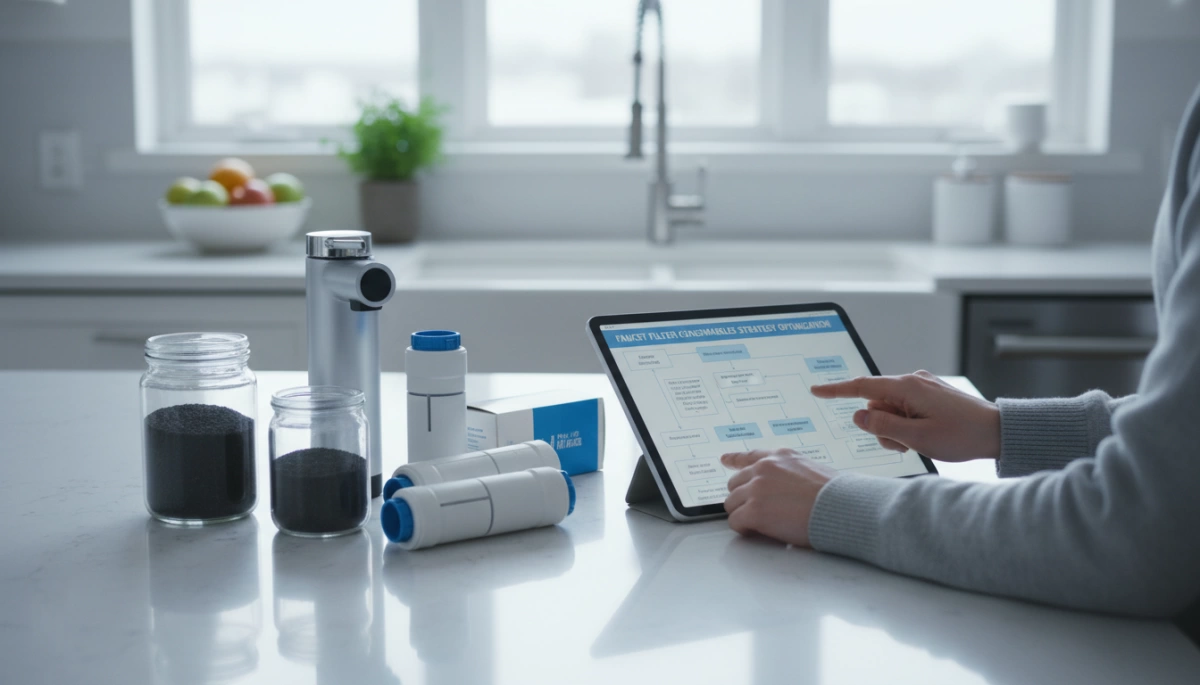
If I want real faucet filter replacement cartridge revenue, I have to design the faucet from day one around the cartridge business, not just the hardware.
- I keep the cartridge format standardized across multiple faucet-mounted models so one SKU can serve a big installed base.
- I design tool-free, “click-and-twist” replacements so anyone can swap a cartridge in under a minute.
- I size filter capacity in realistic gallon ranges for U.S. usage habits (family of 3–4, heavy cooking, coffee, pet water) to support predictable, recurring sales.
- I bake in clear change indicators (flow reduction cues, simple indicators) so customers don’t “stretch” cartridges far beyond their lifecycle.
This is the classic water filter razor blade business model: the faucet sells the story, but the recurring income comes from the consumables economics behind each replacement.
Supply Chain and Production Optimization
To keep ongoing revenue in water purification consumables strong, I treat media and components as a dedicated supply chain, not just another parts list.
- I dual-source key media (carbon, ion exchange) to protect margins and avoid stockouts.
- I lock in quality-controlled cartridge assembly processes that match what we use on countertop water filter production, so faucet cartridges stay consistent.
- I plan inventory based on the installed base and expected replacement cycle, not just initial hardware demand.
- I standardize o-rings, housings, and heads across models to reduce cost per unit and improve B2B faucet filter distributor margins.
Branding and Differentiation with Cartridges
In the U.S. market, customers remember how long the cartridge lasts and how the water tastes more than the faucet body itself.
- I highlight cartridge benefits first: higher-capacity, longer-life, and better taste vs. generic filters.
- I put the brand front and center on every cartridge, making the replacement filter market in the faucet category feel premium, not generic.
- I publish simple, honest capacity and change guidelines so customers trust the consumables, not question them.
- I align packaging and messaging with other products (like glass water filter pitcher maintenance and benefits) so the brand feels unified across categories.
Compatibility, OEM Quality, and Knock-Off Protection
To protect faucet filter cartridge profitability and the aftermarket opportunity in filtration, I focus on compatibility and OEM trust.
- I keep cartridge geometry tight and unique enough to discourage unsafe knock-offs, while still easy to use.
- I clearly mark OEM compatibility and performance claims (chlorine reduction, taste improvement, micro-particle filtration) so buyers can see the value gap vs. generics.
- I register key designs and use branding, seals, and QR codes to help customers identify real cartridges.
- I support distributors with clear cross-reference charts and training so they can push genuine cartridges and grow distributor recurring revenue, not lose it to low-quality copies.
This kind of faucet filter consumables model turns each faucet into a long-term lifecycle monetization engine, balancing user trust, performance, and strong ongoing filter sales in the U.S. market.
Distributor Perspective on Faucet Filter Consumables Revenue
From a distributor and partner angle, the real profit in the faucet filter category comes from the ongoing faucet filter consumables model, not just the hardware. Margins on faucet filter replacement cartridges are usually higher and far more predictable than a one-time faucet-mounted filter sale, which makes the water filter consumables recurring income very attractive.
How Distributors Profit on Cartridges vs. Hardware
Distributors typically see:
- Higher gross margins on each faucet filter replacement cartridge than on the base faucet unit
- Steady, repeat orders once an installed base of faucet-mounted filters is in place
- A scalable water filter razor blade business model, where hardware drives long-term aftermarket opportunity in filtration
This is why we design our faucet filters to use standardized, easy-to-stock cartridges, supported by clear performance claims and third-party tested media similar to the multistage filtration engineering used in advanced systems (see this breakdown of multistage filtration design).
Inventory Forecasting and Planning
Smart distributors treat their installed faucet filter base as a recurring revenue asset. Good planning usually includes:
- Tracking units sold by region to estimate replacement filter market faucet category demand
- Using average replacement intervals (3–6 months in many U.S. households) to forecast recurring sales faucet water purifier volume
- Building a rolling forecast that links installed base growth to distributor recurring revenue model filters
We support this with simple reorder calculators and sell-through reporting so partners can align inventory with real-world usage.
Sales Incentives to Drive Repeat Cartridge Orders
To grow faucet filter cartridge profitability, we work with distributors on:
- Volume-based rebates tied specifically to cartridge sell-through, not just hardware
- Auto-replenishment or standing-order programs for high-volume B2B customers
- Targeted promos that bundle extra cartridges with new faucet-mounted filter installations
These programs turn after-sales service faucet filtration into a structured lifecycle monetization strategy instead of ad-hoc reorders.
Loyalty-Building and Risk Mitigation for Partners
We treat partners as long-term stakeholders in the cartridge replacement business. Typical loyalty tactics include:
- Co-branded marketing kits that highlight ongoing revenue in water purification consumables
- Training for sales teams on filter capacity, change frequency, and how to explain consumable economics water filters to end users
- Joint promotions that reward end customers for timely replacements while protecting distributor margins
- Clear compatibility labeling and OEM-quality assurance to reduce returns and protect against low-quality knock-off cartridges
Done right, this approach locks in repeat ongoing filter sales market revenue for both us and our distributors, and creates a stable B2B faucet filter distributor margins engine over the full product lifecycle.
Challenges and Solutions in the Faucet Filter Consumables Business Model
Common Problems in Faucet Filter Consumables
In the faucet filter consumables model, the biggest issues I see are:
- Low replacement rates: Many U.S. households push cartridges months past their rated life, which kills faucet filter replacement cartridge revenue and hurts filtration performance.
- Poor user experience: Hard-to-change cartridges, confusing models, or slow flow make people stop using the system instead of buying refills.
- Generic competition: Cheap “compatible” cartridges on marketplaces undercut margins and confuse customers, weakening the ongoing revenue in water purification consumables.
If the experience isn’t simple, clear, and reliable, the faucet mounted filter aftermarket business never reaches its full recurring income potential.
Boosting Turnover with Education and Indicators
To drive recurring sales in the faucet water purifier category, I focus on making cartridge replacement a no-brainer:
- Simple, bold messaging: Put clear “change every X gallons or Y months” on packaging, the faucet body, and the cartridge itself.
- Visual and digital indicators: Use color-change indicators, flow-rate cues, or app/QR reminders so users see when to replace, not guess.
- Education at install: Quick-start guides, short videos, and FAQs that explain taste, odor, and health benefits of timely replacement support higher consumable economics for water filters.
This type of filter lifecycle monetization strategy turns confusing upkeep into a predictable cartridge subscription model for filtration, even if the user buys refills on demand.
Enhancing Filtration to Justify Timely Changes
If I want U.S. customers to replace on time, performance has to be obvious:
- Noticeable water quality upgrade: Better taste, odor removal, and visible clarity so people feel the benefit of a fresh cartridge. For users comparing technologies, content like a clear breakdown of how a water purifier works helps them value what the filter is doing.
- Transparent specs: Share certified capacity, contaminants reduced, and realistic lifespan based on typical U.S. tap water.
- Honest “end-of-life” behavior: Design cartridges so flow slows or taste changes before breakthrough, reinforcing the habit of timely replacement instead of silent failure.
Stronger performance supports a premium faucet filter cartridge profitability story and keeps the “water filter razor blade business model” both fair and sustainable.
Regulatory and Sustainability Considerations
Regulatory pressure and U.S. consumer expectations are reshaping the cartridge replacement business:
- Compliance first: NSF/ANSI certifications, clear labeling, and safe materials are non-negotiable in a serious faucet filter consumables model.
- Recyclable and lower-waste designs: Slimmer plastic shells, refillable cores, or take-back programs support a more sustainable revenue stream from cartridge replacements.
- Transparent sourcing and claims: No greenwashing—if I talk about eco benefits, I back it up with real data and programs.
Handled right, this turns regulatory and sustainability requirements into a brand advantage in the replacement filter market in the faucet category, while still protecting distributor recurring revenue and aftermarket opportunity in filtration.
Future Trends in Faucet Filter Consumables Business Models
The faucet filter consumables model is shifting fast, and I see three big trends changing how we monetize replacement cartridges and ongoing filter sales in the U.S. market.
Smart Tech & Subscription Cartridge Services
We’re moving toward connected faucet-mounted filters that track usage, water quality, and filter life in real time. That data powers a cartridge subscription model for filtration where:
- The app triggers automatic shipments right when a cartridge is due, not just on a fixed timeline.
- Customers see clear proof of value (gallons filtered, contaminants reduced), which supports ongoing revenue in water purification consumables.
- We can bundle after-sales service for faucet filtration, system health checks, and warranty extensions into one predictable monthly fee.
This “water filter razor blade business model” makes faucet filter replacement cartridge revenue more stable and easier to forecast.
Longer-Life Cartridges & Revenue Balance
Cartridge technology is improving, especially as more U.S. homes worry about hard water, chlorine, and other quality issues. As we move toward higher-capacity, longer-life cartridges:
- Users get fewer changeouts and better experience, especially in areas with harder water where faucet filters protect plumbing and fixtures.
- We protect faucet filter cartridge profitability by pricing for performance and adding premium tiers (basic, advanced, PFAS/lead-focused, etc.).
- The consumables economics shift from maximum turnover to high-value, trusted replacements with strong brand loyalty.
The goal is not just more changes—it’s smarter, higher-margin replacements that customers feel good paying for.
Expansion Into Commercial & B2B Consumables
The next big aftermarket opportunity in filtration is commercial and light industrial use where water volume is high and usage is predictable:
- Offices, foodservice, clinics, and gyms all need consistent, clean water and reliable replacement filter market supply in the faucet category.
- B2B faucet filter distributor margins grow through bulk contracts, private label cartridges, and multi-year consumable planning.
- Smart monitoring and filter lifecycle monetization strategy help facilities avoid downtime while locking in distributor recurring revenue model filters.
Innovation Opportunities for Manufacturers & Partners
For manufacturers and platform owners, the faucet filter consumables business model will favor brands that:
- Design universal or cross-series cartridges that grow the installed base and simplify ongoing revenue in water purification consumables.
- Build software tools and dashboards that show real-time filter status, cartridge needs, and spend tracking.
- Offer flexible plans—direct sales, subscriptions, and B2B contracts—so customers choose how they want to buy.
If we get this right, the faucet mounted filter aftermarket business becomes a predictable, high-margin engine built on trust, performance, and smart recurring sales in faucet water purifiers.