
















You might think a leak is just a minor annoyance…
But in the world of filtration, a leak represents a critical failure of system integrity.
If water bypasses the filter media, you aren’t getting clean water. It’s that simple.
As a leader in manufacturing excellence, I’ve seen firsthand how cheap plastic threads and poor gaskets destroy user confidence and drive up return rates.
In this post, you are going to learn the exact Leak Prevention Sealing Technologies in Shower Filter Systems that separate professional-grade units from the rest.
We’ll cover precision G1/2″ threading, high-grade EPDM seals, and the engineering secrets behind zero-bypass housings.
Let’s get started.
Why Shower Filters Leak: The Mechanics of Failure
A leaking shower filter isn’t just an annoyance; it’s a symptom of engineering failure. At DripLife, we understand that water spraying from the connection points or dripping from the housing compromises pressure and wastes water. Before discussing our solutions, it is critical to understand the three primary mechanical failures that plague standard filtration systems.
The Neck Connection and Cross-Threading Risks
The most common point of failure occurs right at the installation source: the shower arm connection. Many generic filters suffer from poor machining tolerances, leading to cross-threading. When a user attempts to attach a filter with imperfect threads, the metal shower arm cuts into the plastic filter neck, creating a permanent gap where water escapes.
- Misalignment: If the G1/2″ universal thread standard is not strictly adhered to, the unit cannot sit flush against the washer.
- Force over Fit: Users often try to stop leaks by over-tightening, which strips the threads entirely and destroys the hydrostatic pressure resistance of the connection.
Housing Seam Cracks from Thermal Expansion
Shower systems are subjected to extreme temperature fluctuations, cycling from cold to hot rapidly. This creates significant stress on the filter housing. Materials with a poor thermal expansion coefficient will expand when hot and contract when cold at uneven rates.
Over time, this constant movement causes microscopic stress fractures along the molding seams. Eventually, the high-pressure housing integrity fails, leading to hairline cracks that spray water under pressure. We utilize high-grade ABS materials specifically to withstand these thermal cycles without compromising the structural rigidity of the unit.
Seal Degradation and Chlorine Exposure
The very chemicals we aim to filter out can destroy the seals meant to keep them contained. Chlorine is highly corrosive to standard rubber components.
| Seal Material | Reaction to Chlorine | Result |
|---|---|---|
| Standard Rubber | Hardens and cracks | Loss of elasticity and eventual leaking |
| Elastomeric O-rings | Resists chemical breakdown | Maintains a watertight seal for months |
In inferior systems, the gaskets dry out and lose their compressibility. Once the elastomeric O-ring seals fail, water bypasses the filtration media entirely, leading to both leaks and unfiltered water reaching your skin. We prioritize sealing durability by selecting materials that remain pliable and secure, even in high-chlorine environments.
Core Sealing Technologies in High-Performance Filters
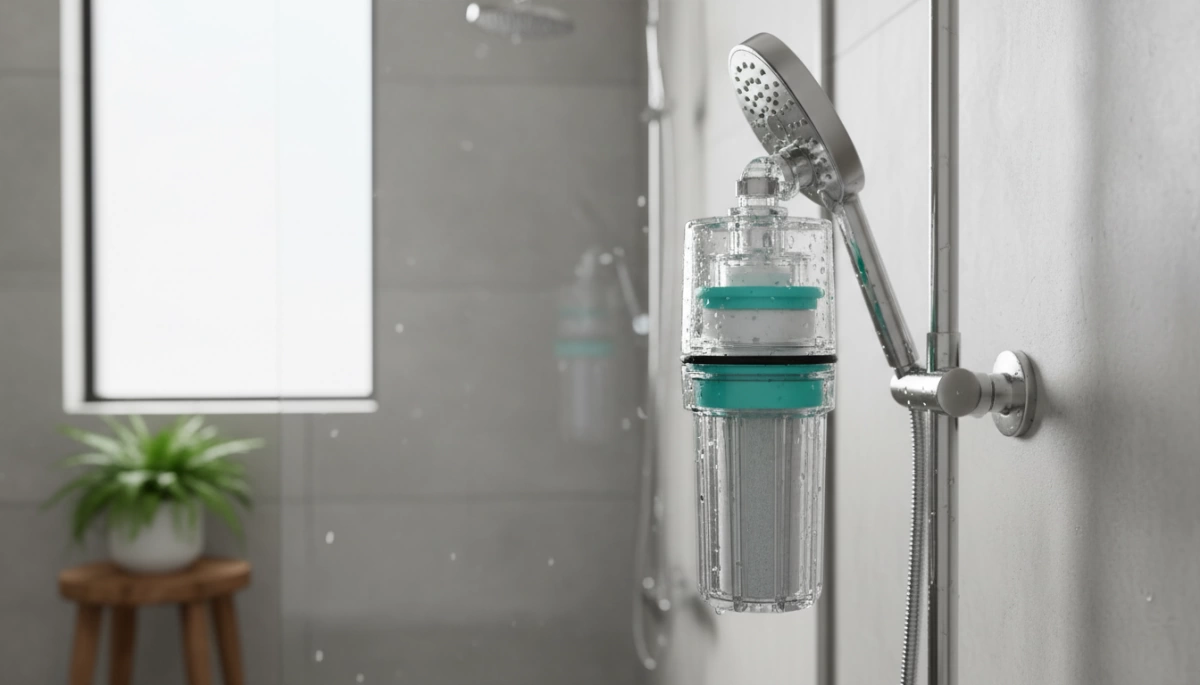
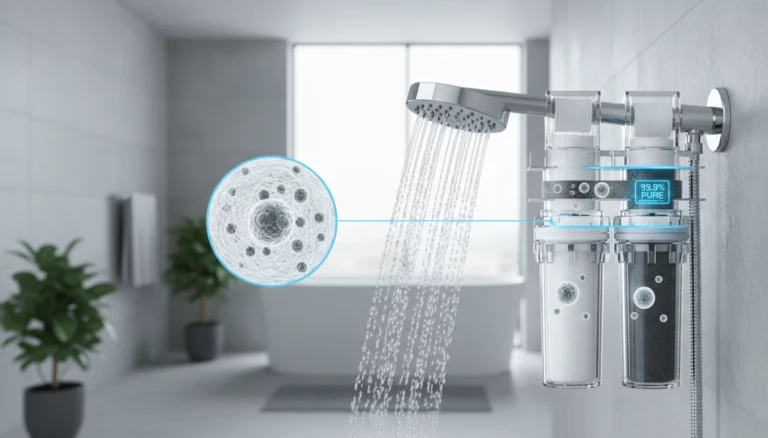
We approach leak prevention sealing technologies in shower filter systems not just as a plumbing requirement, but as a critical component of filtration efficiency. If water bypasses the filter media through a weak seal, the entire purification process is compromised. We utilize specific engineering protocols to ensure every drop of water passes through the filtration stages rather than leaking out the sides.
Precision Threading Geometry and G1/2″ Standards
The foundation of a leak-proof connection lies in precision CNC molding. Many generic filters suffer from poor mold tolerances, leading to “wobbly” connections that drip under pressure. We adhere strictly to the G1/2″ universal thread standard, which is the gold standard for US plumbing fixtures.
This precise geometry ensures a tight, flush fit with standard shower arms and handheld hoses. By matching the thread pitch exactly, we achieve cross-threading prevention, ensuring the unit screws on smoothly by hand without stripping the threads or leaving gaps for water to escape.
Advanced Elastomeric Seals vs. Standard Rubber
Standard rubber washers often degrade quickly when exposed to hot water and chlorine, becoming brittle and prone to cracking. We utilize elastomeric O-ring seals and high-density washers designed for thermal stability. These materials maintain their flexibility and compression memory even after thousands of hot-cold cycles.
- Standard Rubber: Prone to hardening, cracking, and eventual failure within months.
- Elastomeric/EPDM: High hydrostatic pressure resistance, chemical resistance, and long-term elasticity.
Maintaing this seal integrity is vital. Without it, water would bypass the internal media, rendering the filtration useless. A secure seal ensures water is forced through the filtration layers, allowing the system to effectively process water just as carbon filters remove contaminants through contact time and adsorption.
Double-Seal Architecture for Redundancy
To guarantee a watertight connection, we employ a double-seal housing design. This architecture relies on a primary compression seal at the neck connection and a secondary internal seal within the housing threads. This redundancy creates a failsafe; if the primary washer is slightly misaligned during installation, the secondary barrier prevents external leaks. This approach eliminates the common issue of water spraying from the housing seam, ensuring consistent pressure delivery to the shower head.
Material Science: Housing Rigidity and Durability
The integrity of a shower filter system relies heavily on the materials used to build its shell. A seal is only as good as the housing that holds it, and we have found that Chrome-Plated Reinforced ABS offers the best balance of strength and longevity for US homes. Unlike lower-grade plastics that become brittle over time, reinforced ABS maintains high-pressure housing integrity, ensuring the unit doesn’t crack or warp under the stress of daily use.
Chrome-Plated Reinforced ABS Advantages
We utilize high-quality ABS (Acrylonitrile Butadiene Styrene) for our filter bodies because it handles temperature fluctuations far better than standard metals or cheap plastics. In shower environments, rapid changes from cold to hot water cause materials to expand and contract. If the material has a high thermal expansion coefficient, it shifts the sealing points, leading to drips.
- Thermal Stability: ABS resists warping when exposed to hot water, keeping the G1/2″ universal thread standard connections tight and aligned.
- Impact Resistance: The reinforced structure withstands accidental knocks without developing hairline fractures that cause leaks.
- Aesthetic Durability: The chrome plating provides a scratch-resistant finish that matches modern bathroom fixtures while adding an extra layer of structural protection.
Preventing Corrosion and Mineral Buildup
Leakage often starts with corrosion eating away at the threads or the housing interior. Metal housings, particularly those made from lower-grade alloys, are prone to oxidation and rust when exposed to chlorine and moisture. This corrosion creates uneven surfaces where elastomeric O-ring seals can no longer sit flush, resulting in water bypass.
Our ABS construction is naturally immune to rust and resists the adhesion of mineral scale. By maintaining a smooth internal surface, we prevent the pressure spikes caused by clogging, which protects the internal charcoal water filter system from being bypassed or damaged. This ensures that the hydrostatic pressure resistance of the unit remains consistent, preventing the housing from bursting or leaking even in homes with aggressive hard water.
The Tool-Free Installation Advantage
One of the biggest misconceptions in home plumbing is that tighter always equals better. When installing modern shower filtration systems, reaching for a heavy-duty wrench is often the quickest way to create a leak rather than prevent one. We engineered our systems specifically to bypass the need for professional tools, relying instead on precision engineering and high-quality sealing components to create a watertight barrier.
Why Over-Torqueing Causes Leaks
Applying excessive force with pliers or a wrench creates tool-free installation torque issues that compromise the system’s integrity. Over-tightening typically leads to two catastrophic failures:
- Washer Deformation: It crushes the elastomeric O-ring seals or rubber gaskets beyond their elastic limit. Once flattened, these seals cannot rebound to fill gaps, leading to immediate dripping.
- Housing Stress Fractures: The immense pressure placed on the connection point can cause microscopic cracks in the ABS housing. As hot water flows through, thermal expansion widens these fractures, eventually causing the unit to spray water from the neck.
Hand-Tighten Design and Ergonomics
Our design philosophy centers on the G1/2″ universal thread standard, which is calibrated for a perfect fit with standard US shower arms. The watertight seal relies on the proper compression of the internal gasket, not on how hard you can crank the threads.
We designed the housing with an ergonomic, textured grip that allows you to achieve the ideal seal using only hand strength. This approach ensures that our cross-threading prevention mechanisms function correctly, keeping the unit perfectly aligned. By sticking to a hand-tighten protocol, you protect the chrome finish and ensure the internal washers maintain the correct shape for long-term hydrostatic pressure resistance.
DripLife Case Study: 15-Stage High-Output System
At DripLife, we engineered our 15-stage shower filtration system to address the most common failure point in the industry: leakage. While the filtration media—including KDF-55, Calcium Sulfite, and Vitamin C—handles the chemical neutralization, the housing architecture is what ensures leak prevention sealing technologies in shower filter systems actually work in a real-world home environment. We moved beyond standard designs to create a unit that maintains integrity even under fluctuating water pressure.
Integrating Tech for Zero-Bypass
The efficiency of a filter is irrelevant if water flows around the cartridge rather than through it. We utilize a double seal leak proof shower filter design that creates a compression lock between the cartridge and the housing. This eliminates the “bypass effect” common in cheaper models where water takes the path of least resistance along the walls.
- Precision Molding: Our internal housing dimensions are CNC-calibrated to match the cartridge exactly, leaving zero gap for water to escape untreated.
- Compression Gaskets: We use high-density sealing rings that expand slightly under water pressure, reinforcing the seal rather than weakening it.
- Flow Direction: The internal structure forces water through every layer of the 15-stage media, ensuring water bypass elimination.
Universal Compatibility Without Adapters
Leaks often occur at the connection point because users are forced to use flimsy plastic adapters. We designed our system with the G1/2″ universal thread standard natively built into the housing. This matches the standard pipe size found in 99% of United States homes, allowing for a direct, metal-to-plastic secure connection.
By removing the need for intermediate adapters, we reduce the number of potential failure points. This secure connection shower filter sealing design allows for a tight fit on handheld, fixed, and rain shower heads without requiring excessive torque or professional plumbing tools.
Factory Burst Pressure Testing
We don’t just hope the housing holds; we verify it. Every production lot undergoes rigorous burst pressure testing to ensure the chrome-plated ABS body can withstand spikes in hydrostatic pressure resistance.
- Thermal Stability: Our high-quality ABS material is selected for its low thermal expansion coefficient, meaning it won’t crack or warp when switching rapidly between freezing cold and scalding hot water.
- Housing Integrity: The unit is rated to handle pressures significantly higher than standard residential lines, preventing the hairline cracks that lead to catastrophic spraying.
When evaluating the total cost of water filter for home maintenance, the durability of the housing is just as critical as the cartridge life. A cracked housing means replacing the entire unit, which is why our focus on high pressure sealing shower filtration devices is central to our manufacturing process.
Troubleshooting and Maintenance for Longevity
Even the most robust anti leak shower filtration technology requires basic upkeep to maintain peak performance. While our systems are engineered for durability, regular checks ensure that the seal remains watertight against fluctuating water pressure. A few minutes of attention during cartridge changes can prevent leaks before they start.
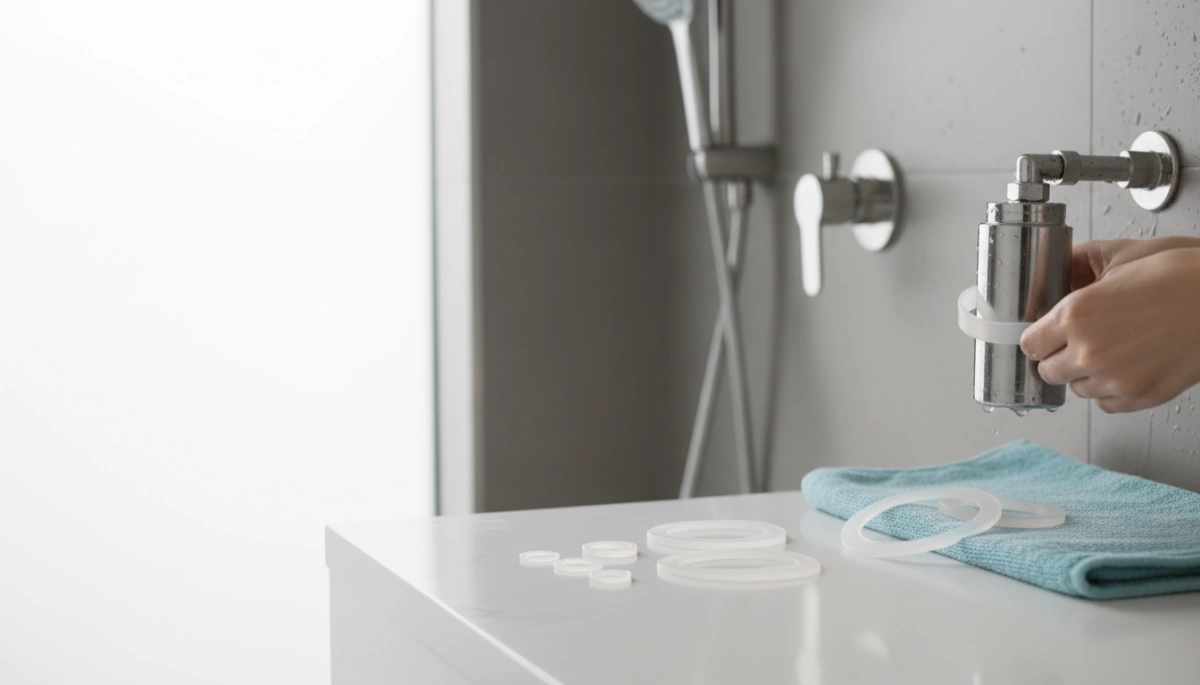
Proper Seating of Washers
The number one cause of leaks isn’t a manufacturing defect—it’s usually a misaligned washer. When you open the housing to replace the filter cartridge, the internal gasket can sometimes shift or twist. If the washer isn’t sitting perfectly flat within the groove, the G1/2″ universal thread standard connection won’t seal correctly, leading to drips.
Before reassembling your shower filter for hard water, run your finger along the washer to ensure it is smooth and fully seated. This simple check guarantees sealing durability for shower filter components and prevents the “pinching” effect that compromises the watertight barrier.
Lubrication with Silicone Grease
Rubber components can eventually dry out, especially when constantly exposed to chlorinated water. To extend the life of your elastomeric O-ring seals, applying a small amount of food-grade silicone grease is highly effective. This lubricant keeps the rubber pliable and helps the O-ring resist drying or cracking.
- Reduces Friction: Makes it easier to tighten the housing without bunching the seal.
- Improves Seal: Fills microscopic imperfections to enhance hydrostatic pressure resistance.
- Note: Never use petroleum-based lubricants (like Vaseline), as they will degrade the rubber and cause seal failure.
Identifying Signs of Washer Failure
Knowing when to retire a seal is key to maintaining a leak-free bathroom. While our high-density washers are built to last, they are consumables. Watch for these indicators that your sealing ring needs replacement:
- Permanent Compression: The washer looks flat and doesn’t bounce back to its original shape.
- Surface Cracking: Visible hairline fractures or brittleness on the rubber surface.
- Persistent Dripping: Water escaping from the housing seam even after hand-tightening.
Replacing a worn washer immediately restores the high-pressure sealing shower filtration devices to their original factory standard, ensuring zero water bypass.
Frequently Asked Questions About Shower Filter Sealing
Why is water spraying from the top of my filter?
If you see water spraying from the connection point between the shower arm and the filter, it is almost always due to improper washer seating or a loose connection. In my experience, the most common culprit is that the internal rubber washer fell out or shifted during installation. Our systems rely on a tight-seal technology where the washer must sit perfectly flat inside the G1/2″ connector to create a compression seal.
Another possibility is cross-threading. If the filter wasn’t aligned perfectly straight when you started twisting it on, the threads might have cut a new path, preventing a full seal. This compromises the cross-threading prevention design features. Always hand-tighten carefully to ensure the threads catch correctly before applying final torque.
Do I need Teflon tape for a G1/2 connection?
While our G1/2″ universal thread standard is precision-molded to fit standard U.S. plumbing, I always recommend using Teflon tape (plumber’s tape) as a secondary barrier. We include a roll with our kits for this exact reason. The primary seal comes from the elastomeric O-ring seals and washers compressing against the pipe, but Teflon tape fills the microscopic imperfections in the metal threads of your existing shower arm. This creates a watertight connection and acts as a lubricant, allowing you to get a tighter fit without over-stressing the plastic housing.
How often should I replace the O-rings?
You generally do not need to replace the O-rings separately from the filter cartridge. The sealing rings are designed to last the lifespan of the cartridge itself. However, when you install a replacement cartridge for your shower water filter, you should inspect the O-rings on the housing.
If they look flattened, cracked, or dry, they have lost their elasticity and won’t provide adequate hydrostatic pressure resistance. Over time, chlorine and minerals can degrade standard rubber, which is why we use high-grade materials. If you notice a drip developing after a filter change, it’s often just a matter of reseating that O-ring or applying a tiny amount of silicone grease to help it seal.
Can high water pressure crack the filter housing?
It is rare, but extreme water pressure can damage inferior plastic housings. However, we design our units with high-pressure housing integrity in mind. We use reinforced ABS material that undergoes rigorous burst pressure testing to ensure it can handle standard residential water pressure fluctuations without failure.
That said, thermal expansion from very hot water combined with excessive water hammer (the banging noise when you turn water off quickly) can stress any plumbing fixture. To protect the double-seal housing design, avoid using a wrench to over-tighten the unit, as the mechanical stress from the tool is more likely to cause a crack than the water pressure itself. Hand-tightening is sufficient for a leak-proof seal.