













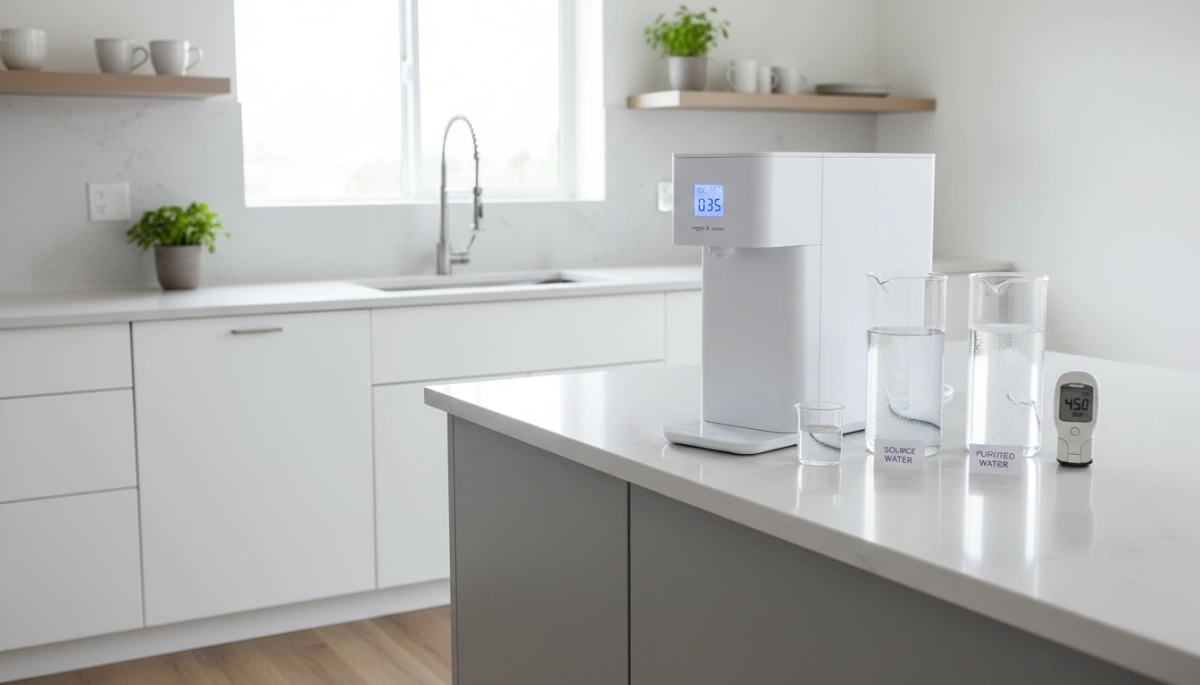
You might already know that standard water pitchers are practically useless against High TDS source water.
If your water reading is over 500 ppm, you aren’t just drinking water—you’re drinking dissolved minerals, salts, and potentially heavy metals.
As a filtration specialist, I understand the skepticism: Can a compact, Countertop RO system really handle that kind of heavy load without clogging the membrane in a week?
The answer is yes, but only if you manage the system correctly.
In this guide, you’re going to learn the exact protocols to protect your RO membrane, how to interpret real-time TDS monitoring, and the specific maintenance steps required to ensure your Driplife system delivers 0.0001-micron purity, regardless of how harsh your tap water is.
Let’s get your water clean.
The Science: Why High TDS Crushes Standard Filters (But Not RO)
When we talk about Managing High TDS Source Water with Countertop RO, we have to look strictly at the physics of filtration. I often see homeowners frustrated because their standard pitcher filters or faucet attachments do nothing to lower their Total Dissolved Solids (TDS) readings. The reality is simple: standard filtration is a sieve, while Reverse Osmosis (RO) is a barrier.
Particle Size Matters: Dissolved Solids vs. Standard Carbon
Most basic filters rely on Activated Carbon. These are excellent for adsorption—grabbing onto chlorine and improving taste—but they are structurally incapable of stopping dissolved minerals.
- Suspended Solids: Dirt, rust, and sediment are large particles easily trapped by standard 1–5 micron filters.
- Dissolved Solids: Calcium, magnesium, sodium, and heavy metals are dissolved into the liquid at a molecular level.
If you are dealing with high ppm source water, a standard carbon filter acts like a chain-link fence trying to stop sand. The dissolved minerals flow right through, leaving your TDS reading virtually unchanged.
The RO Barrier: How the 0.0001-Micron Membrane Works
To physically separate dissolved solids from water, we need 0.0001 micron filtration precision. This is the engineering standard we rely on in our DripLife countertop systems.
Unlike basic filtration, our RO process uses high pressure to force water molecules through a semi-permeable membrane. The pores on this membrane are roughly 0.0001 microns in size. To put that in perspective, this is significantly smaller than bacteria, viruses, and dissolved mineral ions.
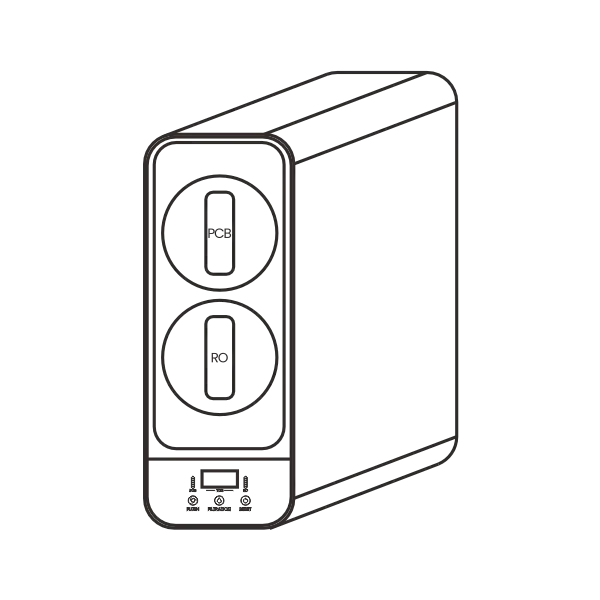
The 5-Stage Defense:
- Sediment & Carbon Pre-treatment: Protects the membrane from large debris.
- RO Membrane (The Core): Rejects heavy metals, salts, and fluoride.
- Post-Filtration & UV: Polishes the water for taste and sterility.
This tight filtration structure is why RO is the only viable solution for genuinely reducing hardness and dangerous contaminants in your water supply.
Understanding Rejection Rates: Turning 800 TDS into <50
The metric that matters most to us engineers is the membrane rejection rate. This percentage tells you how much of the dissolved load the membrane effectively blocks.
If your tap water reads 800 ppm (extremely hard water), a standard filter gives you an output of ~790 ppm. That is not purification; that is just straining.
With a high-performance RO membrane, we aim for dissolved mineral removal rates of 90% to 99%.
- Input: 800 ppm (High TDS Source Water)
- Process: Water is forced against the RO membrane; contaminants are flushed away as brine.
- Output: <50 ppm (Pure, soft water)
By achieving this level of rejection, we strip away the inorganic minerals that cause scaling and bad taste, leaving you with clean, safe hydration. This massive reduction is the baseline requirement for any system claiming to handle high TDS water effectively.
Key Challenges of High TDS Source Water
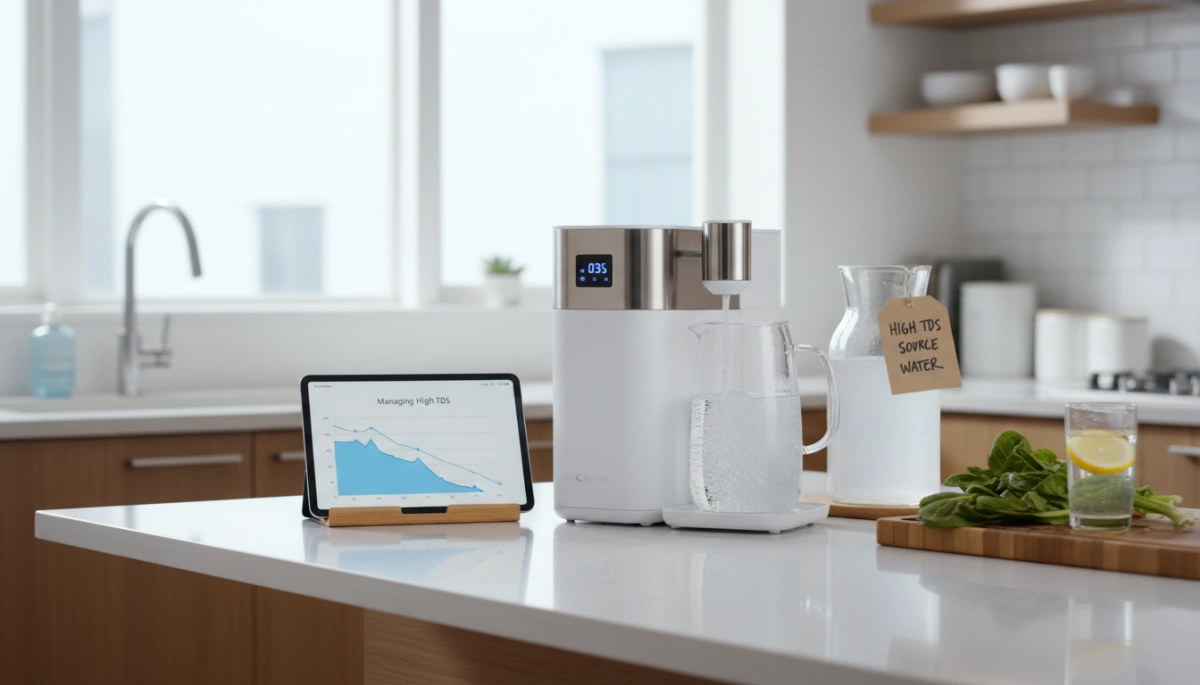
When we deal with high ppm source water, we aren’t just filtering dirt; we are fighting chemistry. While our countertop RO systems are engineered to handle heavy contaminant loads, understanding the specific hurdles of high Total Dissolved Solids (TDS) helps you get the best performance and longevity out of your machine.
Membrane Fouling and Scale Buildup
The primary threat to any filtration system in a hard water area is reverse osmosis membrane fouling. High TDS water is often loaded with calcium and magnesium. As the system separates pure water, these minerals are left behind in a concentrated form. Without proper flushing, they crystallize on the membrane surface, creating a hard scale layer similar to what you see in a tea kettle. This is why understanding the difference between standard filtration and reverse osmosis vs water softeners is crucial for hard water scale prevention. If that 0.0001-micron surface gets plastered with mineral deposits, efficiency drops and the pump has to work overtime.
Understanding TDS Creep
You might notice a slight spike in your TDS reading when you first dispense water after the machine has been idle. This is a natural phenomenon called “TDS creep.” When the high-pressure pump stops, the osmotic pressure naturally tries to equalize, allowing a tiny amount of dissolved solids to migrate through the membrane. This results in a temporary startup spike. It’s not a defect; it’s physics. The system quickly flushes this out once active filtration resumes, returning to the low stable numbers you expect.
Wastewater Volume and Concentration
Processing high TDS water inherently changes the wastewater to pure water ratio dynamics within the source tank. In a countertop setup, the rejected contaminants (brine) are returned to the feed tank rather than sent down a drain pipe.
- Concentration Loop: As you draw pure water, the remaining water in the feed tank becomes increasingly concentrated with contaminants.
- Flushing Needs: High TDS inputs require more frequent feed water tank maintenance.
- System Stress: If you constantly “top off” the tank without emptying the concentrated wastewater, the TDS levels in the feed water can skyrocket beyond the membrane’s rated capacity.
To maintain peak performance, we always recommend fully emptying and rinsing the source tank before refilling, especially when starting with heavy source water.
Strategies for Managing High TDS with Countertop Units
When you are dealing with source water that has a high mineral content, you can’t just plug in a machine and forget about it. High TDS (Total Dissolved Solids) puts significant stress on filtration membranes. To keep your water pure and your system running efficiently, you need to adopt a few specific operational habits. These strategies ensure that the 0.0001 micron filtration precision remains intact and that you aren’t drinking dissolved solids that managed to sneak through.
The Importance of the Flushing Cycle: Preventing Scale
The biggest threat to any Reverse Osmosis system processing hard water is membrane fouling. As water is forced through the membrane, minerals like calcium and magnesium are left behind, forming a layer of scale. If this scale isn’t removed, it hardens and permanently blocks the filtration pores.
We combat this through automated flushing cycles. This process diverts water to wash across the membrane surface at high speed, scouring away the concentrated mineral buildup before it can settle. This is heavily reliant on the internal pressure system; understanding how booster pump technology in compact RO units works helps explain why consistent pressure is vital for effective flushing. A strong flush extends the life of your filters significantly, especially when the input water is over 500 ppm.
Monitoring is Mandatory: Using Dual TDS Displays
You cannot manage what you cannot measure. With standard filters, you are often flying blind, hoping the water is clean until the taste changes. When dealing with high TDS source water, that approach is dangerous.
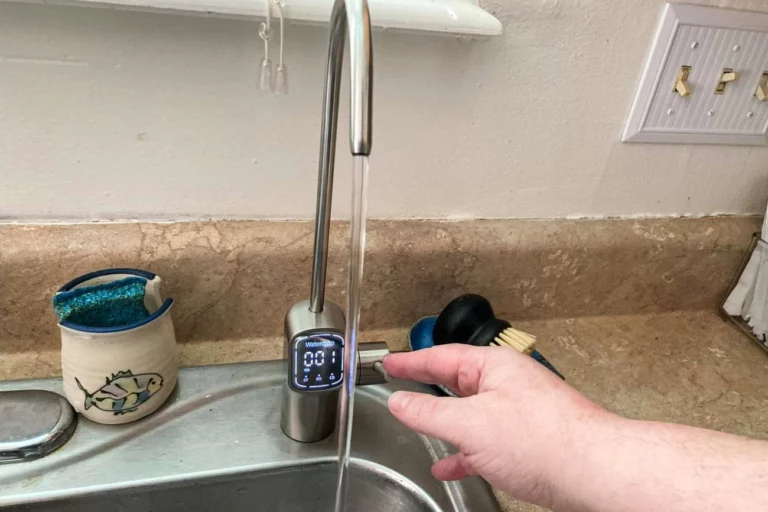
Our DripLife systems feature a Dual TDS Display that provides real-time transparency.
- Inlet Reading: Shows the TDS level of the water currently in the feed tank.
- Outlet Reading: Shows the TDS level of the purified water in your glass.
This allows you to verify the membrane rejection rate instantly. If your feed water reads 700 ppm and your output is 30 ppm, you know the system is performing correctly. If you see the output number creeping up while the input remains stable, it is an immediate indicator that maintenance is required.
Managing the Feed Tank: The Dangers of ‘Topping Off’
This is the most critical operational rule for countertop water filtration system owners: never “top off” the feed tank.
In a portable RO system, the filtration process separates water into two streams: pure water and concentrated wastewater (brine). In many countertop designs, this concentrated water remains in the supply tank.
- The Concentration Effect: If you start with 500 ppm water, the remaining water in the tank might rise to 800 ppm or higher as pure water is extracted.
- The Mistake: If you simply add fresh tap water to this leftover brine, you are creating a mixture with a much higher starting TDS than your original tap water.
- The Consequence: Doing this repeatedly causes the TDS in the tank to skyrocket, potentially exceeding the operating limits of the membrane and causing premature failure.
Feed water tank maintenance is simple but strict: Always discard the remaining water in the tank completely before refilling it with fresh source water. This ensures the membrane is always treating the lowest possible TDS load, preventing unnecessary strain and hard water scale prevention issues.
Selecting the Right Hardware for the Job
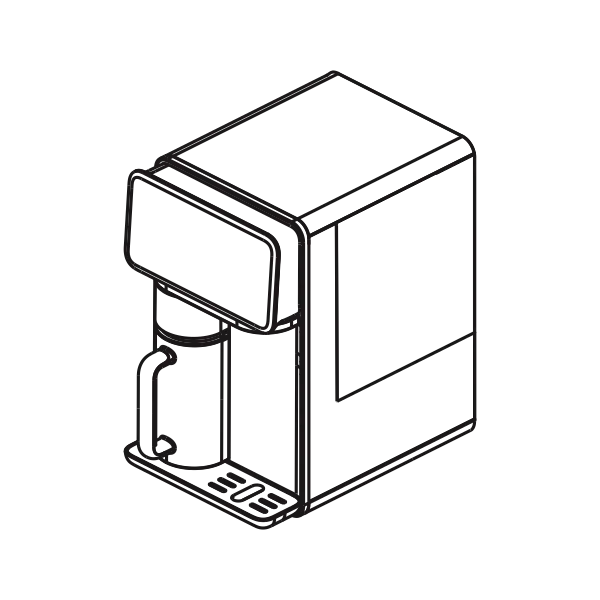
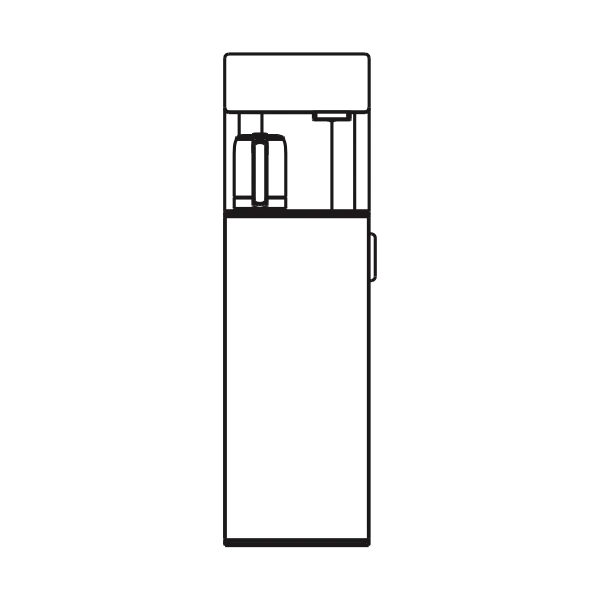
When dealing with high TDS water, not all filtration systems are built to handle the load. You need robust hardware designed to process heavy mineral content without clogging or failing prematurely. We specifically engineer our units to tackle these challenging water conditions through precise engineering and durable components.
Filtration Precision: Why 0.0001 Micron is Non-Negotiable
If your tap water reads high on the TDS meter, a standard filter pitcher or faucet attachment simply won’t cut it. These usually rely on carbon, which improves taste but allows dissolved solids to pass right through. To actually lower TDS, 0.0001 micron filtration precision is the absolute baseline.
Our DripLife countertop RO systems utilize a 5-stage process centered around this high-density RO membrane. The pore size is so small that it effectively blocks up to 99.99% of contaminants, including heavy metals, arsenic, and the dissolved salts that spike your TDS readings. This level of precision is the only way to physically separate pure water molecules from a high ppm source water supply.
Pump Efficiency: Durability for High-Pressure Needs
Pushing water through a membrane with pores that small requires significant force, known as overcoming osmotic pressure. The higher the TDS in your source water, the harder the system has to work to force clean water through the filter while rejecting the contaminants.
We use high-efficiency internal pumps designed to maintain consistent pressure. This ensures that the system delivers a steady flow of purified water and maintains a healthy wastewater-to-pure-water ratio, even when the input water is heavily laden with minerals. A weak pump in this scenario would result in a trickle of water and rapid membrane fouling.
Heating Capabilities: Instant Heating to Prevent Kettle Scaling
One of the most visible signs of high TDS is the white, crusty scale that destroys traditional electric kettles and coffee makers. Boiling hard water just concentrates the minerals further. An instant heating water purifier solves this problem by removing the minerals before the water is heated.
Our systems feature 3-second rapid heating technology. Because the heating element only touches purified, low-TDS water, you get hot water on demand without the risk of hard water scale prevention issues ruining the machine. This protects your hardware and ensures your tea or coffee tastes clean every time. You can see how the benefits of reverse osmosis water extend beyond just drinking, helping to preserve your appliances and simplify your daily routine.
Key Hardware Specs for High TDS Management:
- RO Membrane: Must be 0.0001 micron to effectively lower TDS.
- Booster Pump: Essential for maintaining pressure against high osmotic resistance.
- Heating Element: Should be integrated post-filtration to avoid scale buildup.
Maintenance Schedule for High TDS Zones
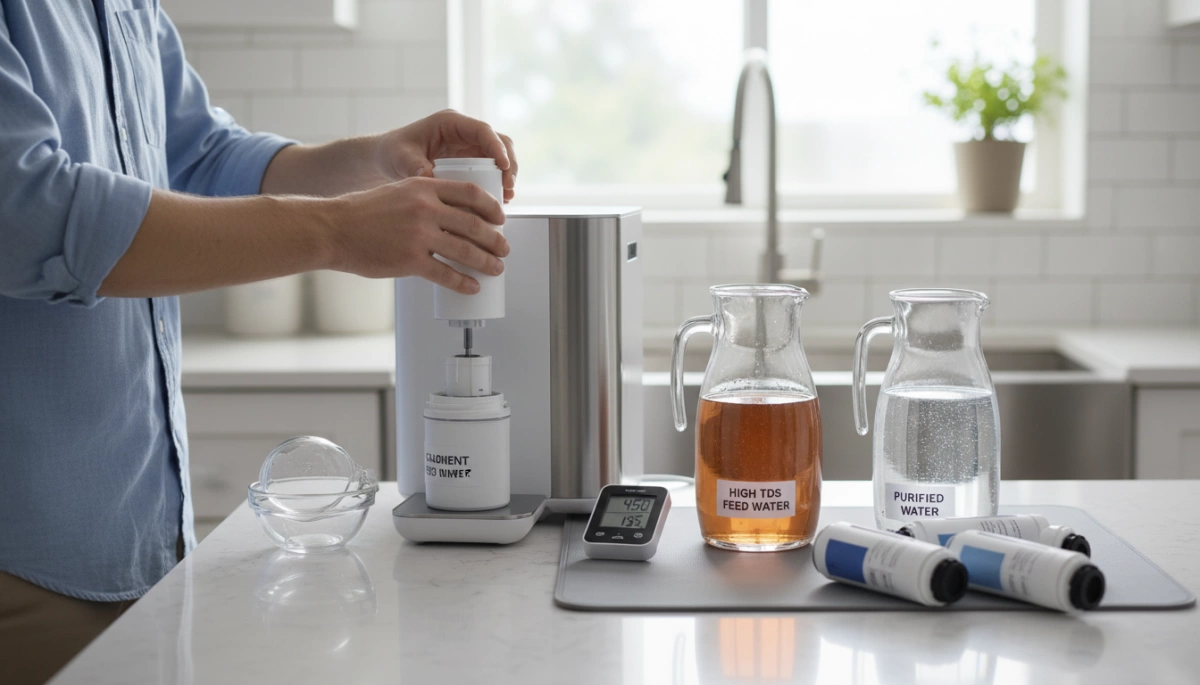
When you are dealing with high ppm source water, the rules of engagement change. Standard maintenance timelines are based on average municipal water quality, but high Total Dissolved Solids (TDS) puts significantly more stress on your filtration hardware. To keep your DripLife system running efficiently, you need a proactive maintenance strategy that accounts for the heavier mineral load.
Pre-Filter Protection: Sacrificing Carbon Blocks
In a multi-stage system, the pre-filters are the sacrificial shields. We design our composite filters (sediment and carbon blocks) to trap larger particulates, chlorine, and organic matter before the water ever touches the reverse osmosis element.
- The Goal: Prevent membrane fouling on the delicate 0.0001-micron layer.
- The Reality: High TDS water often comes with higher sediment or scale potential.
- The Fix: Don’t try to extend the life of these cheaper pre-filters. If they clog, they are doing their job. Changing them promptly ensures the expensive RO membrane doesn’t get choked by debris that should have been caught earlier.
Replacement Frequency for >500 ppm Water
If your source water reads over 500 ppm on the dual TDS display, the standard filter lifespan estimates need adjustment. The physical process of rejecting such a high volume of dissolved minerals increases osmotic pressure and wear on the system.
- RO Membrane: While typically rated for up to 24 months, high hardness might reduce this to 12–18 months.
- Carbon/Sediment Filters: Expect to swap these out closer to the 6-month mark rather than 12 months.
- Monitoring: Rely on the smart filter life indicators on the touch panel, but also trust your taste buds and the TDS output reading. For a deeper dive into keeping your unit in top shape, check our guide on countertop water filters maintenance tips.
Sanitization of the Feed Tank
The feed water tank requires specific attention in high TDS scenarios. As the system filters water, the remaining liquid in the supply tank becomes concentrated with rejected minerals and potential organic contaminants.
- Prevent Algae: Standing water with high mineral content can promote algae growth if the tank is exposed to sunlight.
- Weekly Routine: Empty the feed tank completely—do not just top it off. A quick scrub with mild soap and a thorough rinse prevents biofilm buildup.
- System Health: Keeping the raw water tank clean reduces the workload on the internal UV sterilization system, which is designed to protect the purified water tank, not the dirty supply water.
FAQ: Managing High TDS Water
What is considered ‘High TDS’ for drinking water?
In the United States, the EPA sets a secondary standard for Total Dissolved Solids (TDS) at 500 ppm (parts per million). If your tap water exceeds this level, you are dealing with “high TDS.” While not always a direct health threat, water above this threshold often tastes salty, metallic, or bitter and can cause significant scaling in appliances. Standard filtration pitchers often struggle here because they lack the 0.0001 micron filtration precision required to physically remove these dissolved solids. Our DripLife countertop RO systems are specifically engineered to tackle high ppm source water, effectively stripping away the excess minerals and salts that standard filters leave behind.
Can a countertop RO system handle well water?
Yes, a countertop water filtration system equipped with a Reverse Osmosis membrane is one of the most effective solutions for well water. Well water is notorious for fluctuating quality and higher levels of heavy metals or agricultural runoff. While understanding how charcoal filters work is important for basic chlorine and taste improvement, they cannot isolate the microscopic contaminants often found in wells. The 5-stage filtration process in our units—combining sediment, carbon, and the RO membrane—provides the necessary barrier against these unpredictable impurities. However, if your well water is extremely turbid, we recommend a pre-sediment filter to prevent premature membrane fouling.
Why is the TDS reading high when I first turn on the machine?
This is a common phenomenon known as “TDS creep.” When the system is idle, the natural osmotic pressure can cause a small amount of dissolved solids to migrate from the wastewater side of the membrane back into the pure water side. When you first activate the unit, the Real-time TDS monitoring display might show a momentary spike. This is normal. Our systems are designed to flush this initial water quickly. Within a few seconds of dispensing, you will see the numbers on the interface drop rapidly as the fresh, purified water pushes through, confirming that the system is back to optimal TDS reduction performance.
How often should I empty the wastewater tank?
Proper feed water tank maintenance is critical for the longevity of your machine. You should empty the source water tank every time the water level gets low—never just “top it off.” As the RO system filters water, it pushes contaminants back into the feed tank, creating a concentrated brine. If you keep adding fresh water to this leftover brine, the TDS levels in the tank skyrocket, forcing the pump and membrane to work much harder. To maintain a healthy wastewater to pure water ratio and protect the internal components, dump the remaining concentrate down the sink and refill the tank with fresh tap water for every cycle.