














The Role of Smart Control Boards in Modern Tankless RO Architecture
In the evolution of water purification, the shift from bulky storage tanks to sleek, tankless designs necessitated a fundamental change in hardware: the introduction of the smart control board ro system. This component serves as the central nervous system of the machine, replacing outdated mechanical switches with precise electronic ro management.
In a modern tankless setup, space is at a premium and performance must be instantaneous. The RO controller PCB is engineered to manage high-demand operations that mechanical systems simply cannot handle. By integrating directly with components like the integrated waterway plate, we eliminate chaotic wiring and reduce potential failure points.
Key Architectural Functions:
- Centralized Logic: The board executes intelligent system logic ro, coordinating the high-pressure booster pump control and solenoid valves in milliseconds.
- Sensor Integration: It acts as the hub for sensor driven ro control, constantly reading pressure and flow data to adjust performance dynamically.
- Compact Efficiency: High-density circuitry allows for a smaller footprint while maintaining industrial-grade durability.
At Driplife, we view the control board not just as a switch, but as the guarantor of reliability. Through digital ro operation control, we transform a collection of pumps and filters into a cohesive, intelligent water purification appliance. This smart ro architecture ensures that every drop of water is processed with calculated precision, providing a user experience defined by consistency and safety.
Why Tankless Systems Require Intelligent Control Logic
When we look at Smart Control Board Integration in Tankless RO Systems, it isn’t just about adding fancy digital displays; it is an operational necessity. Unlike traditional bulky units that rely on gravity and large storage tanks to buffer performance, tankless models operate on a strict “make it when you need it” basis. This shift demands sophisticated intelligent system logic RO to handle the immediate workload without the safety net of a reservoir. Without a brain to run the operation, these compact systems simply cannot function safely or efficiently.
On-Demand Pressure Management
The biggest challenge in tankless architecture is managing the immediate demand for water. In a tank-based system, the filter works slowly over hours. In a tankless setup, we need high-pressure booster pump control that kicks in the millisecond you turn on the faucet.
The RO controller PCB acts as the central nervous system, regulating power to the pump to ensure consistent flow. If you are running a system with 600 GPD flow rate logic, the pressure curve has to be managed perfectly. The board adjusts the pump speed in real-time to prevent pressure spikes that could damage components while ensuring you get that fast cup of water. Without this electronic management, you would be left guessing about performance, looking for physical signs you need a water filter rather than having the system tell you exactly what is happening.
Space vs. Function
We are essentially cramming a factory’s worth of filtration technology into a box that fits under a sink. This miniaturization requires intelligent water purification protocols to replace bulky mechanical parts.
- Electronic vs. Mechanical: We replace large mechanical shut-off valves with compact solenoid valves controlled by the board.
- Thermal Management: In tight spaces, heat builds up. The smart board monitors temperatures to prevent the pump from overheating.
- Precision: Electronic sensors take up a fraction of the space of mechanical gauges but offer double the accuracy.
By utilizing a digital interface, we maximize the functionality of the unit without sacrificing valuable cabinet space.
Core Functions of the Smart Control Board
The RO controller PCB serves as the central nervous system of our tankless architecture, executing complex logic that goes far beyond simply turning a pump on and off. We don’t just move water; we manage it through intelligent water purification protocols embedded directly into the circuit design. This board coordinates every sensor and valve to ensure the system operates at peak efficiency without constant user intervention.
Real-Time Water Quality Monitoring (TDS)
We integrate dual TDS (Total Dissolved Solids) probes directly into the flow path, feeding data to the control board instantly. This allows for real-time TDS monitoring of both the feed water and the purified output.
- Instant Feedback: The board calculates the rejection rate continuously, displaying the water quality on the digital interface.
- Safety Lock: If the output TDS spikes beyond a safe threshold, the system can alert the user immediately, preventing the consumption of contaminated water.
Intelligent Filter Life Tracking
Old-school generic timers are obsolete. Our filter life indicator algorithm tracks actual usage based on flow volume and operation time. Just as upgrading firmware for smart bottle filling stations allows for precise maintenance tracking in commercial units, our residential boards utilize data-driven logic to predict exactly when a cartridge is depleted. This prevents premature replacement waste while ensuring you never overuse a clogged filter.
Automated Membrane Flushing
To protect the heart of the system, the control board executes automatic membrane flushing.
- Startup Flush: Before dispensing, the system briefly flushes the membrane to remove standing water and “TDS creep.”
- Post-Run Flush: After production stops, the board triggers a solenoid to wash away concentrated brine from the membrane surface.
- Idle Protection: During long periods of inactivity, the system initiates short cleaning cycles to prevent scaling and fouling, significantly extending the membrane’s lifespan.
Safety Protocols: The Board as a Guardian
When dealing with high-pressure water filtration under the sink, safety isn’t just a feature—it is a necessity. The smart control board integration in tankless RO systems acts as the central nervous system, constantly scanning for anomalies that could threaten your home or the hardware itself. We don’t just build these boards to manage flow; we build them to prevent disasters.
Integrated Leak Detection
Water damage is a homeowner’s nightmare. To mitigate this, the RO controller PCB is hardwired to a highly sensitive leak detection sensor located at the base of the unit.
- Instant Response: The moment moisture bridges the sensor contacts, the board executes an emergency shutdown.
- Valve Closure: It immediately cuts power to the system and signals the inlet solenoid valve to close, physically stopping the water supply.
- Audible Alarm: The system triggers a buzzer to alert you immediately, ensuring you can address the issue before it damages your cabinetry.
Pump Protection & Thermal Management
Tankless systems rely on powerful booster pumps to push water through the membrane instantly. However, these pumps generate significant heat and can be damaged if they run dry or operate continuously for too long.
- Overheat Pump Protection: The smart board monitors the pump’s operating temperature and runtime. If the system detects overheating, it automatically cuts power to the pump to let it cool down.
- Dry Run Prevention: If the source water is cut off, the board senses the pressure drop and stops the pump to prevent it from burning out.
Reliability is the hallmark of the best reverse osmosis water filter system, and this intelligent thermal management ensures the hardware lasts for years without mechanical failure.
Optimizing Efficiency: The 2:1 Pure-to-Drain Ratio
We used to accept that Reverse Osmosis meant wasting gallons of water just to get a single clean glass. That is history. With Smart Control Board Integration in Tankless RO Systems, we have flipped the script. The standout feature here is the ability to achieve a 2:1 pure-to-drain ratio. This means for every two cups of purified water produced, only one cup goes down the drain. This is a massive leap forward from traditional systems that often wasted three or four gallons for every single gallon purified.
Algorithmic Valve Control
This efficiency isn’t magic; it is precise engineering. The control board utilizes advanced solenoid valve management to dynamically adjust water flow. Unlike static flow restrictors found in older units, the smart board reads real-time data from internal pressure and flow sensors.
The system uses intelligent water purification logic to open and close valves with millisecond precision. It maintains the necessary high pressure on the membrane to filter out contaminants while strictly limiting the wastewater output. This ensures the system runs at peak performance without unnecessary flushing.
Sustainability and Cost Benefits
Reducing wastewater directly impacts your utility bills and environmental footprint. When calculating the long-term cost of water filter for home setups, the efficiency rating is a massive variable. A smart tankless system pays for itself faster by saving thousands of gallons of water annually compared to standard units.
Efficiency Comparison:
| Feature | Traditional RO System | Smart Tankless RO |
|---|---|---|
| Drain Ratio | 1:3 (High Waste) | 2:1 (High Efficiency) |
| Control Logic | Mechanical / Passive | Algorithmic / Active |
| Valve Type | Standard Restrictor | Smart Solenoid Management |
| Water Savings | Low | High |
The Hardware: Durability and Integration
When we design these systems, we aren’t just looking at software; we are looking at survival. The environment under a kitchen sink is harsh—humid, prone to condensation, and occasionally wet. To ensure Smart Control Board Integration in Tankless RO Systems is successful, the hardware must be built to withstand these conditions while maintaining a compact form factor.
Waterproofing & Conformal Coating
We treat the RO controller PCB with a specialized conformal coating for electronics. This isn’t just a fancy varnish; it’s a non-conductive chemical layer that acts as a shield against moisture, dust, and temperature extremes.
- Corrosion Resistance: Prevents the copper traces on the board from oxidizing in humid environments.
- Short Circuit Prevention: Stops stray water droplets or condensation from bridging connections.
- Thermal Stability: Protects components during long cycles of high-pressure pump operation.
Integration with Integrated Waterway Plates
Modern design moves away from the “rat’s nest” of tubing found in older units. We mount the control board directly alongside or on top of the integrated waterway plate. This tight integration reduces the distance signals travel to sensors and valves, minimizing latency.
By physically coupling the electronics with the water manifold, we create a compact, vibration-resistant unit that optimizes how the purification process functions. This layout significantly reduces internal wiring, making the system easier to manufacture and more reliable for the end user.
The Future of Smart RO: IoT and Connectivity
The next frontier for the smart control board RO system isn’t just about purifying water; it’s about how the unit communicates with the user. We are seeing a massive shift where the controller PCB acts as a gateway to the Internet of Things (IoT). In the US market, where smart home ecosystems are standard, consumers want their appliances to be as connected as their thermostats. The control board is no longer just a local processor; it is becoming a data hub that bridges the gap between hardware and user lifestyle.
App Integration and Remote Monitoring
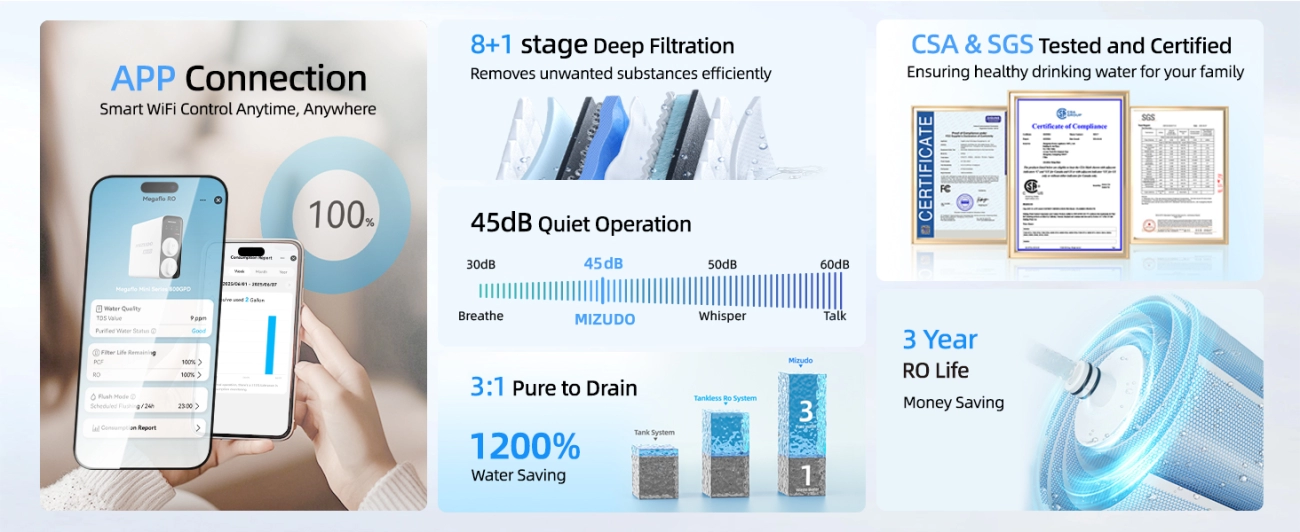
IoT water filter connectivity transforms the user experience from reactive to proactive. Instead of waiting for a beeping sound from under the sink or checking a physical digital RO interface, the board sends data directly to a smartphone app via Wi-Fi or Bluetooth. This integration offers several distinct advantages for the modern homeowner:
- Real-Time Visualization: Users can view input and output TDS levels instantly on their phones, verifying performance without needing a handheld meter.
- Remote Leak Alerts: If the leak detection sensor triggers, the board shuts the water off and sends an immediate push notification, preventing damage even when the homeowner is away.
- Precise Filter Tracking: The app displays the exact remaining percentage of filter life based on actual volume and water quality, removing the guesswork.
Data Analytics for Maintenance Prediction
Beyond simple monitoring, the smart board utilizes data analytics to predict maintenance needs. By analyzing daily usage patterns, flow rates, and pressure drops over time, the system acts as a diagnostic tool. It can identify if a membrane is fouling faster than expected due to poor feed water quality or if the pump is working too hard.
This connectivity also streamlines the ownership experience. The app can alert the user exactly when to order new cartridges, directly supporting the profitability of bundling branded replacement filters with the unit. This creates a seamless loop where the smart control board RO system ensures the hardware is always running at peak efficiency while simplifying the supply chain for the user.
Frequently Asked Questions About Smart RO Control Boards
What advantages does a smart control board provide in tankless RO systems?
Smart control board integration in tankless RO systems acts as the central nervous system of the unit. Unlike traditional mechanical systems, these boards handle high-pressure booster pump control and solenoid valve management with millisecond precision. This allows for the compact, tankless design by managing pressure on demand. For entrepreneurs looking to launch your own private label undersink RO brand, utilizing a robust control board is the key to delivering a reliable, low-maintenance product that stands out in the US market.
How does the board improve filter life management?
The RO controller PCB moves beyond simple timer-based guesses. It utilizes a filter life indicator algorithm that tracks actual water usage and run time. By monitoring the volume passing through the integrated waterway plate, the system tells the user exactly when to change cartridges based on real consumption. This prevents replacing filters too early (wasting money) or too late (risking water quality).
Can the smart board detect and prevent leaks?
Yes, safety is a primary function. The board is connected to a highly sensitive leak detection sensor usually placed at the base of the unit. If any moisture is detected, the intelligent water purification logic triggers an immediate shutdown. It cuts power to the pump and closes the inlet valve, preventing water damage to the kitchen cabinetry.
What role does the control board play in water efficiency?
The board is responsible for achieving the high-efficiency 2:1 pure-to-drain ratio. It uses automatic membrane flushing sequences to clean the membrane without wasting excess water. By dynamically adjusting the pump speed and valve timing based on real-time TDS monitoring, the system ensures you get the maximum amount of clean water for every gallon processed.
Is IoT connectivity available in current smart control boards?
Absolutely. Modern 600 GPD flow rate logic often includes IoT water filter connectivity. This allows the board to communicate with a mobile app, giving users a digital RO interface right on their smartphone. Homeowners can view water quality stats, receive leak alerts, and check filter status remotely. To ensure longevity in humid under-sink environments, these advanced boards are protected by conformal coating for electronics.