


















How Under-Sink RO Technology Actually Works
When we talk about an under-sink reverse osmosis water filter, we aren\’t just talking about a simple mesh screen. We are dealing with a precision-engineered system that uses residential water pressure to force water molecules through a semi-permeable membrane. This isn\’t about just catching visible dirt; it\’s about separating pure water from dissolved contaminants at a molecular level.
The Core Mechanism: Understanding 0.0001-Micron Accuracy
The heart of our system is the high-efficiency RO membrane. To give you a sense of scale, a human hair is about 75 microns wide. Our RO membranes feature a pore size of 0.0001 micron filtration. This is tight enough to block virtually everything except pure water molecules.
Bacteria, viruses, and dissolved salts are simply too large to pass through. This level of precision is why Total Dissolved Solids (TDS) reduction is so effective in these systems, turning tap water with high mineral content into pure, drinkable water.
The Filtration Process Breakdown
While traditional systems separated these steps into bulky individual canisters, modern tankless reverse osmosis systems often integrate these layers into composite filters (like our 5-in-1 composite filter) to save space without sacrificing performance. Here is how the purification journey looks inside the unit:
| Filtration Stage | Primary Function | Target Contaminants |
|---|---|---|
| Pre-Filtration | Physical Barrier | Sand, Rust, Suspended Solids |
| Carbon Block | Chemical Adsorption | Chlorine, VOCs, Odors |
| RO Membrane | Molecular Separation | Lead, Fluoride, Arsenic, Heavy Metals |
| Post-Carbon | Polishing | Residual Taste, Odor |
Pre-filtration: Removing Sediment and Rust
Before water ever hits the sensitive RO membrane, it must be prepped. The pre-filtration layer acts as the bodyguard for the system. It physically traps larger particles like rust, sand, and sediment that travel through aging city pipes. By catching these coarse contaminants early, we extend the lifespan of the more delicate internal components.
Carbon Block: Eliminating Chlorine and Odors
Once the sediment is gone, the water passes through an activated carbon block. This stage is crucial for heavy metal removal and chemical treatment. Carbon is incredibly effective at adsorbing chlorine and chloramines—chemicals commonly added by municipal water plants that can damage RO membranes and ruin the taste of your coffee. This step ensures the water is chemically neutral before the real work begins.
RO Membrane: The Defense Against Heavy Metals
This is where the magic happens. Water is pushed through the 0.0001 micron RO membrane flux. This stage handles the invisible threats. It strips away dissolved inorganic solids, including lead, arsenic, and fluoride. The \”waste\” water containing these concentrated contaminants is flushed away via the drain line, leaving only purified water to move forward.
Post-filtration and Remineralization Benefits
Pure RO water can sometimes taste \”flat\” because it is so clean. The final stage involves a post-carbon layer or a remineralization water filter stage (depending on the specific configuration). This \”polishes\” the water as it flows to the faucet, ensuring it tastes crisp and fresh rather than sterile. This step is vital for ensuring the water from your smart faucet with LED display is not just safe, but enjoyable to drink.
Tank vs. Tankless: The Modern Dilemma
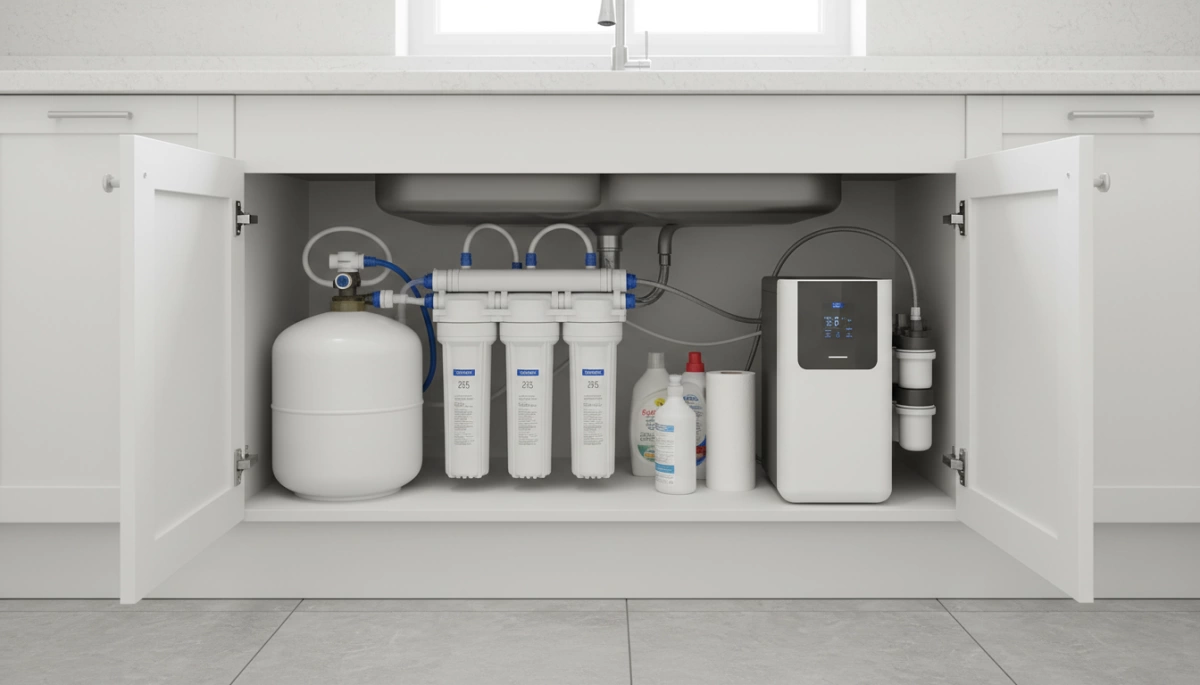
When you are looking to upgrade your kitchen water quality, the biggest hardware choice comes down to the delivery method: a traditional reservoir setup or a modern tankless reverse osmosis system. While both use membrane technology to clean your water, the user experience is drastically different.
Traditional Tank Systems: Pros and Cons
For decades, RO systems relied on large pressurized storage tanks. The filtration process was incredibly slow, so the system had to trickle purified water into a holding tank so it would be ready when you turned on the tap.
- The Upside: These systems are often cheaper upfront because they use less powerful pumps and simpler membranes.
- The Downside: The tank is a massive space hog, often dominating the entire under-sink cabinet. Worse, there is a risk of secondary pollution; water sitting in a rubber bladder for days can develop a stale taste or bacterial growth. Once you empty the tank, you are stuck waiting hours for it to refill.
Modern Tankless Systems: High Flow and Space Saving
We shifted our focus to tankless designs to solve the bulk and bacteria issues. By utilizing a high-efficiency RO membrane and an advanced internal pump, these units filter water in real-time.
- 70% More Space: With a tankless space-saving design, the unit is ultra-compact, leaving plenty of room for your cleaning supplies or garbage disposal.
- Instant Freshness: You are drinking water filtered the exact second you open the faucet, ensuring the highest purity without the water ever sitting stagnant.
Why the Market is Shifting to Tankless RO
Homeowners are moving away from tanks because we demand speed and efficiency. A system with a 600 GPD flow rate (Gallons Per Day) or higher allows you to fill a cup in mere seconds, matching the convenience of tap water with the purity of bottled water.
Beyond speed, the efficiency is unmatched. Traditional tanks often waste 3 to 4 gallons of water for every single gallon purified. Our modern tankless systems operate with a superior wastewater ratio of up to 2:1 (pure to drain). This means you get continuous clean water while significantly reducing your environmental footprint and water bill.
Key Features to Look for When Buying an Under-Sink RO
When selecting an under-sink reverse osmosis water filter, you need to look beyond the basic specs. The market has shifted from bulky, slow units to high-efficiency powerhouses. Here is what actually matters for your daily usage.
Flow Rate Explained: Why 600 GPD Matters
Speed is the biggest differentiator in modern filtration. We moved away from slow trickle systems to high-capacity engines. A 600 GPD flow rate (Gallons Per Day) means the system produces water in real-time, filling a standard cup in about 8 seconds. You get instant access to clean water without the stagnant storage tank found in older models.
Drain Ratio Efficiency: Saving Water and Bills
Older RO systems were notorious for wasting water, often dumping 4 gallons down the drain for every 1 gallon purified. We engineered our tankless reverse osmosis system to reverse this trend. With a wastewater ratio as efficient as 2:1 (two cups of pure water for every one cup of waste), you significantly reduce your environmental footprint and keep utility bills low.
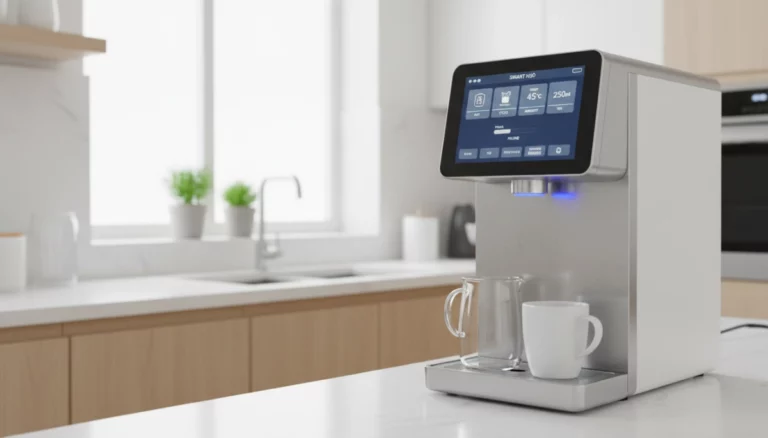
Smart Monitoring: Faucets with TDS Displays
Guesswork has no place in water purification. A smart faucet with LED display provides immediate visual feedback on your water quality. It monitors Total Dissolved Solids (TDS) reduction in real-time and alerts you exactly when the filter needs changing. This ensures you never drink from an expired filter.
Remineralization: Fixing the Flat Taste
Reverse osmosis is so effective at removing contaminants that it can sometimes leave water tasting \”flat\” by removing natural minerals. A quality remineralization water filter stage or post-carbon filter restores essential minerals like calcium and magnesium. Much like a high-quality charcoal water filter system polishes flavor, this final stage ensures your water tastes crisp and natural, not sterile.
| Feature | Old Tank Systems | Modern Tankless RO |
|---|---|---|
| Flow Rate | Slow (50-100 GPD) | High Flow (600-800 GPD) |
| Space Required | Bulky (Tank + Unit) | Compact (Save 70% Space) |
| Drain Ratio | 1:3 (High Waste) | 2:1 (High Efficiency) |
| Maintenance | Difficult, requires tools | 3-Second Twist-and-Pull |
Installation and Maintenance: It’s Easier Than You Think
Many homeowners hesitate to upgrade their kitchen water quality because they dread the installation process. I get it—messing with plumbing feels risky if you aren\’t a pro. However, we have engineered our under-sink reverse osmosis water filter systems specifically to eliminate that stress. We moved away from the chaotic tubing of traditional systems to create a streamlined, user-friendly experience that doesn\’t require a call to a plumber.
The DIY Factor: Integrated Waterway Manifolds
The biggest innovation here is the integrated waterway manifold. In older RO setups, you had a maze of tubes connecting various stages, which increased the risk of leaks and made the unit bulky. We consolidated those connections into a single, solid board. This design cuts down the number of connection points, significantly reducing the potential for water damage.
For the average DIY enthusiast, this means installation is straightforward. You are essentially connecting the input, the drain, and the faucet. Most of our customers get the system up and running in about 30 minutes. The compact design fits easily in standard US cabinets, leaving plenty of room for your cleaning supplies. While some renters might prefer countertop water filters to avoid any plumbing work, homeowners find that the permanent, hidden nature of an under-sink system provides a cleaner countertop aesthetic without a difficult setup.
Twist-and-Pull Filter Replacements
Maintenance is where the tankless design truly shines. We abandoned the heavy filter housings that required a wrench and significant elbow grease to open. Our systems utilize a twist-and-pull filter replacement mechanism that takes literally three seconds.
- No Water Shut-off Required: You don\’t need to crawl under the sink to turn off the main valve.
- Front-Loading Design: The filters are accessible from the front, so you don\’t have to drag the entire unit out of the cabinet.
- Tool-Free: Just twist the old filter out and snap the new one in.
The system automatically resets, and the smart faucet updates the filter life indicator immediately. It turns a chore into a momentary task.
Cost Analysis: Long-Lasting Filters vs. Pitchers
When you look at the upfront cost, an under-sink RO system is an investment, but the long-term math works in your favor. Standard water pitchers require filter changes every 1 to 2 months. Over a year, those costs add up, and you are often only getting basic filtration that doesn\’t tackle heavy metals or dissolved solids effectively.
In contrast, our RO membranes last up to 24 months, and the composite filters last between 6 to 12 months depending on your water quality. When you break down the cost per gallon, an under-sink system provides purified water for pennies, far cheaper than bottled water or frequent pitcher filter replacements. You get superior 0.0001-micron filtration accuracy and a high flow rate without the constant recurring costs of smaller, less efficient units.
Safety and Durability Standards
Certifications: NSF/ANSI and BPA-Free Materials
When it comes to something you drink every day, the materials inside your filter matter just as much as the filtration process itself. We prioritize health by constructing our systems with food-grade BPA-free materials. This ensures that once contaminants are removed, no new chemicals leach into your water from the plastic components. We strictly align with the NSF/ANSI 58 standard for reverse osmosis performance and material safety. Additionally, using lead-free faucets is a non-negotiable part of our design, guaranteeing that the health benefits of RO water are never compromised by the hardware delivering it.
Stress Testing: Water Hammer and Burst Pressure
A flooded kitchen is a homeowner\’s worst nightmare, which is why we engineer our integrated waterway manifold to withstand extreme conditions. Before any model launches, it undergoes rigorous stress testing to ensure it can handle the fluctuations of US residential plumbing.
- 100,000+ Water Hammer Cycle Tests: We simulate years of sudden pressure changes (like turning a faucet off quickly) to ensure the system won\’t crack over time.
- Hydrostatic Burst Pressure Safety: We push the pressure limits far beyond normal operating levels to guarantee the unit won\’t burst under stress.
These tests confirm that our tankless designs aren\’t just saving space; they are built to last.
FAQ: Common Questions About Under-Sink RO Systems
Does RO Remove Healthy Minerals?
Standard reverse osmosis is incredibly efficient at stripping water down to its purest form, which means it does remove dissolved solids, including beneficial minerals like calcium and magnesium. This can sometimes leave water tasting slightly flat or acidic. However, we address this in modern designs by using composite filters or post-filtration stages. A high-quality remineralization water filter setup adds these healthy minerals back in right before the water leaves the faucet, balancing the pH and improving the taste so you get the purity of RO with the mouthfeel of natural spring water.
Are Tankless RO Systems Noisy?
Because a tankless reverse osmosis system relies on an internal booster pump to push water through the fine RO membrane instantly, there is some operational sound. However, it is not disruptive. You will hear a low hum—similar to a quiet refrigerator or a running laptop fan—only while you are actually dispensing water. Once you turn off the faucet, the system goes silent immediately. Unlike older tank systems that might vibrate or hum for an hour while refilling a storage tank, tankless models only make noise for the few seconds you are filling your cup.
Can I Install RO with a Garbage Disposal?
Absolutely. Space constraints under the sink are the main reason homeowners hesitate to upgrade, but our compact design solves this. Since we eliminated the bulky storage tank, the unit has a footprint roughly the size of a small computer tower. This leaves plenty of room to install the under-sink reverse osmosis water filter alongside a standard garbage disposal and still have space left over for your cleaning supplies. The integrated waterway manifold minimizes tubing, keeping the cabinet organized and clutter-free.
Does Reverse Osmosis Remove PFAS?
Yes, reverse osmosis is currently one of the most effective technologies for removing per- and polyfluoroalkyl substances (PFAS), often called \”forever chemicals.\” The 0.0001-micron filtration accuracy of the RO membrane acts as a formidable barrier against these microscopic contaminants. By using a PFAS removal water filter mechanism inherent in the RO process, these harmful chemicals are separated from the water molecules and flushed away with the wastewater, ensuring the water you cook with and drink is safe for your family. For those looking to discover the benefits of smart water purifiers, consistent removal of emerging contaminants like PFAS is a major advantage.