













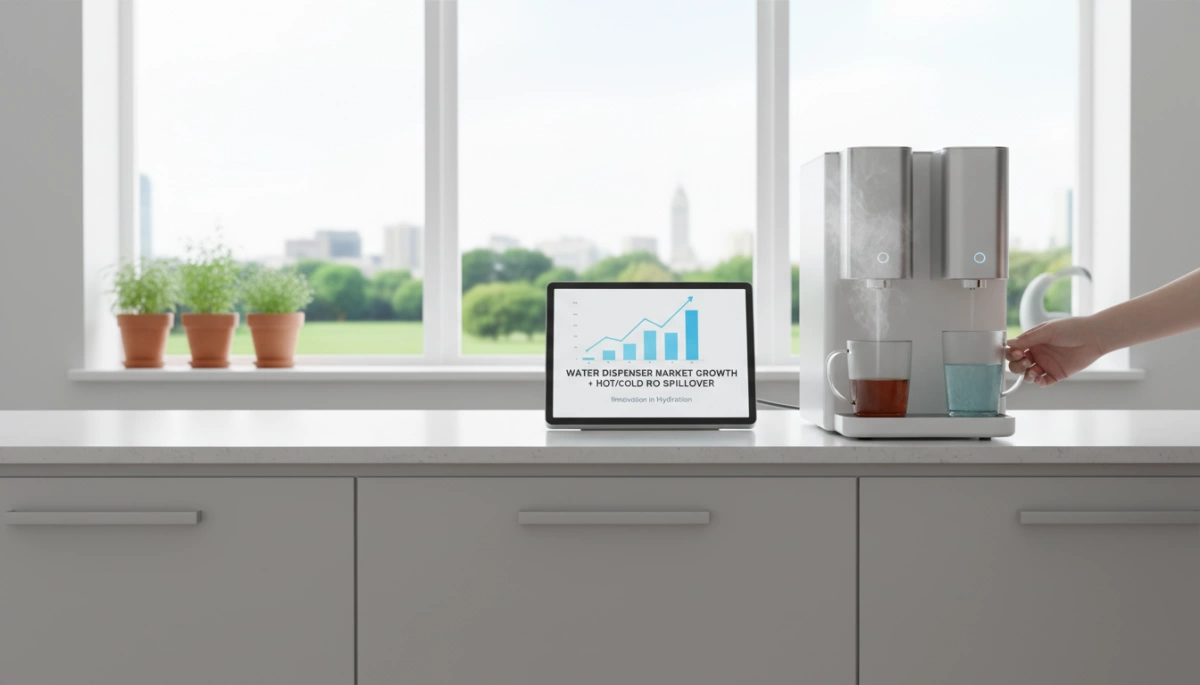
Water Dispenser Market Growth Overview
If you sell, distribute, or spec water systems today, you’re already feeling how quickly the water dispenser market is shifting. Health-conscious consumers, hybrid offices, and tighter sustainability goals are driving strong water dispenser market growth and pushing demand toward smarter, cleaner, and more compact systems.
Global Market Size and Growth
The global water dispenser market is on a clear upward trend:
- Market value already in the multi‑billion‑dollar range and expanding steadily
- Healthy CAGR driven by upgrades from basic coolers to hot and cold water dispenser and RO integrated water dispenser solutions
- Strong momentum in both residential RO water dispenser and commercial RO water dispenser segments
For most B2B buyers, the signal is simple: this category is no longer “nice to have”—it’s becoming a standard infrastructure item in homes, offices, and public spaces.
Segment Breakdown: From Floor-Standing to RO-Integrated
Inside the overall water dispenser market size, we see clear shifts across product types:
- Floor-standing dispensers: Still large in volume, especially in offices and public areas
- Countertop water dispensers: Fastest share gain, driven by the compact countertop water dispenser and kitchen countertop water filtration system trend
- Point of use (POU) systems: Strong point of use water dispenser growth as users move away from jug-based coolers
- Bottleless water coolers: The bottleless water cooler market is expanding as companies cut plastic and logistics costs
- RO integrated water dispenser units: Rapid adoption of RO water purifier with hot and cold function, merging purification and dispensing into one all in one water purification dispenser
The biggest crossover demand now sits where water purification dispenser convergence happens: multi-stage filtration plus instant hot cold water appliance performance in compact, plug-in form factors.
Regional Demand Patterns
Demand looks different by region, but the direction is the same—up:
- Asia-Pacific: Leads in volume, with strong growth in bottleless hot cold RO system and hybrid RO hot/cold countertop systems for dense urban markets
- North America: Focus on home hydration solutions, office water dispenser system upgrades, and premium smart hot cold water dispenser models
- Europe: Strong environmental drivers and adoption of sustainable water dispensing solutions and low-energy systems
- Emerging markets: Fast catch-up with direct jumps from bottled water to POU appliance market solutions
For brands and distributors, regional portfolios now need both basic dispensers and advanced reverse osmosis hot cold dispenser SKUs.
Core Market Drivers
Several powerful forces are sustaining hot and cold water dispenser market growth:
- Health & hygiene: Rising concern over tap water safety boosts consumer demand for purified hot cold water
- Urbanization: Smaller living spaces push demand for the compact countertop water dispenser and multi temperature water dispenser solutions
- Shift from bottled water: Cost, convenience, and environmental pressure are moving users from single-use bottles to bottleless hot cold RO system and POU solutions
- Convenience: People want instant boiling and chilled water system performance for everyday use, not just “cold water only” coolers
These drivers are not cyclical—they’re structural, which means the category has long-term tailwinds.
Post-Pandemic Habit Shifts
Post‑COVID behaviors changed how people think about water access:
- Offices and public spaces prefer touchless water dispenser technology and easy-to-clean surfaces
- Households invest more in at‑home home hydration solutions for tea, coffee, instant meals, and baby formula
- Facility managers favor bottleless water cooler and POU models to cut delivery traffic and shared handling
The result is accelerated dispenser replacement with RO purifier systems and a clear POU appliance market convergence—traditional coolers are steadily replaced by multi-stage RO filtration system dispensers with precise hot, cold, and ambient output.
Hot and Cold Water Dispenser Market Trends
In the U.S., the hot and cold water dispenser market is shifting fast as homes and offices move toward smarter, cleaner, and more compact hydration solutions.
Multi temperature water dispenser demand
Users don’t just want cold water anymore. They want hot, cold, and ambient from one unit so they can:
- Brew coffee or tea instantly
- Prep instant meals or oatmeal
- Fill water bottles with perfectly chilled water
- Get room-temp water for kids or medication
This multi temperature water dispenser trend is now standard expectation, not a premium extra.
Instant hot cold water appliance growth
The instant hot cold water appliance market is growing in both households and offices because people want:
- On-demand boiling and chilled water
- Faster drink prep without waiting on kettles or fridges
- Cleaner, better-tasting water than tap or pitcher filters
For many U.S. offices, upgrading the office water dispenser system with instant hot/cold is now part of basic employee benefits, not a luxury.
Smart, touchless, and energy-saving features
Modern smart hot cold water dispenser designs are adding:
- Touchless controls (sensor or pedal) to cut germ transfer
- IoT monitoring for filter status, leak alerts, and usage data
- Energy saving modes and scheduling to cut power costs
These features matter especially in shared spaces like coworking offices, schools, and clinics where hygiene and utility costs are under the microscope.
Bottleless hot cold RO system and sustainability
The move to a bottleless hot cold RO system is driven by two big factors:
- Lower plastic waste – replacing 3–5 gallon jugs and single-use bottles
- Lower long-term cost – no more delivery contracts or heavy bottle handling
This is pushing strong point of use water dispenser growth, especially in U.S. companies with ESG goals and families trying to ditch single-use plastics in the kitchen.
Compact, countertop-friendly design evolution
Design is getting cleaner and smaller. The market is clearly moving toward:
- Compact countertop water dispenser units instead of bulky floor-standing coolers
- Minimalist, neutral finishes that fit modern U.S. kitchens and open-plan offices
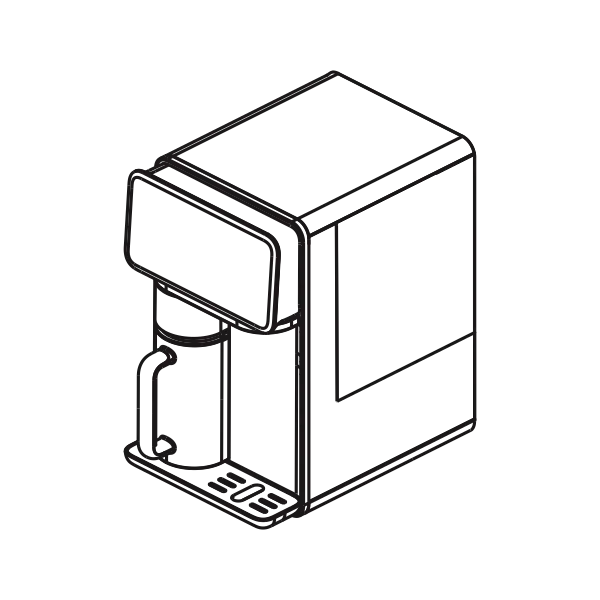
- All-in-one units that combine filtration, hot, cold, and ambient in a small footprint
You can see this shift in next-gen products like a 3-in-1 countertop RO cold and hot water purifier, which packs multi-stage filtration and instant temperature control into a small, stylish form factor that actually looks good on the counter. For a deeper look at how countertop systems are replacing old-school coolers, I’ve broken down the trend in this overview of the countertop RO alternative to traditional water dispensers (https://driplifecorp.com/cooling-water-trend-countertop-ro-as-an-alternative-to-traditional-water-dispensers/).
Countertop RO Water Dispenser Segment
Why Countertop Water Dispenser Systems Are Gaining Share vs Floor-Standing
In the U.S., the water dispenser market growth is clearly tilting toward compact, countertop systems. As more people live in apartments, condos, and smaller homes, floor space is tight, and a full-size floor-standing cooler just isn’t practical. At the same time, offices are downsizing and shifting to flexible workspaces, which makes bulky bottle coolers less attractive.
Countertop water dispenser systems solve this by:
- Fitting easily on standard kitchen counters or office pantries
- Connecting directly to the water line as a point of use (POU) water dispenser
- Delivering the same or better performance than traditional floor-standing units
This shift is also fueled by dispenser replacement with RO purifier systems, as businesses and homeowners move away from simple coolers toward RO integrated water dispenser solutions that actually purify the water, not just chill or heat it.
Advantages of Countertop RO Water Purifier With Hot Cold Functions
A countertop RO water purifier with hot cold functions is quickly becoming the “all-in-one” home hydration solution in the U.S. Instead of separate products (pitcher filter, kettle, bottled water, office cooler), a single compact countertop water dispenser handles everything.
Key advantages:
- Instant hot and cold: Multi temperature water dispenser output (hot, cold, ambient) for coffee, tea, instant meals, and daily hydration
- Real purification: Multi-stage RO filtration removes dissolved solids, heavy metals, and off-tastes, similar to what you’d expect from dedicated RO systems that focus on issues like lead removal and chemical reduction.
- Better taste and safety: Cleaner, better-tasting water that supports everyday use, from baby formula to cooking
- Bottleless convenience: No more lifting heavy jugs or scheduling bottle deliveries
For U.S. customers used to high-performance kitchen gadgets, a hot and cold RO water purifier feels like a natural upgrade from basic filters or bottled water.
Space-Saving Benefits for Small Kitchens, Offices, and Apartments
Space is a real decision driver. Countertop RO hot cold dispensers are built for compact living and modern U.S. layouts:
- Small footprint: Fits on a corner of the counter, sideboard, or breakroom shelf
- No dedicated floor space: Ideal for small offices, coworking spaces, and clinics
- Apartment-friendly: Works great in rental units where drilling or permanent plumbing changes are limited
- Declutters the kitchen: Replaces multiple items (kettle, pitcher filter, bottled water rack) with one compact countertop water dispenser
This makes countertop systems a go-to choice for young professionals, small families, and remote workers who want a premium hydration setup without crowding their space.
Ease of Installation and Maintenance for POU Countertop Systems
POU appliance market trends in the U.S. show strong demand for plug-and-play setups. Countertop RO systems respond to that with:
- Simple install:
- Quick connection to the cold-water line or even just a refillable tank (depending on model)
- No need for complex under-sink plumbing in many cases
- Easy filter changes:
- Front or side access cartridges
- Tool-free replacement that homeowners can manage themselves
- Smart reminders:
- Filter life indicators and alerts on smart hot cold water dispenser models
- Integration with IoT or app notifications for maintenance schedules
This low-friction experience is a major reason point of use water dispenser growth is accelerating, especially among users who don’t want to deal with service visits just to keep their system running.
Market Forecast for Countertop Water Dispenser and RO Segments
The hot and cold water dispenser market growth is increasingly driven by countertop and RO segments rather than legacy bottled coolers. Over the next several years, industry data and on-the-ground distributor feedback point to:
- Faster growth in countertop vs floor-standing units, especially in residential and small-office environments
- Stronger adoption of RO integrated water dispenser products, driven by rising awareness of tap water quality and interest in advanced filtration, including concerns about contaminants like fluoride and other dissolved solids often addressed by specialized filtration systems.
- Category convergence:
- Hybrid RO hot/cold countertop systems replacing basic dispensers
- Distributors repositioning from “water cooler suppliers” to “home and office hydration solution providers”
As U.S. consumers demand purified hot cold water and bottleless hot cold RO systems for sustainability and convenience, the countertop RO water dispenser market forecast points to this segment taking a larger share of overall water dispenser market growth, reshaping how both brands and distributors build their product lineups.
RO Technology in Hot/Cold Dispensers
Reverse osmosis hot cold dispenser trends
In the U.S., I see reverse osmosis hot cold dispensers moving fast from “nice to have” to “must have” in both homes and offices. People want one compact unit that:
- Filters city or well water reliably
- Delivers instant hot, cold, and ambient water
- Cuts out bottled water and jugs completely
Residential demand is driven by families wanting safer water at the tap, while commercial RO water dispensers are replacing old-school bottled coolers in offices, clinics, and coworking spaces.
How RO integrated water dispenser designs improve filtration
When you build the RO system directly into the dispenser, you get tighter control over water quality and user experience:
- Optimized flow path for better contact with filters
- Stable TDS control for more consistent taste
- Cleaner internal plumbing and reduced contamination risk
- Compact layout for kitchen countertop water filtration systems
This is a big upgrade over basic coolers that only chill/heat already-filtered or bottled water.
Multi-stage RO: RO + UV + carbon + sediment
Most serious RO integrated water dispenser designs now use a full multi-stage setup, for example:
| Stage | What it does |
|---|---|
| Sediment filter | Traps sand, rust, dirt, visible particles |
| Carbon filter | Reduces chlorine, odors, and bad taste |
| RO membrane | Removes dissolved solids, heavy metals, nitrates |
| UV / final polish | Targets microbes & fine-tunes taste |
Using RO with a final carbon “polish” is key to better flavor and user satisfaction; it’s the same logic I use when we talk about why RO needs a final polishing filter for taste.
Core benefits of RO: what it actually removes
A strong RO water purifier with hot and cold function tackles what regular filters can’t:
- Heavy metals: lead, arsenic, chromium, etc.
- High TDS: scale-forming minerals that ruin kettles and coffee gear
- Microbes: many bacteria, some viruses (especially when combined with UV)
- Chemical residues: some pesticides and industrial pollutants
For U.S. cities with high TDS source water, RO-based systems, and in some cases dual-membrane RO solutions, give users a clear, measurable upgrade in safety and taste.
Energy efficient hot cold dispenser design with RO
The winning energy efficient hot cold dispenser designs balance performance with low operating cost:
- Instant heating / on-demand boiling instead of keeping a big tank hot all day
- Smart chillers and ECO modes for off-hours (nights, weekends in offices)
- High-density insulation around hot and cold tanks
- Adaptive sleep mode based on usage patterns (via simple sensors or IoT)
- Right-sized RO pump to cut power use while keeping decent flow rate
For U.S. homeowners and offices watching energy bills, these efficiencies are now a major part of the buying decision—not just a “nice feature” on the spec sheet.
Spillover From Traditional Water Dispensers to RO Countertop Systems
The big shift I’m seeing in the water dispenser market is a clear spillover from basic coolers to RO countertop systems. Instead of choosing between “just a dispenser” or a separate purifier, U.S. buyers now expect all-in-one water purification dispensers that chill, heat, and clean water in one compact unit. That’s driving strong water purification dispenser convergence across product categories.
Dispenser replacement with RO purifier
This is where the market mix is changing fast:
- Offices and homes are replacing old bottled-water coolers with RO integrated water dispenser units that hook directly to the main line.
- Every time a legacy dispenser reaches end of life, there’s a strong push to upgrade to a countertop RO water purifier with hot cold functions instead of another basic cooler.
- This dispenser replacement with RO purifier is expanding the total market for purification, not just shifting share between brands.
Category blending and POU growth
The lines between categories are blurring:
- “Water cooler,” “RO purifier,” and “kitchen appliance” are merging into one hybrid RO hot/cold countertop system.
- We’re seeing strong point of use water dispenser growth, especially in U.S. kitchens, small offices, clinics, and coworking spaces where people want purified hot and cold water instantly.
- Bottleless hot cold RO systems are becoming the default choice where people want to cut delivery costs and storage and reduce plastic waste.
From bottled-water coolers to hybrid RO hot/cold countertop systems
This shift hits product positioning directly:
- Basic dispensers are now seen as entry-level; multi temperature water dispensers with RO are becoming the “standard” mid- to high-end option.
- Buyers compare systems on purification performance, convenience, and hygiene, not just cold vs hot output.
- Hybrid RO hot/cold countertop systems sit at the center of the modern kitchen and office hydration setup, often paired with other filtered fixtures like a kitchen faucet with integrated filtration.
In this spillover wave, the winners are the brands that treat hot/cold RO countertop dispensers as the new core category—not an add-on—positioning them as compact, bottleless, instant-temperature water hubs for daily life.
Consumer Behavior and Lifestyle Drivers
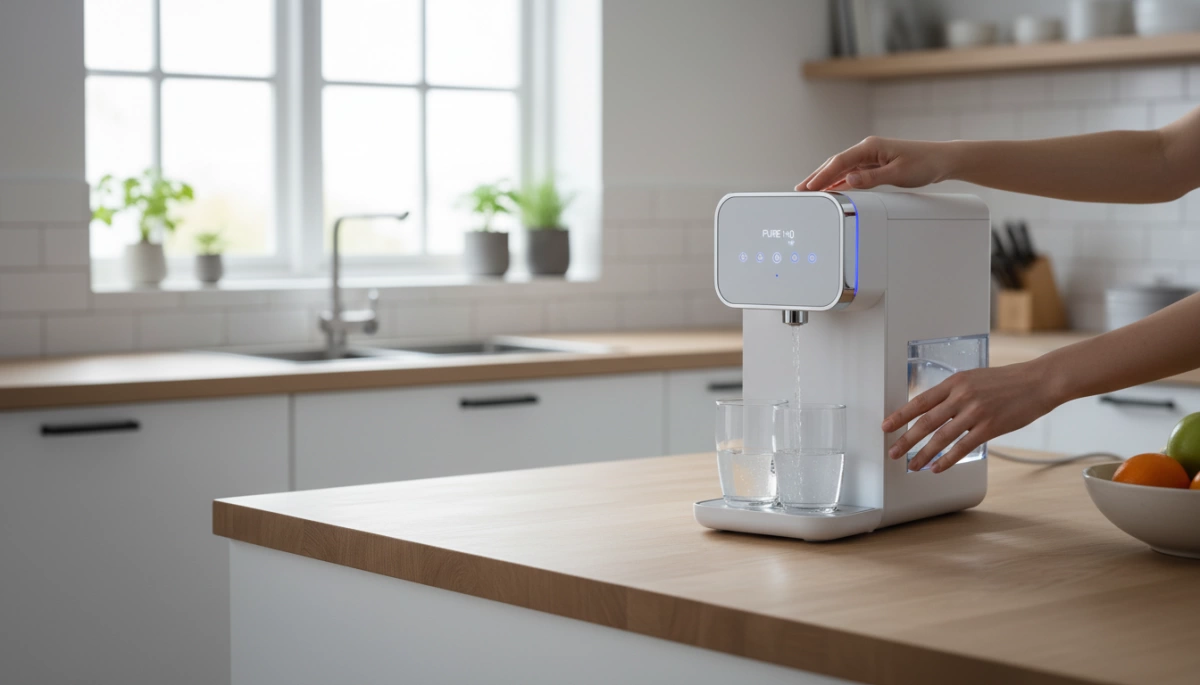
Urban water solution trends and compact living
In the U.S., more people are living in apartments, condos, and smaller homes, so compact countertop water dispensers and POU hot and cold RO systems are winning over bulky floor units. Consumers want:
- Slim, compact countertop water dispensers that fit between cabinets and appliances
- Plug‑and‑play, tankless designs that don’t require major plumbing work
- Quiet, clean-looking units that match modern kitchens and home offices
Everyday demand for purified hot and cold water
Daily habits are driving consumer demand for purified hot cold water on demand. Instead of waiting for a kettle or using the fridge, users want instant hot cold water appliances that deliver:
- Near‑boiling water for tea, pour-over coffee, instant noodles, and oatmeal
- Chilled water for all‑day hydration and flavored water
- Safe, filtered warm water for baby formula and kids’ drinks
A countertop RO water purifier with hot cold functions turns the dispenser into a daily-use appliance, not just an occasional cooler.
Real-world use cases
Most U.S. customers use multi temperature water dispensers for:
- Morning coffee and tea without a separate kettle
- Instant meals and late‑night snacks
- Baby formula at a precise temperature
- Fitness and hydration throughout the workday
- Quick hot water for cleaning bottles and utensils
This “all‑in‑one” usage pattern is why hybrid RO hot/cold countertop systems are replacing basic coolers in many homes and small offices. For a quick overview of typical desktop use cases and features, I walk through them in this guide to top desktop water dispensers and their benefits.
Sustainability and plastic reduction
Sustainability isn’t just a buzzword anymore. U.S. families and offices are actively moving from bottled water to bottleless hot cold RO systems to:
- Cut single-use plastic bottles and 5‑gallon jug deliveries
- Lower long-term water costs versus case packs from Costco or grocery stores
- Reduce storage clutter from bottled water and jugs
A bottleless water cooler with RO and hot/cold functions gives them a clear eco and cost upgrade.
Price sensitivity and upgrade triggers
Consumers are price-aware, but not always price-first. They’re willing to pay more when they see perceived value in:
- Multi‑stage RO filtration and better taste
- Multi temperature options (hot/cold/ambient) in one compact unit
- Energy efficient hot cold dispensers with sleep modes and smart controls
- Longer filter life and simple DIY filter changes
Key upgrade triggers across regions include:
- New home or kitchen remodel
- New baby in the family (safety and convenience become critical)
- Switching from bottled water delivery to point of use water dispenser growth solutions
- Moving to remote work and wanting a home “office water dispenser system”
In short, U.S. buyers want instant, purified hot and cold water, less plastic, and more counter space—at a price that feels fair over the 3–5 year life of the appliance.
POU Appliance Market Trends and Ecosystem
POU appliance market trends in offices, schools, and hospitality
Across U.S. offices, schools, and hospitality spaces, point of use (POU) water dispenser market growth is shifting hard toward bottleless, hot and cold water dispenser systems. Facility managers want:
- Lower operating costs vs. 5-gallon bottles
- Consistent water quality with RO or multi-stage filtration
- Instant hot and cold water for coffee corners, staff kitchens, and guest areas
- Touchless water dispenser technology for better hygiene
This is driving strong point of use water dispenser growth and a clear move from basic coolers to hybrid RO hot/cold countertop systems that fit tight break rooms and pantries.
Integration with kitchen and smart home ecosystems
POU systems are becoming part of a wider kitchen countertop water filtration system and smart home setup:
- Built-in or under-cabinet options paired with a compact countertop water dispenser
- Wi-Fi or app-based monitoring for filter life, usage, and energy modes
- Integration with office and home energy management to schedule energy efficient hot cold dispenser operation
For home users, a smart hot cold water dispenser now sits next to the coffee machine and air fryer as a core home hydration solution.
Service models: rental, subscription, maintenance
In the U.S., the strongest growth is in service-based POU appliance models:
- Rental or lease programs for offices and hospitality
- Subscription plans that bundle cartridges, filter swaps, and sanitization
- Maintenance contracts for commercial RO water dispenser fleets
This “water-as-a-service” model makes upgrades from basic dispensers to RO integrated water dispenser units a low-friction decision for both small businesses and large enterprises.
Regulations, standards, and certifications
To win in this space, systems must align with U.S. water quality standards and certifications:
- NSF/ANSI certifications for materials and performance
- Compliance with local plumbing and building codes
- Attention to hygiene design—features like autoflush technology to reduce fouling and odors (as used in Driplife’s auto-flush filtration systems)
These standards directly shape purchasing decisions for schools and hospitality brands that can’t risk quality issues.
Competitive dynamics and OEM/ODM ecosystem
Competition is heating up between:
- Global brands pushing premium multi temperature water dispenser lines
- Agile China water dispenser manufacturer and OEM RO water dispenser supplier partners that build private-label systems for U.S. distributors
- Local service companies bundling installation, rental, and maintenance
As the POU appliance market trends toward water purification dispenser convergence, brands that control both product design and OEM/ODM supply can quickly launch all in one water purification dispenser lines tailored to U.S. office, school, and hospitality needs.
Opportunities for Manufacturers and Brands in Hot/Cold RO Countertop Systems
Product Innovation in Hot/Cold RO Countertop Systems
In the U.S., I see huge upside in smarter, cleaner, and more compact hot and cold RO countertop systems. The biggest wins come from:
- Multi temperature water dispenser setups: instant boiling, chilled, and ambient in one unit.
- All-in-one RO water purification dispenser: filtration + storage + heating/cooling in a single compact chassis.
- Instant hot cold water appliance performance: 10–15 seconds to hot water, fast-chill recovery for busy kitchens and offices.
- Bottleless hot cold RO system designs that plug directly into the line and remove the need for bottled delivery.
U.S. customers want fewer appliances on the counter, faster access to safe water, and less bottled water waste. If a unit can handle coffee, tea, instant meals, and kids’ water bottles all day, it wins.
Differentiation: Filtration, Design, Energy
To stand out in the hot and cold water dispenser market growth wave, I focus on three levers:
1. Filtration performance (RO + multi-stage)
- Use multi-stage RO filtration (sediment, carbon, RO, and polish filters).
- Promote specific outcomes: removal of heavy metals, PFAS, chlorine taste, microplastics, and microbes.
- Explain media choices simply. For example, our use of advanced carbon filter media builds on the kind of adsorption logic described in this breakdown of carbon fiber filter media structure and adsorption.
- Certify to NSF/ANSI standards relevant to U.S. users.
2. Design and user experience
- Compact countertop water dispenser form factor that fits under cabinets.
- Neutral colorways (white, black, stainless) and low-noise operation for open kitchens and home offices.
- Simple digital interface, touchless or low-contact controls, and visible filter-life indicators.
3. Energy efficient hot cold dispenser design
- Efficient compressors and tankless heating to cut standby loss.
- Eco/sleep mode, schedule-based heating, and vacation mode.
- Clear annual kWh estimates so buyers can compare to kettles and mini fridges.
Customization for Distributors and Private Labels
For distributors and private label partners, hot and cold RO countertop systems are a flexible platform. I usually structure customization like this:
| Custom Area | What We Can Tune for You |
|---|---|
| Filtration Stack | RO only, RO + UV, RO + alkaline, mineralization options |
| Temperature Options | Hot/cold, hot/cold/ambient, baby-formula presets |
| Design & Branding | Logo, housing color, interface language, packaging |
| Smart Features | Wi-Fi, app control, filter alerts, usage analytics |
| Compliance Set | UL/ETL, FCC, NSF-style requirements per target market |
This flexibility lets a distributor position the same core RO integrated water dispenser differently for warehouse offices, apartment amenity spaces, or retail big-box channels.
Data-Driven Design With Usage Analytics and IoT
Smart hot cold water dispensers with IoT connectivity open up a new layer of product improvement and service revenue:
Usage analytics:
- Time-of-day demand (morning hot water spikes, afternoon cold water peaks).
- Hot vs. cold vs. ambient usage ratios by site type (office vs. home vs. hotel lobby).
- Real-life filter life vs. theoretical specs.
Service optimization:
- Predictive filter replacement instead of fixed time-based swaps.
- Remote troubleshooting and firmware updates.
- Fleet dashboards for POU water dispenser growth in offices and schools.
Design feedback loop:
- If we see 80% usage in cold mode, next-gen models can scale up chilling performance.
- If touchless usage is highest, we can prioritize sensor reliability and hygiene-driven UX.
Risks, Barriers to Entry, and After-Sales Logistics
The hot and cold water dispenser market is attractive, but not easy. The biggest risks I plan around:
Barriers to entry
- Certification costs and timelines for U.S. electrical, plumbing, and materials safety.
- Strong incumbents in the bottleless water cooler market and office POU contracts.
- Technical complexity of integrating RO, heating, cooling, and smart controls in a compact body.
Operational and logistics risks
- Filter logistics:
- Filters must be affordable, easy to replace, and always in stock.
- Clear labeling and standardized cartridges so users don’t get confused.
- After-sales service:
- U.S.-based support, replacement units, and fast responses for leaks or sensor issues.
- Warranty structures that match the reality of compressor and heater lifecycles.
How I manage them
- Design for tool-free filter replacement and front-loading access.
- Offer subscription-based filter plans so users never run out.
- Keep a tight SKU lineup so spare parts and training stay simple.
- Build content that educates consumers on basic maintenance, just like we do for faucet water filter systems and their benefits.
Manufacturers and brands that nail filtration performance, compact design, dependable energy efficiency, and rock-solid after-sales support will capture the spillover from traditional dispensers into hybrid RO hot/cold countertop systems and lead the next phase of water dispenser market growth in the U.S.
Future Outlook for Hot/Cold RO Countertop Systems
Looking ahead to 2030 and beyond, I see water dispenser market growth shifting heavily toward hot/cold RO countertop systems, especially in the U.S. where space, convenience, and health are driving most buying decisions.
Long-Term Water Dispenser Market Growth Through 2030
By 2030, the global hot and cold water dispenser market size is expected to be dominated by:
- Point of use (POU) water dispenser growth instead of bottled coolers
- Strong double‑digit growth in countertop RO water purifier with hot cold functions
- Higher adoption in U.S. homes, small offices, clinics, and coworking spaces
More households want a single home hydration solution that handles filtration plus instant hot and cold water. That’s exactly where hybrid RO hot/cold countertop systems win.
Penetration of RO Integrated Water Dispensers
The share of RO integrated water dispenser products will keep climbing as tap water concerns and taste issues grow across U.S. cities. Users are moving from basic dispensers to all in one water purification dispenser solutions that:
- Replace separate filter pitchers, kettles, and bottled water
- Deliver instant boiling and chilled water at the counter
- Use multi-stage RO filtration systems to remove dissolved solids, heavy metals, and microbes
As more consumers understand the value of high‑performance removal of bacteria and microbes in daily drinking water, adoption of RO-based systems will accelerate, especially in metro areas with older plumbing and variable water quality.
Smart, Connected, and Eco-Efficient Demand
Future winners in this space will be smart hot cold water dispensers that are:
- Connected: App monitoring, filter life alerts, usage insights, leak detection
- Touchless: Sensor or tap-to-dispense options for better hygiene
- Energy efficient: Smarter heating/cooling logic and standby modes to minimize power draw
Energy-efficient hot cold dispenser design will be mandatory, not optional. U.S. customers are watching power bills and expect savings without sacrificing performance. At the same time, sustainable water dispensing solutions that cut plastic and waste will be a baseline expectation.
How Countertop RO Systems Change Replacement Cycles
Once users switch to a compact countertop water dispenser with RO, their upgrade pattern changes:
- They hold onto the core unit longer
- They replace filters on a regular schedule
- They only swap the appliance when new tech (better efficiency, faster heating, smarter controls) justifies it
This shifts the market from a simple “buy and forget” dispenser to a service-like POU appliance with recurring filter logistics and maintenance. Brands that manage filter subscription models and easy DIY replacement will lock in long-term customers.
For context, understanding real-world daily water usage capacity and how people actually consume purified water at home helps fine-tune system sizes and filter cycles, which is crucial for planning future product lines and service models (daily water usage capacity insights).
Strategic Moves to Capture the Spillover Growth Wave
To ride the crossover demand from traditional dispensers to countertop RO hot cold units, brands should:
- Focus on category convergence: Design systems that act as dispenser + purifier + instant hot/cold appliance
- Dominate the countertop segment: Prioritize slim, kitchen‑friendly, plug‑and‑play designs for U.S. homes and small offices
- Lead with health and safety: Highlight 99.99% microbial removal performance and strong contaminant reduction to build trust
- Build recurring revenue: Offer filter subscriptions, rental, and hybrid ownership models for homes and offices
- Partner smart: Work with distributors, installers, and OEM/ODM suppliers that can localize features and certifications for the U.S. market
As dispenser replacement with RO purifier speeds up, the brands that move fast into multi temperature water dispenser designs—hot, cold, and ambient—with strong RO at the core will capture most of the spillover growth and become the default choice for modern kitchens and workspaces.
Driplife Positioning in the Water Dispenser Market
How Driplife Fits the Hot/Cold RO Countertop System Trend
I position Driplife squarely in the center of the hot and cold water dispenser market growth and the shift toward countertop RO water purifier with hot cold functions. The US market is moving fast toward compact countertop water dispensers that deliver purified, instant-temperature water at home and in small offices, and that’s exactly the lane Driplife is built for. Our roadmap is aligned with the crossover demand from basic coolers to hybrid RO hot/cold countertop systems, especially as more US households move away from bottled water and traditional jug coolers.
Core Strengths: RO Integration, Multi-Temperature, Energy Efficiency
Driplife’s core product strategy is simple:
Deep RO integration
Every flagship model is built around a multi-stage RO filtration system with optional UV and carbon, designed to hit US expectations for taste, safety, and TDS control. Our RO integrated water dispenser designs target both residential RO water dispenser and light commercial RO water dispenser usage.Multi temperature water dispenser design
We focus on instant hot, cold, and ambient delivery for real-world use cases: coffee, tea, instant meals, baby formula, and daily hydration. That’s where US consumers feel the upgrade from a basic dispenser to a RO water purifier with hot and cold function.Energy efficient hot cold dispenser engineering
Compressors, tanks, and control logic are tuned for energy efficient hot cold dispensers, with sleep modes and intelligent heating/cooling cycles. Our countertop series, including the family cold drinking water solution with countertop cooling RO systems, is optimized for US kitchen and office duty cycles.
OEM/ODM Capabilities for Global Distributors and Partners
As a China water dispenser manufacturer and OEM RO water dispenser supplier, Driplife is built for partners:
- Full OEM/ODM support for hot and cold RO countertop systems
- Private-label branding, custom colors, and UI layouts
- Tailored capacity (GPD), tank size, and temperature profiles for different channels (retail, office, hospitality)
For US distributors looking to lock in territory, we share clear playbooks on topics like how to negotiate exclusive distribution rights with RO factories, which we cover in detail in our guide on structuring OEM/ODM RO partnerships for distributors.
Market-Specific Customization and Compliance
The US market has specific needs around NSF-style performance expectations, safety, and plumbing compatibility. I position Driplife systems to support:
- Market-specific filtration stacks (e.g., extra carbon for chloramine-heavy cities)
- Power specs and plug types for North America
- Compliance-ready designs to support local certification pathways and water quality standards
This lets distributors bring in point of use water dispensers that are ready to plug into US POU appliance market trends without redesign from scratch.
Helping Brands Ride the Purifier–Dispenser Convergence
The biggest shift right now is water purification dispenser convergence: the move from simple dispensers to all in one water purification dispensers with RO, heating, and cooling in one compact shell. I position Driplife as the backend engine that helps brands:
- Upgrade from bottleless water cooler lines to bottleless hot cold RO systems
- Replace aging office water dispenser systems with smart home and office hydration solutions
- Launch smart hot cold water dispensers with app control, TDS display, and usage tracking, leveraging our IoT-ready platforms outlined in our overview of smart features trends in countertop RO systems.
By aligning product design with consumer demand for purified hot cold water and the countertop dispenser market trend, Driplife gives US brands a fast, low-friction way to tap into the spillover growth from traditional water dispensers into hot/cold RO countertop systems—without having to build the technology stack from zero.