
















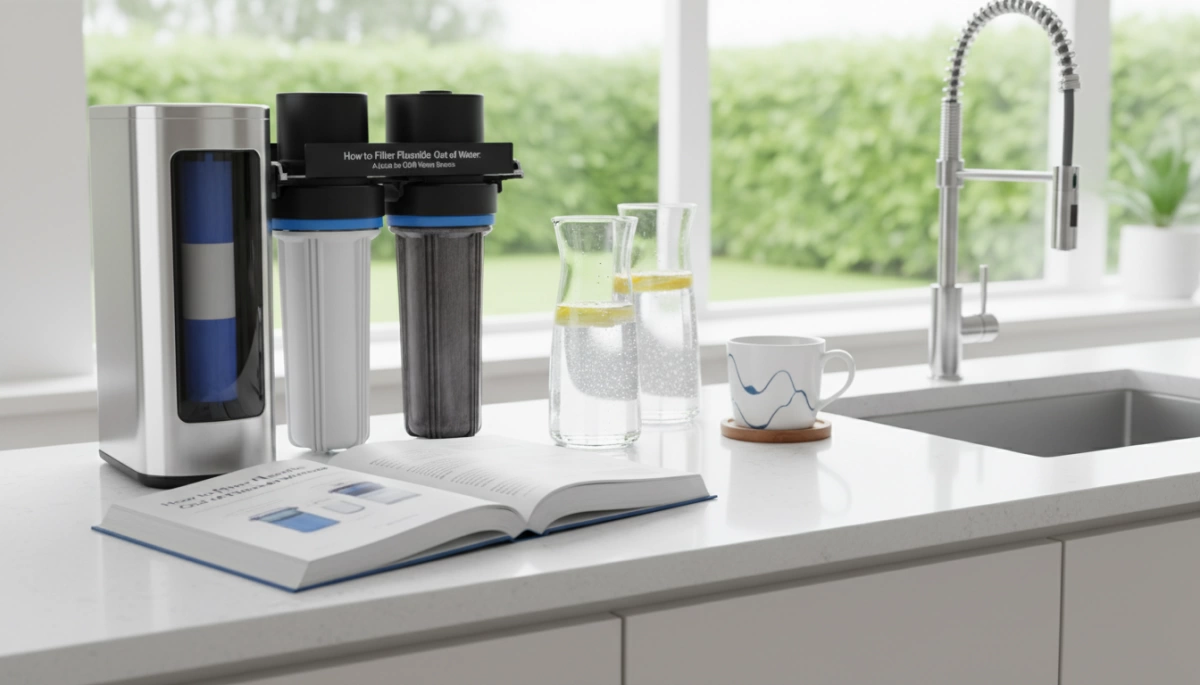
Comparative Analysis of Fluoride Removal Technologies
For OEM Water Brands, selecting the right filtration engine is the difference between a verified “fluoride-free” claim and a liability lawsuit. Fluoride is a stubborn monovalent ion that passes right through standard activated carbon blocks. To effectively remove it, we must move beyond basic aesthetic filtration and utilize advanced separation technologies. Here is how the top methods stack up for mass production.
Reverse Osmosis (RO) Mechanisms and Rejection Rates
At DripLife, we consider Reverse Osmosis Membrane Manufacturing the gold standard for consistent fluoride removal. Unlike adsorption methods that rely on chemical contact time, RO utilizes a physical barrier with a Membrane Pore Size of 0.0001 microns.
When we engineer our tankless RO systems, we apply high pressure to force water molecules through the semi-permeable membrane while rejecting larger dissolved ions. This process delivers superior results:
- High Efficacy: Achieves Total Dissolved Solids (TDS) Rejection rates of 90% to 99%, effectively stripping fluoride alongside arsenic and lead.
- Consistency: Performance does not degrade significantly until the membrane reaches the end of its lifespan, unlike media that can saturate unexpectedly.
- Safety: Our integrated waterways prevent the secondary pollution often found in tank-based systems, ensuring the water remains pure post-filtration.
Activated Alumina Adsorption Pros and Cons
Activated Alumina Media is a porous, granular aluminum oxide that removes fluoride through adsorption. While common in gravity-fed filters, it presents specific challenges for scalable Commercial Water Treatment Solutions:
- pH Sensitivity: Efficiency drops drastically if water pH is above 8.5.
- Contact Time: Requires slow flow rates to allow sufficient contact time, which can bottleneck high-performance dispensers.
- Leaching Risks: Low-quality media can leach aluminum back into the treated water if not strictly monitored.
Bone Char Carbon for Niche Eco-Friendly Markets
For brands targeting the “all-natural” demographic, Bone Char Carbon Media offers a unique selling proposition. Produced from charred animal bones, this media is rich in hydroxyapatite, which naturally attracts fluoride ions.
However, for a Private Label Water Purifier, bone char has limitations:
- Variable Quality: As a biological product, Fluoride Reduction Capacity can vary between batches.
- Market Restrictions: It is not suitable for vegan or vegetarian consumer bases.
- Supply Chain: Sourcing high-grade, contaminant-free bone char is often more complex than sourcing standardized synthetic media.
For most high-volume OEM applications, RO remains the most reliable and scalable solution for guaranteeing fluoride removal.
Designing the System: OEM and ODM Considerations
When we partner with brands for ODM Product Development, the goal isn’t just to pick a filter off the shelf; it’s to engineer a complete hydration ecosystem. Effective fluoride removal requires a holistic approach to system design, ensuring that the technology not only performs well in the lab but also delivers a seamless experience for the end-user. As a manufacturer, we focus on integrating high-efficiency components that balance performance, maintenance ease, and aesthetic appeal.
Importance of Multi-Stage Configuration and Pre-filtration
A single filter cartridge is rarely enough to handle the complex water profiles found in US households. To maximize the lifespan and efficiency of the Reverse Osmosis Membrane Manufacturing process, we implement robust multi-stage configurations. The RO membrane is the heavy lifter for removing dissolved solids like fluoride, but it is sensitive to chlorine and large particulates.
We typically engineer systems with composite pre-filtration stages—combining PP cotton and carbon blocks—to protect the core membrane. This setup captures sediment, rust, and chlorine, and is also highly effective to filter microplastics from water before they can foul the finer RO pores. By layering these stages, we ensure the RO membrane maintains its Fluoride Reduction Capacity for longer periods, reducing maintenance calls for your brand.
Selecting Form Factors: Countertop vs Under-Sink Systems
Choosing the right form factor depends entirely on your target market’s lifestyle. We offer two primary chassis types for OEM Water Filtration Systems, each with distinct advantages:
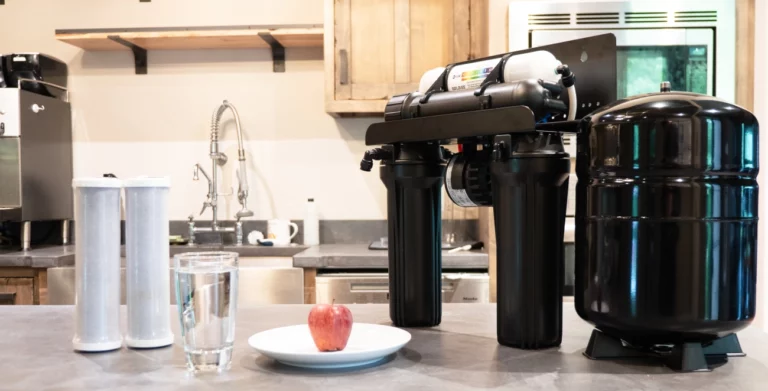
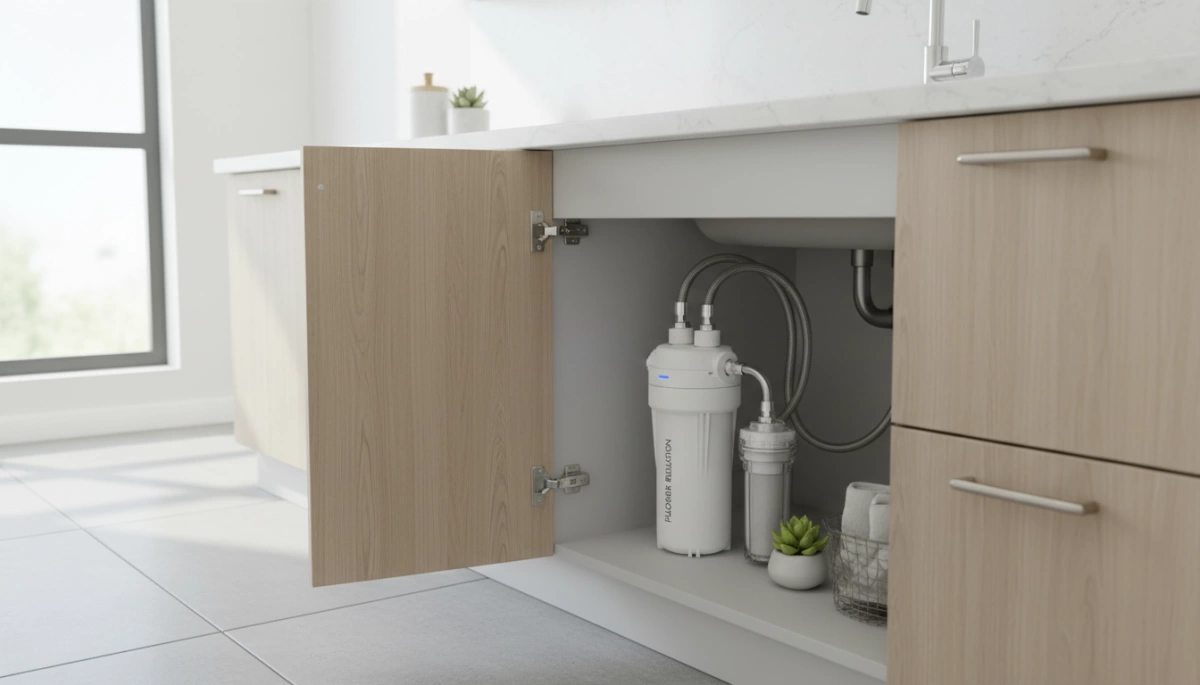
- Tankless Under-Sink RO Systems: These are the gold standard for modern kitchens. By eliminating the bulky storage tank, we reduce the risk of secondary pollution (bacteria growth in the tank) and save massive amounts of under-cabinet space. Our designs support high-flow outputs ranging from 600 GPD to 1000 GPD, delivering fresh, fluoride-free water instantly.
- Countertop Water Dispensers: Ideal for the rental market or offices where plumbing modifications aren’t possible. These units are installation-free and often feature integrated heating or cooling, making them a versatile Private Label Water Purifier option.
Balancing Flow Rate with Chemical Adsorption Contact Time
One of the biggest challenges in Commercial Water Treatment Solutions and residential design is balancing speed with purity. In traditional adsorption filters (like activated alumina), the water needs significant “contact time” with the media to effectively grab fluoride ions. If the water flows too fast, the fluoride slips through.
However, with our advanced RO technology, we leverage Membrane Pore Size (0.0001 micron) rather than just contact time. This allows us to achieve high flow rates without sacrificing rejection rates. Our systems are engineered with high-efficiency pumps and optimized flow channels that maintain the necessary pressure to force water through the membrane while rejecting fluoride-laden wastewater. This ensures your customers get that “fast pour” experience without compromising on the safety specs on your label.
Regulatory Compliance and Certification Standards
When we manufacture a Private Label Water Purifier for the US market, compliance isn’t just a checkbox; it’s your brand’s shield against liability. Navigating the regulatory landscape requires a deep understanding of American safety standards, ensuring that your product claims hold up under scrutiny.
Navigating NSF/ANSI Standard 58 and 53
For any brand targeting the US, the gold standard is NSF certification. Specifically, NSF/ANSI 58 Certification is the benchmark for Reverse Osmosis systems. This standard verifies that the membrane effectively reduces Total Dissolved Solids (TDS) and specific contaminants like fluoride. If you are developing a reverse osmosis water filter with remineralization, meeting Standard 58 proves that the system strips out the bad stuff before adding the good minerals back in.
For non-RO systems using adsorption media, NSF/ANSI 53 is the relevant standard for health effects. This certifies that the filter media physically reduces specific health-related contaminants. As an OEM partner, we ensure our OEM Water Filtration Systems are designed to meet or exceed these rigorous requirements, giving your brand a competitive edge on retail shelves.
Understanding Labeling Claims: Reduction vs Removal
Marketing teams often want to use the word “Removal,” but engineering and legal teams prefer “Reduction.” Here is why the distinction matters:
- Removal: Implies 100% elimination of fluoride, which is technically difficult to guarantee over the entire lifespan of a filter due to variables like water pressure and temperature.
- Reduction: This is the industry-standard claim. It indicates that the system lowers fluoride levels significantly (often >95% with high-quality RO) but acknowledges the reality of filtration physics.
We advise our partners to focus on Fluoride Reduction Capacity in their marketing materials. This approach builds trust with consumers and ensures reduced operational liability by avoiding absolute claims that could lead to false advertising lawsuits.
Batch Testing and Factory-Level Quality Control
Quality control happens long before the product reaches the customer. In our ISO certified manufacturing facilities, we implement strict protocols to ensure consistency across every unit.
- Raw Material Verification: We review Material Safety Data Sheets (MSDS) for all activated alumina and carbon media to ensure no leaching of harmful substances.
- Performance Testing: Randomly selected units from every production run undergo high-pressure testing to verify structural integrity and filtration efficiency.
- Final Inspection: Every sink water filter system is checked for assembly precision before packaging.
By handling these factory-direct technical catalogs and testing procedures in-house, we provide our partners with the documentation needed to pass third-party audits and enter the market with confidence.
Manufacturing Strategies: From Concept to Cartridge
Custom Media Blending and Resin Recipes
Creating a top-tier Private Label Water Purifier starts long before the assembly line. In our R&D labs, we don’t just pick standard parts off a shelf; we engineer specific filtration “recipes” based on the target water quality. While the 0.0001-micron RO membrane is the heavy lifter for fluoride removal, the supporting stages are critical. We customize composite filters—blending high-grade carbon blocks with specific pre-filtration layers—to maximize the lifespan of the membrane. This ODM Product Development process ensures that the final output provides the consistent health benefits of RO water your customers expect, without premature clogging or pressure drops.
Scalability and Supply Chain Security for Mass Production
Once the prototype is perfected, the challenge shifts to consistency at scale. As a partner for OEM Water Filtration Systems, we secure the Water Filter Supply Chain to prevent the bottlenecks that often plague smaller operations. We operate under strict ISO certified manufacturing standards, ensuring that unit #1 and unit #10,000 perform exactly the same. By maintaining factory-direct technical catalogs and raw material reserves, we offer brands the stability needed to launch aggressive marketing campaigns without fear of stockouts. Our integrated production lines handle everything from injection molding to final testing, guaranteeing that your fluoride-filtration claims are backed by robust industrial capacity.
FAQs About Fluoride Filtration Manufacturing
Which filtration method is most cost-effective for OEMs?
For most OEM Water Filtration Systems, Reverse Osmosis (RO) offers the best balance of performance and cost per gallon. While Activated Alumina Media is cheaper upfront as a raw material, it targets only fluoride and arsenic. In contrast, Reverse Osmosis Membrane Manufacturing creates a barrier that handles fluoride alongside heavy metals, bacteria, and salts. This allows brands to market a comprehensive “all-in-one” solution without needing complex, multi-media blends. Our high-capacity under-sink RO systems demonstrate how a single core technology can deliver high Total Dissolved Solids (TDS) Rejection and fluoride reduction simultaneously, simplifying the supply chain.
How do pH levels affect activated alumina performance?
This is a critical variable in Commercial Water Treatment Solutions. Activated alumina is highly pH-sensitive; its Fluoride Reduction Capacity peaks at a pH of 5.5 to 6.5. If the feed water is alkaline (pH > 7.5)—which is common in many U.S. municipalities—the adsorption efficiency drops significantly. This introduces Reduced Operational Liability risks for brands selling nationwide, as performance will vary by region. RO membranes are generally less dependent on pH for effective Monovalent Ion Removal, making them a more stable choice for mass-market products.
Can a single filter stage effectively remove fluoride?
Generally, no. Standard carbon blocks or sediment filters have zero impact on fluoride. Effective removal requires either a dedicated contact time with Hydroxyapatite Filtration media or a semi-permeable membrane. In a Private Label Water Purifier, we always recommend a multi-stage configuration. A pre-filter protects the main stage, while the RO membrane or specialized media handles the chemical separation. You can explore how we configure these stages in our guide to best under-sink RO system features, ensuring the system is robust enough to handle tough contaminants.
What is the difference between fluoride reduction and removal?
In the context of NSF/ANSI 58 Certification, wording matters. “Removal” implies 100% elimination, which is scientifically difficult to guarantee continuously outside of a lab. “Reduction” refers to lowering the concentration to a specific safety standard (e.g., reducing 4.0 mg/L to under 1.5 mg/L). Most high-quality RO systems achieve 90-99% reduction. When developing ODM Product Development strategies, we advise clients to use “Reduction” on packaging to maintain regulatory compliance and consumer trust.