







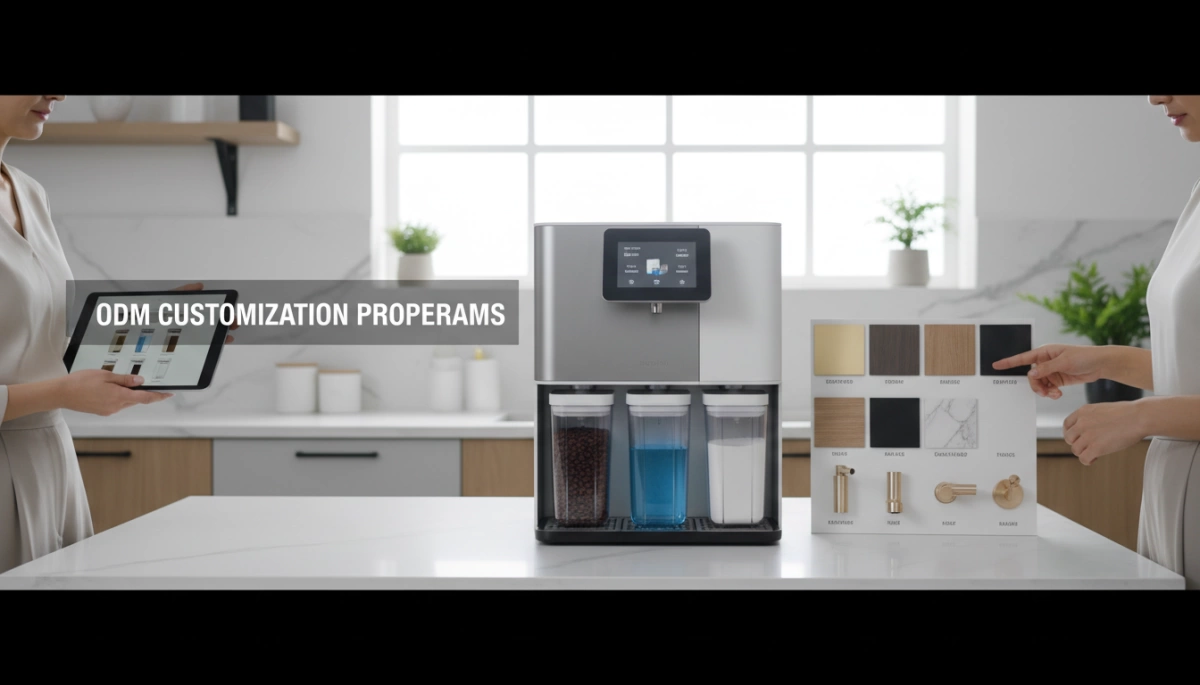
Deconstructing ODM Customization Programs for Multi Function Dispensers
When brands step into multi function water dispensers instead of simple hot-and-cold units, the ODM customization program immediately becomes more complex. We are no longer just packaging a heater and a compressor. We are integrating instant heating modules, compressor-based cooling, sparkling water system integration, and multi stage water filtration into one compact, serviceable chassis.
Multi function dispensers are harder to customize than single function units because every change affects multiple subsystems at once. A different filter stack changes pressure, flow rate, and carbonation behavior. A higher hot water output affects thermal management, power draw, and safety margins. Adding sparkling water requires precise carbonation injection system design, leak prevention, and smart venting paths, all while keeping the UI simple for office staff or facility managers.
In a good ODM customization program, we structure these technical decisions instead of treating them as one-off requests. We typically break them into clear decision blocks:
- Thermal architecture: instant heating module technology vs tank, compressor size, refrigerant choice, insulation, and thermodynamics in compact appliances.
- Hydraulics and filtration: RO vs UF filter configuration, pump and valve selection, hydraulic routing, and regional water quality assumptions.
- Sparkling system: carbonator type, pressure setpoints, anti-backflow design, and sparkling water leak prevention around fittings and manifolds.
- Control and UI: PCB development for dispensers, temperature and flow control logic, and custom UI/HMI design that matches your brand.
By turning these into structured option sets inside the ODM development lifecycle, we help brands choose combinations that are technically sound, certifiable (NSF, CE, CB), and commercially viable. The result is an ODM customization program for multi function dispensers that balances differentiation with manufacturability, instead of pushing risky, one-off engineering experiments into production.
Multi Function System Complexity in ODM Customization Programs
Designing ODM customization programs for multi function dispensers is harder than it looks, because we’re cramming hot, cold, ambient, and sparkling water into one compact chassis without sacrificing safety or reliability. In the U.S. market, where offices, gyms, and multi-family buildings expect “coffee-shop quality” water on demand, that system complexity is exactly what makes or breaks a multi function water dispenser.
Thermodynamics in Compact Multi Function Dispenser Designs
In a compact footprint, thermodynamics becomes the main constraint. We’re managing:
- A hot tank or instant heating module running at near-boiling temps
- A compressor-based cooling system that hates extra heat load
- Insulation and airflow paths that keep hot and cold zones from fighting each other
In our ODM customization programs, we run detailed thermal simulations and bench tests so the dispenser can hit target temperatures quickly, stay stable over long draws, and avoid the “lukewarm mix” problem that ruins user trust.
Balancing Instant Heating Modules with Compressor Cooling
For U.S. customers, instant hot is now a must-have, but it can easily overload the cooling section if we don’t structure the system right. In a serious ODM dispenser customization project, we typically:
- Use instant heating module technology with smart duty cycles and preheat modes
- Separate airflow for hot and cold sections to protect the compressor
- Add temperature sensors and firmware control to manage peak demand intelligently
This balance is critical in high-traffic B2B water dispenser solutions, where users expect back-to-back hot and cold dispenses without long recovery times.
Managing Hot, Cold, Ambient, and Sparkling in One Chassis
When we integrate hot, cold, ambient, and sparkling water in one multi function dispenser, hydraulics and thermal paths must be tightly controlled:
- Clear routing to keep carbonated lines cold and stable
- Proper sequencing so sparkling water doesn’t pull warm, flat water from shared lines
- Smart valve control to keep hot water away from carbonation and sensitive components
The same thinking applies downstream of under-sink systems or multi stage water filtration setups, where temperature and flow need to stay predictable no matter what the user selects on the front end.
Energy Efficiency and Safety in ODM Programs
In our ODM business model for dispensers, we design energy efficiency and safety in from day one, not as add-ons:
- Sleep modes, eco-heating profiles, and optimized compressor cycling
- Overheat protection, leak detection around sparkling and hot zones, and electronic child lock options
- Compliance with U.S. expectations around electrical safety and potable water standards
Done right, a multi function dispenser program delivers lower operating costs, fewer service calls, and a safer experience—all while giving your brand a high-performance, all-in-one hydration station that actually matches how people in the U.S. use water every day.
Hydraulics and Filtration Customization in Multi Function Dispensers
On multi function dispensers, hydraulics and filtration customization is where performance is won or lost. I start by mapping a clean hydraulic circuit around the full treatment chain: sediment, carbon, optional UV, and multi stage filtration like UF or RO. The goal is simple: consistent pressure, predictable flow rate, and stable outlet temperature at every dispense point.
For brands that want true premium water, I typically recommend reverse osmosis system integration. That means sizing the RO membrane, pump, and storage tank so recovery rate, refill time, and TDS reduction match real U.S. usage patterns—office break rooms, gyms, or kitchen countertop units. If you’re new to RO, it helps to benchmark against a proven home reverse osmosis water filter so expectations on taste and rejection rate are clear.
Balancing pressure, flow rate, and carbonation injection is critical in a multi function water dispenser. Carbonation needs a stable inlet pressure, tight control of CO₂ injection, and short, direct lines to the sparkling outlet to avoid flat or foamy pours. I typically:
- Use dedicated regulators for RO, ambient, and sparkling lines
- Set separate flow restrictors for hot, cold, and sparkling
- Keep carbonation loops as short and cold as possible to prevent gas breakout
Regional water quality in the U.S. is all over the map, so ODM customization programs must adapt filter configurations. In hard-water areas, I prioritize scale control and may add a calcium-targeting water filter; in older cities with lead risk, I’ll spec RO plus lead-rated post-filters. The point of an ODM customization program is that you don’t ship one generic spec—you tune the hydraulic circuit, filter stack, and pressure management for the exact markets and channels you plan to serve.
Electronics and Smart Control in ODM Customization Programs
When I build ODM customization programs for multi function dispensers, the electronics and smart control stack is where real brand differentiation happens. We start with PCB development for dispensers that’s tailored to the exact feature set: heating modules, compressor cooling, sparkling water system integration, flow meters, TDS sensors, and leak detection all sit on a stable, serviceable board. From there, we layer in custom UI logic so every button press, dispense mode, and cleaning cycle feels intentional and on-brand, not like a generic private label appliance.
On the front end, multi function water dispenser interfaces are fully skinnable. I can customize touch screen layouts, display languages for U.S. and bi‑lingual locations, and icon sets that match your existing brand guidelines. For non‑screen models, we still support custom HMI design with LEDs, capacitive buttons, and clear status indicators, so users always know what’s hot, cold, ambient, or sparkling at a glance. If you’re already selling countertop filtration products, like an NSF‑focused countertop water filter pitcher system, we can align UI logic so the experience feels consistent across your line.
On the smart side, I treat IoT as a core part of the ODM development lifecycle, not an afterthought. We support smart water dispenser IoT integration with Wi‑Fi or BLE modules, app connectivity for usage tracking, filter life alerts, and basic remote diagnostics. For B2B water dispenser solutions, that might mean fleet management and simple API endpoints; for home use, a clean, mobile‑first app that stays lightweight and reliable.
Behind all of this, electronics design must pass the real‑world tests: reliability, serviceability, and certification. I design boards with clear labeling, modular harnesses, and accessible test points so field techs can swap parts fast instead of pulling whole units. We validate against U.S. expectations for safety, EMC, and the appliance certification process (NSF and CE/CB where required), and we bake in protections like thermal cutoffs, surge protection, and robust grounding. That approach keeps the ODM customization program scalable: same proven electronics core, customized UI and connectivity per brand, and predictable time to market.
Levels of ODM Customization for Multi Function Dispensers
When I build ODM customization programs for multi function dispensers, I always break them into clear levels: light, medium, and deep. Each level changes the scope, cost, tooling, MOQ, and time to market, so brands know exactly what they’re signing up for.
Light ODM customization (visual only)
I use this when a brand needs a fast, low-risk way into multi function water dispensers. We keep the internal platform standard and customize color, finish, logo, and UI skin. Scope is tight, no new tooling, and MOQs stay low. This is the best fit for rapid market testing, pilots, or channel-exclusive editions where speed and time to market acceleration matter more than deep technical changes.Medium ODM customization (modular changes)
At this level, we treat the dispenser like a modular system. We can swap filtration stages (UF vs RO), change cartridges to match local water quality, tweak heating and cooling performance, or adjust ergonomics for office vs home use. Scope is wider, some tooling or insert changes might be needed, and MOQs go up. It’s ideal when you need a brand-specific configuration that better fits U.S. tap water conditions and you want a turnkey water filtration solution without starting from scratch. For brands already selling RO systems or under-cabinet water filter systems, this level extends that experience into a multi function dispenser format.Deep ODM customization (full platform work)
Deep customization means we’re committing to structural changes, new industrial design, and sometimes proprietary electronics or IoT. Scope covers chassis layout, unique ID, custom PCB development, and performance tuning for specific B2B or high-end residential segments. This demands new mold tooling, higher mold tooling investment, longer lead times, and higher MOQ for custom appliances—but it delivers a truly ownable, brand-specific appliance design that can anchor your category for years.
In practice, I map the brand’s strategy, budget, and launch window against these three levels. If the goal is a quick proof of concept, I push them to light ODM. If the goal is a differentiated platform with long-term IP value, deep ODM customization for multi function dispensers is worth the added cost, tooling, and development timeline.
Level 1 ODM Visual Customization for Multi Function Dispensers
Level 1 ODM customization programs focus on fast, low‑risk visual changes to a standard multi function dispenser platform. I keep the internal heating, cooling, sparkling, and filtration systems as‑is, and tailor the outside so it looks and feels like your brand.
Color, Finish, and Logo Options
With light ODM customization, I usually offer:
- Multiple cabinet colors (black, white, silver, matte dark gray) that match common office and residential interiors in the U.S.
- Different finishes: matte, gloss, brushed metal, or fingerprint‑resistant textures.
- Flexible logo placement: front door, side panel, drip tray area, or screen boot‑up logo.
- Branded labels for hot, cold, ambient, and sparkling outlets so users instantly understand each function.
These visual choices let you launch a “brand‑specific” multi function water dispenser without touching the core engineering.
UI Skinning and Front Panel Customization
I also treat the front panel and HMI as a quick‑win branding area:
- Custom UI colors, fonts, and button layouts that align with your design guidelines.
- Touch screen themes with your icons and brand voice, including simple language for U.S. workplaces and multi‑family buildings.
- Overlay graphics around buttons and nozzles that clearly mark temperature, flow rate, and sparkling options.
- Option to highlight features (like “lead‑reducing filtration”) that tie into your broader content on topics such as how water filters handle lead and other contaminants.
All of this is done on top of a standard, proven PCB and control logic, so we don’t add technical risk.
What Stays Standard in Light Customization
In a Level 1 ODM visual program, core systems stay standard:
- Internal thermodynamics, instant heating modules, compressor cooling, and sparkling water system integration.
- Hydraulic layout, filtration path (UF or RO), and safety systems.
- Structural frame, molds, and main electronic boards.
That’s why this level is fast and cost‑effective: no new tooling, no redesign, and minimal re‑validation.
Best Use Cases for Rapid Testing and Pilot Launches
I use Level 1 visual customization for:
- Rapid market testing with distributors or B2B water dispenser solutions where speed matters more than unique hardware.
- Pilot launches in U.S. offices, schools, gyms, and multi‑tenant buildings to validate user demand before deeper ODM customization.
- Private label appliance manufacturing where you want your own badge and UI, but need short lead times and low MOQ.
If early pilots perform well, we can always step up to deeper ODM customization programs later, adding more filtration options, smart water dispenser IoT features, and bespoke performance tuning.
Level 2 Modular ODM Customization Programs
Level 2 modular ODM customization programs are where a multi function water dispenser really starts to feel brand-specific without the cost and delay of a full ground-up design. At this stage, I’m working with fixed core architecture, but I can swap modules, tune performance, and tailor the user experience for specific U.S. channels like office, hospitality, education, or multi-family housing.
Swapping Filtration Stages (UF vs RO)
In a modular ODM program, I can configure different multi stage water filtration stacks on the same base platform:
- Swap UF vs RO cartridges depending on local water quality, TDS, and customer expectations
- Add or remove pre-filters (sediment, carbon) to handle chlorine, taste, and odor
- Tune service intervals and cartridge sizes to match U.S. usage patterns and maintenance budgets
For markets that care more about whole-home filtration, I often reference how cartridge choices affect total cost of ownership, similar to what we explain in our breakdown of water filter costs for home users.
Nozzle Design, Drip Tray, and User Interaction
Modular ODM customization also covers how people physically use the multi function dispenser:
- Change nozzle geometry to reduce splashing, improve bottle access, and protect sparkling water performance
- Redesign drip tray depth, width, and grate pattern to suit refillable bottles or high-traffic B2B environments
- Adjust button layout, touch points, and basic HMI logic to simplify hot/cold/sparkling selection
These changes let me tailor one base dispenser to a hotel lobby, a corporate hydration station, or a convenience store back counter without redoing the whole system.
Adjusting Tank, Heating, and Cooling
At Level 2, I can tune core performance specs within the existing chassis:
- Increase or decrease tank capacity for hot, cold, or sparkling lines
- Adjust instant heating module wattage and control curves to balance speed vs. energy use
- Re-spec compressor size, condenser, and airflow to hit tighter cooling performance targets
This is where I align the multi function dispenser’s flow rate and temperature control with real-world U.S. use cases, like heavy lunch rush peaks in offices or steady all-day draw in co-working spaces.
Aligning With Channel and Region Needs
Because these ODM customization programs are modular, I can build different SKUs off the same platform:
- “Light RO” vs “premium RO + remineralization” versions for different regions
- Sparkling-enabled models for corporate and hospitality vs. still-only units for schools
- Configurations that line up with local plumbing, voltage, and service capabilities
This approach keeps tooling and MOQ under control while still delivering brand-specific, channel-ready multi function dispensers that feel purpose-built, not generic.
Level 3 Deep ODM Customization Programs
When we talk about Level 3 deep ODM customization programs for multi function dispensers, we’re talking about building a truly brand‑specific appliance, not just changing colors or filters.
Industrial design and new tooling
At this level, we modify the industrial design (ID) from the ground up:
- Create a unique exterior shape, footprint, and proportions for your multi function water dispenser
- Develop new exterior tooling so the chassis, panels, and trim are exclusive to your brand
- Align every visual detail (bezel, lighting, handle lines) with your broader product lineup
This is where private label appliance manufacturing stops looking “white label” and starts looking like a true in‑house product line.
Structural layout and component placement
Deep ODM customization also means reworking the internal structure:
- Redesign the frame and brackets to fit your preferred instant heating module, compressor, RO system, and sparkling water hardware
- Optimize internal airflow and water routing for better thermal management in dispensers
- Improve serviceability by positioning filters, PCB, and valves for fast field maintenance
The goal is a compact, quiet, and easy‑to‑service all in one hydration station that still hits U.S. performance expectations.
Smart integration and proprietary IoT
For brands that want a smart water dispenser IoT roadmap, Level 3 is where we lock in:
- Custom PCB development for dispensers, including your own firmware logic
- Brand‑specific touch screen water dispenser UI, icon sets, and HMI flows
- Proprietary IoT features like usage analytics, filter subscription prompts, or app‑based temperature control
This lets you own the digital experience and protect your IP around control logic and app connectivity.
Performance tuning for niche markets
Finally, we tune the system to hit very specific use cases in the U.S. market:
- Higher hot water output for office coffee stations or heavy breakroom use
- Faster cold recovery and stronger sparkling water system integration for gyms or hospitality
- Custom RO vs UF filter configuration based on local water quality and your brand promise
If you’re still deciding between RO and carbon filtration for different channels, it’s worth looking at how we compare options in this breakdown of carbon water filters vs reverse osmosis for OEM brands.
Level 3 deep customization isn’t for testing the waters—it’s for brands that want a flagship multi function dispenser program with clear differentiation and strong long‑term unit economics.
ODM Development Lifecycle for Multi Function Dispensers
When I run an ODM customization program for a multi function water dispenser, I treat it like a clear, staged lifecycle—from idea to shipment. That’s how we keep engineering risk low, control costs, and still move fast in the U.S. market.
From Idea To Shipment
A typical ODM development lifecycle for multi function dispensers runs through these stages:
Concept & Scoping (2–4 weeks)
We lock in user scenarios, feature set (hot, cold, ambient, sparkling, filtration), target price, and channels (office, hospitality, residential). This is where we decide whether you need light, modular, or deep ODM customization and align on expected MOQ for custom appliances.Design & Engineering (4–8 weeks)
My team handles industrial design proposals, internal layout, PCB development for dispensers, and hydraulic schematics. You approve look, functions, and UI behavior. In parallel, we validate manufacturability against our existing manufacturing and turnkey water filtration capabilities.EVT / DVT Prototyping (6–10 weeks)
We build EVT samples to validate thermodynamics in compact appliances, hydraulics, and control logic. After tuning, we move to DVT samples to confirm cosmetic quality, usability, and reliability. You typically run in-house evaluations, while we handle internal life testing and safety checks.Tooling & Certification (6–12 weeks, overlaps)
Once DVT is on track, we kick off mold tooling investment and start the appliance certification process (NSF, CE, CB if needed). We manage documentation and lab coordination; you confirm labeling, compliance markets, and any private label appliance manufacturing requirements.Pilot Run & Ramp (4–6 weeks)
We run a pilot build using mass-production tooling to validate yield, quality control, and packaging. You review samples from the line, finalize forecasts, and approve go-to-market timing. After that, we move into stable mass production and ongoing supply.
Who Owns What: Brand vs Manufacturer
In a well-run ODM customization program:
Brand side (you):
- Define positioning, feature priorities, and budget.
- Approve ID, UI, and performance targets.
- Lead market testing, branding, and launch planning.
ODM manufacturer (us):
- Own detailed engineering, BOM, and turnkey water filtration solutions.
- Manage prototyping, ODM development lifecycle, and quality control.
- Coordinate certifications, supply chain consolidation, and production schedules.
Clear division of roles, defined checkpoints, and realistic lead times are what make multi function dispenser programs predictable instead of painful—and that’s exactly how I structure every ODM customization project.
Requirement Definition and Scoping in ODM Customization Programs
When I kick off an ODM customization program for a multi function water dispenser, requirement definition and scoping is where I set the tone for the entire project. If we’re sloppy here, everything downstream—tooling, MOQ, pricing, and launch dates—starts to drift.
First, I lock in brand positioning and real-world user scenarios. Are we building an all-in-one hydration station for a tech-heavy U.S. office, or a compact B2B water dispenser solution for clinics that need strict hygiene and hot/cold reliability? I’ll map concrete use cases (cups per hour, peak usage, preferred temperatures, sparkling usage, typical incoming water quality, U.S. building codes) and tie them to functions like instant heating module technology, sparkling water system integration, and reverse osmosis system integration. At this stage, I often refer customers to simple explainers, like the difference between RO and UF filtration in this RO vs UF filter configuration guide, so marketing, sales, and engineering speak the same language.
Next, I separate “must-have” from “nice-to-have” features in the ODM customization program. For example:
- Must-have: NSF-compliant multi stage water filtration, stable hot and cold water dispenser performance, safe electronics, and basic smart water dispenser IoT monitoring.
- Nice-to-have: advanced touch screen water dispenser UI, deep custom HMI, or niche carbonation injection system options for specific channels.
Then I translate those marketing asks into engineering specs: flow rate targets, outlet temperatures, noise limits, thermodynamics in compact appliances, hydraulics and pressure management ranges, filter type and service life, PCB development for dispensers, connectivity protocols, and appliance certification process (NSF, CE, CB) requirements. This is where “premium feel” becomes something measurable like stainless finishes, exact faucet height, or specific response time on hot water.
Finally, I’m blunt about risk, cost, and timeline trade-offs at the scoping stage:
- Deeper customization (new ID modification for dispensers, new tooling, unique smart water dispenser IoT features) means higher upfront mold tooling investment, higher MOQ for custom appliances, and longer ODM development lifecycle.
- Lighter programs (visual plus modular tweaks) drive faster time to market acceleration and lower engineering risk but less differentiation.
Getting this requirement definition right is what makes an ODM customization program feel “turnkey” instead of chaotic. It gives both sides a clear contract on scope, helps protect IP, and keeps the project aligned with real U.S. customer needs instead of a generic spec.
Design, Engineering, and Validation in ODM Customization Programs
When I run an ODM customization program for a multi function water dispenser, the real value is in how tightly we connect design, engineering, and validation into one loop.
Industrial + Structural Design Collaboration
For multi function dispensers that combine hot, cold, ambient, and sometimes sparkling water, I always start with industrial design (ID) and structural design at the same table:
- ID focuses on brand look, footprint, and user ergonomics at the counter or bottle-filling station.
- Structural design checks if that look can realistically fit tanks, compressor, instant heating module, filters, and electronics without service nightmares.
- We lock in key ODM customization targets early: front panel layout, spout height, access to filters, and service access panels.
CAD Layout and Mold Flow Analysis
Once we agree on the basic architecture, we move fast into CAD:
- We build full 3D CAD layouts of the multi function dispenser chassis, routing for hydraulic circuits, and mounting for PCB assemblies.
- Mold flow analysis on key plastic parts (front bezels, drip trays, internal brackets) helps us avoid sink marks, warpage, and stress points before we spend a dollar on tooling.
- This is where we fine-tune modular dispenser architecture so we can support different filter stacks (UF vs RO) or different tank sizes with minimal rework.
Rapid Prototyping and EVT Testing
Before committing to molds, we push hard on rapid prototyping:
- We 3D print housings, nozzles, and internal supports to validate fit, assembly sequence, and cable/tube routing.
- Engineering Validation Testing (EVT) prototypes let us test thermodynamics in compact appliances:
- Heat-up time for the instant heating module
- Cooling performance and recovery under continuous draw
- Noise levels, vibration, and condensation control
- For brands focused on quality drinking experience, we often compare the user flow against simpler systems like an under-sink water chiller dispenser to make sure we’re not adding complexity that doesn’t help the end user.
Iterating on Thermal, Hydraulic, and Usability Data
The ODM development lifecycle at this stage is all about data-driven iteration:
- Thermal data: surface temperatures, standby energy usage, compressor duty cycles, and hot water safety performance.
- Hydraulic data: flow rate stability, pressure drops across multi stage filtration, RO vs UF performance, and carbonation injection stability (if sparkling is included).
- Usability data: button layout, touch screen UI logic, icon clarity, and how quickly a first-time user finds what they need.
We cycle changes through CAD, firmware, and mechanical tweaks until the dispenser feels right in real-world conditions, not just in a spec sheet. This is how a serious ODM customization program turns a multi function dispenser concept into a brand-specific appliance that’s ready for DVT, certification, and scaling.
Tooling, Certification, and Pilot Runs in ODM Customization Programs
When we build an ODM customization program for multi function dispensers, this is the stage where ideas turn into real hardware. I treat tooling, certification, and pilot runs as a single, tightly linked phase—if we cut corners here, the project will cost more later.
Mold Tooling Investment and DVT Refinement
For a brand-specific multi function water dispenser, mold tooling is usually the biggest upfront check you write. We use DVT (Design Validation Testing) to lock the details before you commit to steel:
- We finalize exterior ID modifications, internal brackets, and modular panels, then translate them into hardened molds.
- We run mold flow analysis to spot sink marks, warpage, and weak ribs before cutting expensive tooling.
- During DVT, we tune details like fit, panel gaps, and assembly time, so your turnkey water filtration solution looks and feels premium on a U.S. countertop.
Appliance Certification Process (NSF, CE, CB)
For the U.S. market, NSF and electrical safety drive trust and channel access. In a multi function dispenser with heating, cooling, and sparkling water, we design around certification from day one:
- NSF-certified water contact materials, filtration layouts, and flow paths so your dispenser can claim credible water safety.
- CE/CB-oriented design for global deployments, with insulation, creepage/clearance, and grounding built into PCB development and wiring.
- Our engineers reuse proven platform architectures and test logic from other NSF-compliant water filtration appliances to compress timelines without gambling on safety.
Pilot Production Runs and Reliability Testing
Before we scale, we run pilot builds to confirm that the ODM development lifecycle works in real production:
- Small-batch pilot runs validate assembly sequences, takt time, and packaging for heavy multi function dispensers.
- Life testing hammers heating modules, compressor cooling, sparkling water systems, and multi stage filtration under U.S.-realistic duty cycles (office, hotel, breakroom).
- We stress-test for leaks, carbonation stability, and thermal management so your B2B water dispenser solutions don’t fail in the field.
Feeding Pilot Learnings Back Into the ODM Program
Pilot data isn’t just a report—it feeds directly into the customization program:
- We tighten specs where needed (thicker brackets, improved seals, updated firmware logic) before mass production.
- Tooling is locally adjusted for better fit-and-finish, easier serviceability, and lower defect rates.
- You walk away with a dialed-in, brand-specific multi function dispenser that’s certified, reliable, and ready for time-to-market acceleration instead of firefighting.
Strategic Benefits of ODM Customization Programs for Multi Function Dispensers
ODM customization programs for multi function dispensers give brands in the U.S. a faster, safer way to launch serious hardware without building an engineering team from scratch. I treat each project like it’s my own line of business, not just a contract build.
Why Choose ODM Over In‑House
For most brands, in‑house development of a multi function water dispenser is too slow and too risky:
- You avoid hiring full appliance R&D teams (mechanical, electrical, firmware, certification).
- You tap into proven multi function dispenser platforms and real field data on failure modes.
- You get industrial design validation, safety, and compliance baked into the process.
Turnkey Water Filtration vs Piecemeal Sourcing
With ODM customization programs, you get a turnkey water filtration solution instead of stitching parts together:
- One partner handles heating, cooling, sparkling water system integration, and filtration.
- Hydraulics, electronics, and enclosure are designed as a single system, not a pile of SKUs.
- Certification (NSF, CE, CB) is planned from day one, rather than patched in at the end.
- If you care about materials and hygiene, looking at proven platforms like our stainless steel water dispensers is a good benchmark for build quality.
Time to Market and Risk Reduction
ODM development lifecycle work is already in place, so you move faster with fewer surprises:
- Shorter EVT/DVT cycles because core modules (instant heating, compressor cooling, RO) are pre‑validated.
- Fewer redesign loops, since the thermodynamics in compact appliances are already mapped.
- Clear timelines, MOQs, and cost targets from the start.
Supply Chain and Cost Optimization
A strong ODM customization program also streamlines your operations:
- Single point of contact instead of managing multiple suppliers for filters, PCBs, valves, and housings.
- Better volume leverage and pricing on key components through vertical integration in appliance manufacturing.
- More predictable landed cost, which makes pricing and margin planning much easier for U.S. retail and B2B channels.
| Strategic Benefit | What It Means for Your Brand |
|---|---|
| Turnkey multi function dispenser ODM | One partner owns design, build, and validation |
| Faster time to market | Launch in months, not years |
| Lower engineering risk | Use proven modules and architectures |
| Supply chain consolidation | Fewer vendors, simpler logistics |
| Cost optimization at scale | Better unit economics and more stable margins |
Evaluating ODM Customization Programs for Multi Function Dispensers
When I evaluate ODM customization programs for multi function dispensers, I treat them like a long‑term strategic partner, not just a factory quote. Before I commit, I always drill into three areas: experience, process, and quality systems.
Key Questions to Ask ODM Partners
I start with direct, specific questions so I can compare ODM partners side by side:
Experience with multi function water dispensers
- How many multi function dispensers (hot, cold, ambient, sparkling) have you launched in the last 3–5 years?
- Can you show NSF- or CE-compliant projects that used instant heating modules, compressor cooling, and multi stage filtration?
- What’s your success rate from EVT/DVT to mass production without major redesigns?
Technical depth and vertical integration
- Do you handle industrial design, PCB development for dispensers, and firmware in‑house, or do you outsource?
- What’s your experience with reverse osmosis system integration, carbonation injection systems, and smart water dispenser IoT features?
- How flexible is your modular dispenser architecture for RO vs UF filters, different flow rates, and temperature control?
Project structure and support
- What does your ODM development lifecycle look like from brief to pilot run?
- Who is my day‑to‑day contact, and what’s their authority to make decisions?
- How do you quote MOQ for custom appliances at different customization depths (light vs medium vs deep)?
How I Judge an ODM Customization Program Before Committing
I don’t rely on presentations; I look for proof in how they run projects:
Clarity of scope and customization depth
- Can they clearly define what’s standard vs custom at each level (visual, modular, deep)?
- Do they connect customization depth to tooling investment, lead time, and unit cost in writing?
Process discipline
- Do they show a real ODM development lifecycle with EVT, DVT, and pilot production clearly mapped?
- Are timelines, deliverables, and responsibilities for both sides documented from the start?
Technical & compliance awareness
- Do they bring up risk areas first (thermal management, sparkling water leak prevention, RO waste water ratio, UL/NSF/CE risks)?
- Do they already understand U.S. expectations around water quality, TDS, and reverse osmosis performance? For example, I’ll ask how they validate filtration results using a TDS tester in real-world conditions.
Total cost view
- Can they break out mold tooling, engineering NRE, certification, and per‑unit cost separately?
- Are they transparent about long‑term costs like spare parts, firmware maintenance, and potential redesigns?
Red Flags in ODM Processes and Quality Systems
There are a few non‑negotiable red flags I watch for when selecting an ODM partner for multi function dispenser programs:
Vague or shifting answers
- No clear examples of previous multi function dispenser projects.
- Changing MOQs or lead times without a process reason.
- Hand‑wavy answers about RO vs UF configuration, power requirements, or compliance.
Weak documentation
- No written ODM customization program outline, no project Gantt, no risk register.
- Poor control of drawings, BOMs, and firmware versions, which is a huge risk for long‑term product lifecycle management.
Quality system concerns
- No structured EVT and DVT testing plan for heating, cooling, and sparkling modules.
- Limited experience with appliance certification processes like NSF and CE for water dispensers.
- Inconsistent incoming QC, in‑line checks, and final inspection standards for hydraulic and electrical safety.
Communication issues
- Slow replies, unclear ownership on their side, or frequent staff changes on the project.
- Over‑promising on time to market acceleration without showing how they’ll compress the schedule safely.
For the U.S. market, I only move forward with ODM partners who can clearly show that their customization program protects my brand on performance, safety, and long‑term support—not just offers a low upfront price.
IP, MOQ, And Commercial Terms In ODM Customization Programs
When I run ODM customization programs for multi function dispensers, I treat IP, MOQ, and commercial terms as non‑negotiable foundations, not fine print. If you’re investing in a brand‑specific multi function water dispenser, this is where you protect your upside.
Protecting Industrial Design And Control Logic
For serious ODM customization, I always lock down three IP areas in writing:
- Industrial design (ID): Who owns the exterior design, ID modification work, and 3D files? In deeper ODM programs, I usually grant the brand full ownership of the final ID if they fund the design, or shared rights if it’s a derivative of our base platform.
- Control logic and firmware: PCB development for dispensers, smart water dispenser IoT logic, and touch screen water dispenser UI behavior should be clearly defined: can we reuse the code base for other customers, or is it exclusive to you?
- Confidentiality and non‑compete: For B2B water dispenser solutions in the U.S., I recommend strong NDAs plus channel or region‑based non‑compete clauses, especially when we’re building proprietary sparkling water system integration or advanced instant heating module technology.
Spending time here up front prevents messy fights later when your multi function dispenser programs start to scale.
How Customization Depth Drives MOQ And Unit Economics
In ODM customization programs, customization depth = commitment level. That’s why MOQ and pricing move with the technical scope:
- Light customization (Level 1): Mostly visual changes and UI skinning. MOQs stay low, pricing is close to our standard multi function dispensers. Great when you’re just testing the market.
- Modular customization (Level 2): Swapping filtration (RO vs UF), changing tank sizes, or adjusting cooling capacity pushes MOQs higher because we must manage more SKUs and specific components. Unit cost rises slightly, but you get better fit for your channels.
- Deep customization (Level 3): New exterior tooling, structural changes, proprietary PCB development, and IoT app connectivity for dispensers usually require the highest MOQ and a longer commitment. The upside is better unit economics once volumes ramp and we lock in supply chain consolidation.
I always share a clear MOQ ladder so you see how each step of customization impacts landed cost per unit.
Ownership Of Tooling, Drawings, And Firmware
Tooling, drawings, and firmware are often where ODM vs OEM business models feel very different. With a serious ODM development lifecycle, I recommend you lock in:
- Tooling ownership: If you fund mold tooling investment for a new multi function water dispenser shell, you should either own the tools outright or have an exclusive usage agreement tied to your brand and region.
- Engineering drawings and CAD: For deep customization projects, I generally grant the brand access to key 2D and 3D files related to their ID and critical mounting points, while we retain platform knowledge for maintainability.
- Firmware and cloud assets: Clarify whether you get source code access or just compiled firmware; also define who owns IoT cloud accounts, app listings, and data. If you’re building a long‑term hydration platform, you want control of user relationships and app infrastructure.
A tight agreement here makes your product lifecycle management and future upgrades much smoother.
Pricing And Lead Time Expectations
On commercial terms, the brands I work with in the United States do best when we keep expectations very concrete:
- Non‑recurring engineering (NRE): Deep ODM customization programs usually carry NRE for industrial design validation, EVT and DVT testing, and compliance work (for example, aligning with the appliance certification process for NSF and CE). NRE is often amortized into volume projections.
- Tiered pricing: I set price breaks tied to MOQ and annual volume, so you can see exactly how time to market acceleration and scale bring your cost down.
- Lead times: For custom multi function water dispensers, realistic timing includes development, tooling, certification, and pilot run and reliability testing before mass production. Rushing this usually costs more in quality issues later.
The brands that win in this category treat IP, MOQ, and commercial terms as strategic levers, not obstacles. When we get these elements right early, everything else in the ODM customization program moves faster and with far less risk.
Quality, Testing, and After Sales Support in ODM Customization Programs
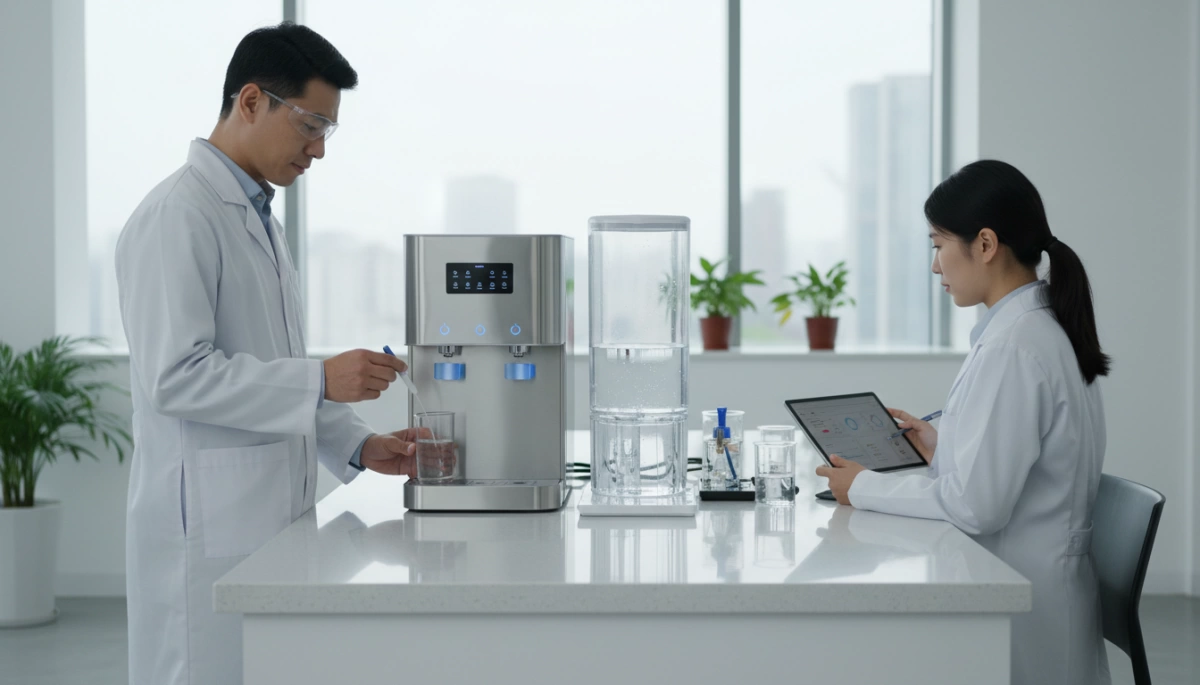
For multi function water dispensers, our ODM customization programs treat quality, testing, and after sales support as part of the product design, not an afterthought.
Specific QC Needs for Multi Function Dispensers
Multi function dispensers combine hot, cold, ambient, and sparkling water in one chassis, so QC has to go deeper than basic leak checks.
In our ODM programs, we typically lock in:
- 100% water path checks for leaks, taste, and odor after multi stage filtration or reverse osmosis system integration.
- Flow rate and temperature validation on every function (hot, cold, ambient, sparkling) to confirm real‑world performance.
- CO₂ system checks for carbonation injection, including backflow prevention, regulator accuracy, and sparkling water leak prevention.
- Electrical safety and ground checks on all PCB development for dispensers, UI boards, and power modules.
When brands target premium filtration performance, we often align QC standards with the same expectations as an NSF‑style water filtration system, even if formal certification is handled separately.
Life Testing for Heating, Cooling, and Sparkling Modules
To protect your brand in the U.S. market, we run life testing that simulates several years of heavy use:
- Heating modules: on/off cycling, descaling performance, and thermal cutoff reliability.
- Compressor cooling systems: long‑run tests at high ambient temperature, with door-open / high‑draw scenarios for B2B locations.
- Sparkling modules: valve life, CO₂ regulator durability, and carbonation consistency over thousands of pours.
- Multi function stress tests: hot–cold–sparkling switching under peak demand to validate thermal management in compact appliances.
We use EVT and DVT testing to catch these issues before tooling is frozen and before you commit to large MOQs.
Spare Parts Planning and Service Documentation
For private label appliance manufacturing in the U.S., after sales support can make or break your reputation. We plan service from day one:
- Spare parts lists: heating cartridges, pumps, PCBs, valves, nozzles, and filter heads with clear part numbers.
- Service manuals and exploded views: step‑by‑step repair guides that match your multi function dispenser programs and UI logic.
- Filter and RO cartridge planning: region‑specific stocking strategies so end users can easily swap filters or upgrade from UF to RO.
- Training assets: basic troubleshooting trees for your service partners and customer support teams.
This documentation fits cleanly with your own brand manuals or with third‑party service networks across the U.S.
How After Sales Support Fits into the ODM Program Roadmap
In a solid ODM development lifecycle, after sales support is planned alongside design and engineering, not bolted on later:
- We define serviceability requirements (tool‑less filter changes, front‑access components) during ID modification for dispensers.
- We capture failure modes from pilot run and reliability testing and feed them into final QC plans and spare parts strategy.
- We align warranty assumptions and SLA targets with your sales channels (office, hospitality, residential, or all‑in‑one hydration stations).
- We build a feedback loop so field data from the U.S. market informs the next ODM customization round and future product lifecycle management.
That way, your brand specific multi function dispenser doesn’t just look good at launch—it stays reliable, repairable, and profitable through the entire lifecycle.
Building a Brand-Specific Multi Function Dispenser
When I build a brand-specific multi function dispenser through an ODM customization program, I look at three layers together: visual, modular, and deep customization. The visual layer covers color, finishes, lighting, and UI branding so the dispenser feels instantly “yours” in an office, hospitality space, or wellness studio. The modular layer lets us tune the hardware—like hot/cold capacity, sparkling water system integration, and filtration stages—so the multi function water dispenser matches real-world usage instead of a generic catalog spec. Deep customization goes further with ID modification for dispensers, internal layout changes, and smart water dispenser IoT features that lock in long-term brand differentiation.
I always start with core users, not features. U.S. customers care about taste, safety, and convenience first, so I define clear use cases: high-traffic corporate hydration stations, premium residential kitchens, or fitness centers needing cold and sparkling on demand. From there, I choose the right reverse osmosis system integration or UF setup, noise level, dispense speed, and interface style (simple buttons vs. touch screen water dispenser UI). For markets with very hard water or high TDS, I’ll lean into more advanced, dual-membrane RO architectures similar to what we use in our high TDS RO solutions so the dispenser stays reliable over time.
Planning the ODM development lifecycle also means thinking beyond version 1. I map a roadmap of “now, next, later”: launch with a stable, ODM customization program baseline, then add smart features, app connectivity, or new filter SKUs in future revisions. I design the modular dispenser architecture so we can swap filtration types, update UI skins, or introduce a plastic-free filter line inspired by our own plastic-free water filter solutions without redoing the entire platform. That’s how I use ODM customization programs to balance time to market, future upgrades, and a dispenser that’s truly brand-specific instead of another me-too unit.