













The Physics of Sterilization: Defining UV Dose
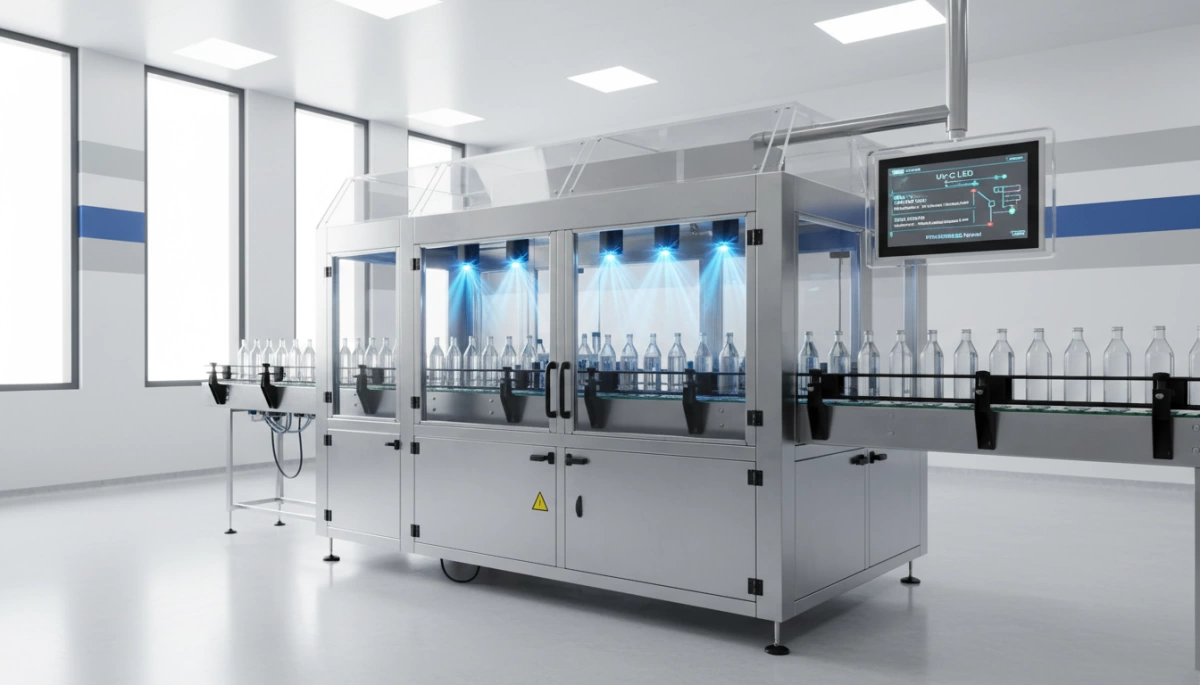
At Drip Life, we approach water safety not just as a feature, but as a precise engineering challenge governed by the laws of physics. The core of our sterilization strategy relies on delivering the correct UV-C LED sterilization dose to neutralize pathogens effectively. We define this dose, or fluence, as the total radiant energy received by the target microorganism.
To achieve reliable disinfection in a high-flow bottle filler, we must rigorously control the relationship between the light source and the water stream. It is not enough to simply install a light; we must calculate the exact energy required to damage the DNA/RNA of bacteria and viruses, preventing replication.
Breaking down the UV Dose Formula (Fluence = Intensity x Time)
The fundamental equation driving our reactor design is straightforward yet critical: Dose = Intensity × Time.
- Intensity (Fluence Rate): Measured in milliwatts per square centimeter (mW/cm²), this represents the power of the UV energy hitting the water. We utilize high-output Klaran UV-C LEDs to generate intense germicidal light instantly.
- Time (Exposure): Measured in seconds, this is the duration the water remains within the UV chamber.
In a Fluence Rate Calculation, we face a trade-off: users demand rapid bottle filling (high flow rate), which naturally reduces exposure time. To compensate, our engineering focuses on maximizing intensity and optimizing the reactor geometry to ensure every drop receives the necessary millijoules per square centimeter (mJ/cm²) for effective sterilization.
Why 265nm-275nm Wavelength Precision Matters
Unlike traditional mercury vapor lamps that emit at a fixed 254nm, our solid-state technology allows us to tune emissions to the 265nm Germicidal Wavelength. This precision is vital for maximum efficacy.
- DNA Absorption Peak: The peak absorption of microbial DNA and RNA occurs roughly between 260nm and 270nm.
- Targeted Inactivation: By operating strictly within the 260nm – 275nm range, our LEDs align perfectly with the germicidal action spectrum.
- Efficiency: This spectral match means we achieve higher log reductions with less total power consumption compared to wavelengths that fall outside this optimal window.
Understanding UV Transmittance (UVT) Factors in Potable Water
Delivering the right dose requires accounting for UV Transmittance (UVT)—the measure of how easily UV light passes through the water. Even in potable water, dissolved organic matter or suspended solids can absorb or scatter UV photons, shielding pathogens from the light source.
To mitigate low UVT scenarios, we integrate multi-stage filtration (Sediment and Carbon Block) prior to the UV chamber. This pre-treatment removes particulates that could cause “shadowing,” ensuring the water entering the reactor has high optical clarity. By stabilizing the UVT, we guarantee that the calculated UV-C LED sterilization dose effectively penetrates the entire water column, reaching pathogens at the center of the flow path.
Dwell Time: The Critical Variable in Bottle Fillers
In our engineering process, dwell time—technically known as Hydraulic Retention Time—is the non-negotiable factor for safety. It refers to the exact duration water remains inside the reactor to absorb germicidal energy. If the water moves too fast, it bypasses the UV-C LED Sterilization field; too slow, and the user experience suffers. We have to design the Path Design for Bottle Fillers to ensure the water “dwells” in the light just long enough to destroy pathogen DNA.
Balancing Flow Rate vs. Exposure Time
We never leave flow rates to chance. We strictly manage the velocity of water passing through the system to match the LED’s power output. This Flow Rate Optimization ensures that every drop receives the correct dose, regardless of the building’s water pressure. This balance is often maintained by selecting precise filtration components, similar to how understanding micron ratings helps us predict pressure drops and maintain a consistent stream for the LEDs to act upon.
The “Instant-On” Advantage
The biggest flaw in legacy sterilization systems is the warm-up period. This is where Mercury-Free Water Treatment via LEDs proves superior for on-demand dispensing:
- Mercury Lamps: Require minutes to reach full power. This means the first few ounces of water dispensed after the machine has been idle are often not fully sterilized.
- UV-C LEDs: Reach peak intensity instantly (milliseconds). This allows for reliable Point-of-Use (POU) Disinfection the moment a user activates the sensor, ensuring the first drop is as safe as the last.
Calculating Residence Time for 4-Log Reduction
To consistently hit a Log Reduction Value (LRV) of 4 (99.99% pathogen reduction), we calculate the precise residence time needed based on the LED’s intensity. By utilizing Fluence Rate Calculation data, we program our smart systems to monitor performance in real-time. This guarantees that the Dose delivered during the dwell time is sufficient to neutralize bacteria and viruses, providing a level of safety that meets the high standards expected of modern hydration stations.
Path Design: Engineering the Reactor for Maximum Efficacy
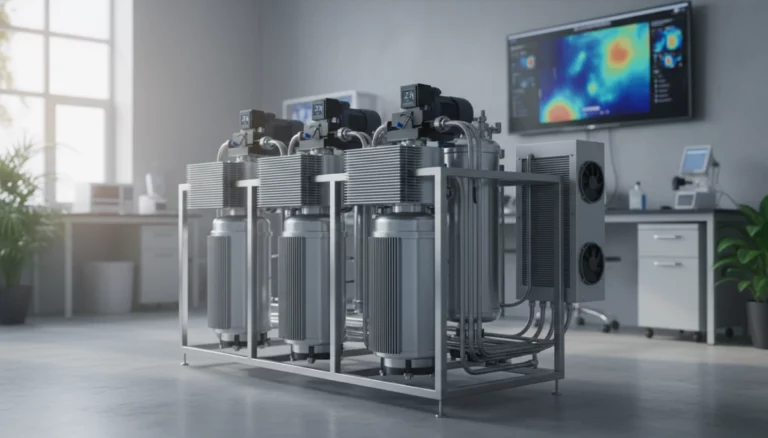
Designing a UV disinfection design bottle filler isn’t just about installing a powerful light; it is about controlling how water moves past that light. We utilize Computational Fluid Dynamics (CFD) to simulate water flow within the sterilization chamber before a single prototype is built. This digital modeling allows us to identify and eliminate “shadow zones”—areas where hydraulic dead spots might allow pathogens to bypass the UV field. By refining the internal geometry, we ensure that the UV water disinfection performance remains consistent across the entire cross-section of the pipe, guaranteeing that every drop receives the necessary lethal dose.
Turbulence vs. Laminar Flow: Why Mixing Matters
In standard plumbing, laminar flow (smooth, layered movement) is often preferred to reduce pressure loss. However, for microbial reduction UV-C, laminar flow can be a liability. If water flows too smoothly, pathogens in the center of the stream may be shielded by the water layers on the outside. We engineer our systems as a Turbulent Flow Reactor. By inducing controlled turbulence, we force the water to mix and rotate as it passes through the chamber. This mixing action brings pathogens from the center of the stream to the edges, closer to the UV-C LED source, ensuring uniform exposure.
Leveraging Reflective Geometry and Compact Design
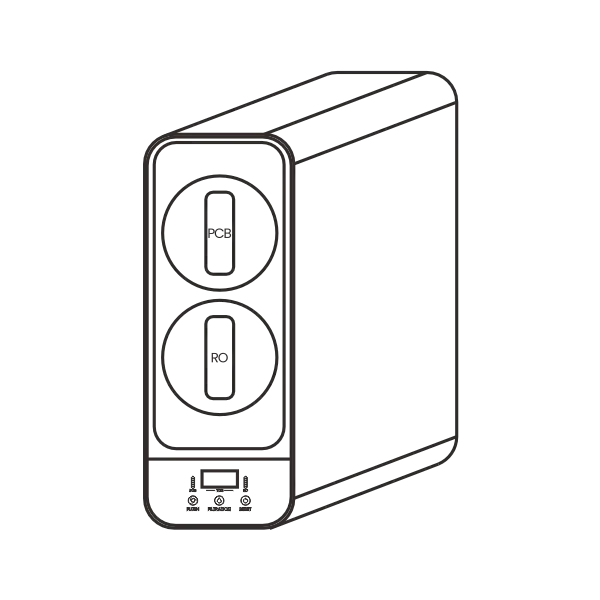
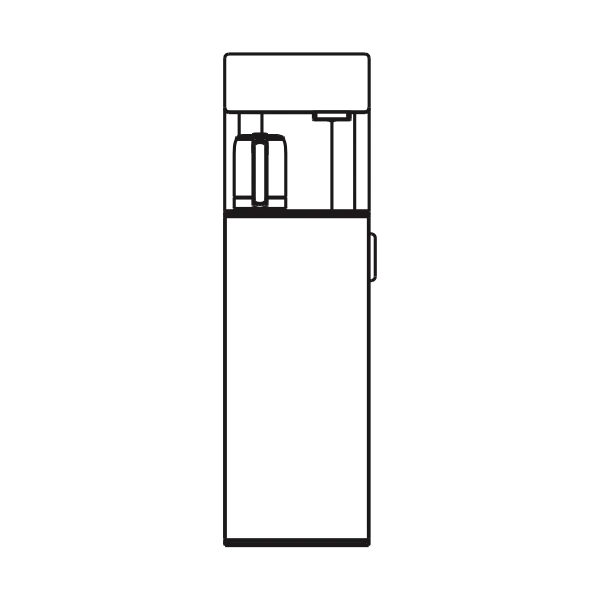
To maximize the efficiency of our LEDs, we rely on precise UV chamber engineering. The internal geometry is designed to bounce photons effectively, creating a dense field of UV energy that hits microorganisms from multiple angles. This approach is critical when integrating sterilization into compact units like our countertop RO water filter system, where space is at a premium. Unlike bulky mercury lamp reactors, our LED-based Point-of-Use (POU) Disinfection modules are slim enough to fit inside sleek, modern bottle fillers without sacrificing the volume or intensity required for safety. This combination of smart flow dynamics and reflective geometry ensures that we achieve high sterilization rates instantly, without the heat buildup associated with older technologies.
Thermal Management and System Integration
Solving the Heat Challenge with PCB Heat Sinks
We don’t just focus on the light; we focus on the hardware that keeps that light running efficiently. While UV-C LEDs are far cooler than traditional mercury lamps, the junction temperature of the diode itself can rise quickly during operation. If thermal dissipation in LEDs isn’t managed correctly, the UV output drops, and the lifespan of the chip shortens significantly.
To combat this, we utilize advanced Metal Core Printed Circuit Boards (MCPCB) acting as direct thermal paths. By bonding the LED package to an aluminum or copper-based heat sink, we effectively pull heat away from the critical junction point. This passive cooling design ensures that the UV-C LED sterilization dose remains consistent, whether the machine is filling one bottle or one hundred in a row.
Intermittent Use Logic to Prevent Bacterial Regrowth
One of the biggest risks in any Point-of-Use (POU) Disinfection system is stagnation. In an office or school, a bottle filler might sit unused overnight or over a weekend. In standard systems, this stagnant water can become a breeding ground for bacteria, leading to biofilm formation on the nozzle.
We engineered our firmware with intermittent use logic to solve this. Even when the machine is idle, the system automatically activates the UV-C module at set intervals (pulsing). This proactive approach ensures that the water sitting in the chamber and near the dispense point is sterilized periodically. By eliminating “dark periods,” we prevent bacterial regrowth and ensure the first drop of water on Monday morning is just as safe as the last drop on Friday.
Compliance and Validation Standards
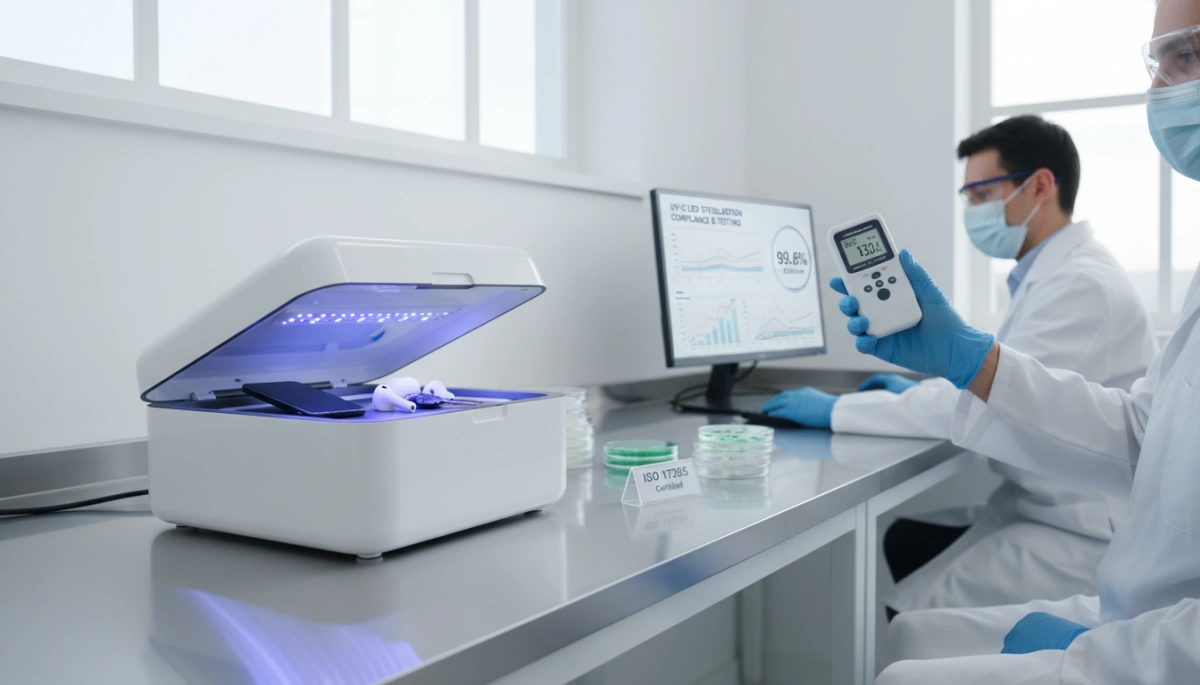
When we engineer high-performance hydration systems, theoretical physics isn’t enough. We have to prove that our UV-C LED Sterilization: Dose, Dwell Time, and Path Design for Bottle Fillers actually works in real-world scenarios. In the United States, water safety is governed by rigorous standards, and adherence to these protocols is what separates professional-grade hardware from consumer gadgets.
Meeting NSF/ANSI 55 Class B Requirements
For commercial water bottle filling stations, the gold standard for ultraviolet microbiological water treatment systems is NSF/ANSI 55. This standard differentiates between Class A (for contaminated water) and Class B (for supplemental bactericidal treatment).
Our systems are designed to align with NSF/ANSI 55 Class B requirements. This classification is specifically intended for Point-of-Use (POU) Disinfection on water that is already considered potable (safe to drink) but may contain nuisance microorganisms. Compliance ensures that our Klaran UV-C LED modules deliver a sufficient UV dose (fluence) to reduce bacteria found in the distribution lines or biofilm buildup near the dispense point.
Key NSF/ANSI 55 Class B Criteria:
- Minimum UV Dose: Must deliver at least 16 mJ/cm² at the alarm set point.
- Wavelength: Efficacy must be proven within the germicidal range (260nm–275nm).
- Material Safety: All wetted components must meet strict extraction testing to ensure no harmful substances leach into the water.
The Importance of Third-Party Bioassay Testing
We do not rely solely on mathematical modeling to guarantee safety. While Computational Fluid Dynamics (CFD) helps us design the reactor, Bioassay Validation is the only way to confirm the actual Log Reduction Value (LRV).
Bioassay testing (biodosimetry) involves sending our hardware to an accredited third-party laboratory. The lab challenges the unit with a specific surrogate microorganism (often MS2 Coliphage or T1 Phage) at maximum flow rates. They measure the concentration of the virus before it enters the UV chamber and after it exits. This process empirically verifies that our flow rate optimization and thermal management strategies result in effective sterilization.
Calculated vs. Validated Performance:
| Feature | Calculated Dose (Theoretical) | Validated Dose (Bioassay) |
|---|---|---|
| Methodology | Mathematical formula (Intensity × Time). | Live microbial challenge testing. |
| Accuracy | Assumes ideal flow and no shadowing. | Accounts for real-world turbulence and mixing. |
| Reliability | Good for initial design estimates. | Essential for NSF/ANSI 55 Standard compliance. |
| Outcome | Predicted sterilization rate. | Proven 99.99% (4-Log) pathogen reduction. |
By prioritizing Bioassay Validation, we ensure that every drop dispensed meets the highest hygiene standards, providing users with safe, clean water instantly.
FAQ: Engineering UV-C LED Systems
How does flow rate impact UV-C dose calculations?
Flow rate is the primary variable we control to ensure safety. The UV-C LED sterilization dose (fluence) is calculated by multiplying UV intensity by the exposure time. If the water flows too fast, the hydraulic retention time decreases, potentially lowering the dose below effective levels. We engineer our systems to balance flow speed with reactor volume, ensuring that even when you fill a bottle quickly, the water remains in the chamber long enough to achieve the necessary Fluence Rate Calculation for pathogen inactivation.
What is the ideal wavelength for water sterilization?
The most effective germicidal range is the 265nm Germicidal Wavelength. This specific frequency aligns with the DNA Absorption Peak of bacteria and viruses, disrupting their ability to reproduce. While traditional mercury lamps emit a fixed 254nm, our Klaran LED technology targets the 260nm–275nm range. This precision allows us to achieve a higher Log Reduction Value (LRV) with less energy, making it a superior choice compared to older types of water purification methods that rely on broad-spectrum light or chemicals.
How do you prevent heat buildup in compact UV reactors?
Heat management is critical for the longevity of LEDs. Unlike old bulbs that radiate heat into the water, LEDs generate heat at the back of the chip. We handle Thermal Dissipation in LEDs by mounting the modules on specialized PCBs connected to heat sinks or the thermal mass of the stainless steel body. This keeps the junction temperature low, ensuring consistent UV output without heating up the drinking water.
What is the difference between laminar and turbulent flow in UV disinfection?
In a Turbulent Flow Reactor, the water is agitated as it passes through the chamber. This mixing action is vital because it prevents “shadowing,” where pathogens hide behind particles or travel in the center of the stream away from the light. Laminar flow (smooth, straight movement) is inefficient for UV treatment. We design our UV dwell time water path to induce turbulence, ensuring every drop cycles close to the LED source for maximum UV water disinfection performance. This engineering is standard in our advanced water fountain filter systems to guarantee safety at the point of dispense.