











Understanding Peak-Hour Dynamics on Metro Platforms
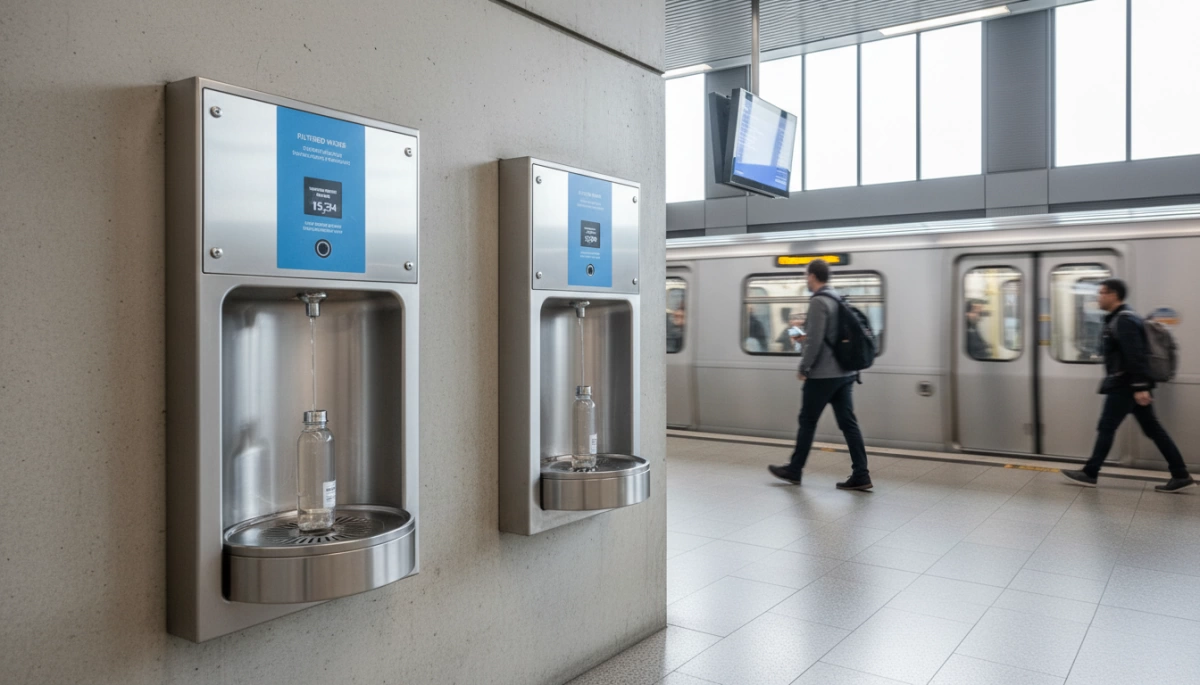
When platforms are packed during the morning and evening rush, I see the same pattern in almost every metro system: crowded edges, tight dwell times, and almost no easy way to get a quick drink of water. That’s exactly where Metro Platform Bottle Filling Stations for Peak Hour Commuter Surges change the equation.
Peak-Hour Commuter Surges
During peak hours, metro platforms experience:
- Short arrival intervals that dump large groups onto platforms at once
- Dwell-time pressure that forces riders to move quickly and avoid detours
- High standing density around doors, stairs, and escalators
In this environment, peak hour commuter hydration drops off because riders don’t want to leave the platform or lose their place near the train doors just to find water.
Hydration Pain Points on Platforms
On crowded platforms, passengers tell us the same hydration pain points:
- No visible, nearby water access while they wait in dense crowds
- Traditional fountains blocked or ignored because they are slow, shared-mouth, or hard to reach
- Parents, older riders, and tourists struggling during longer-than-expected waits
Without metro station hydration stations right on the platform, people either stay thirsty or turn to single-use plastic bottles from off-site vendors.
Climate, Delays, and Ridership Impacts
In US cities, three factors drive platform water demand during rush hour:
- Climate: Hot summers, heat waves, and humid underground environments push sweat rates and dehydration risk higher.
- Delays and disruptions: Even a 5–10 minute delay can double the perceived need for water when passengers are packed together.
- Ridership trends: Growing ridership, extended service hours, and special events all increase the need for high-traffic platform water refill options.
When these factors stack together, commuter surge water stations become critical infrastructure, not a nice-to-have amenity.
Why Reusable Bottles and On-Platform Hydration Matter
I design platform water refill points around one simple idea: riders should stay hydrated without leaving the platform or buying a disposable bottle.
Well-placed metro platform bottle filling stations support:
- Reusable bottle culture: Easy, fast access encourages riders to carry and refill their own bottles.
- Lower waste and cleaning load: Fewer disposable bottles and cups on tracks and floors.
- Better passenger comfort and safety: Hydrated riders handle heat, crowds, and stress better during rush hour water access crunches.
By putting transit platform bottle fillers directly where riders actually wait, I align sustainable transit hydration solutions with real peak-hour behavior, not just station design theory.
Benefits Of Metro Platform Bottle Filling Stations For Peak-Hour Commuter Surges
Passenger Comfort During Rush Hour
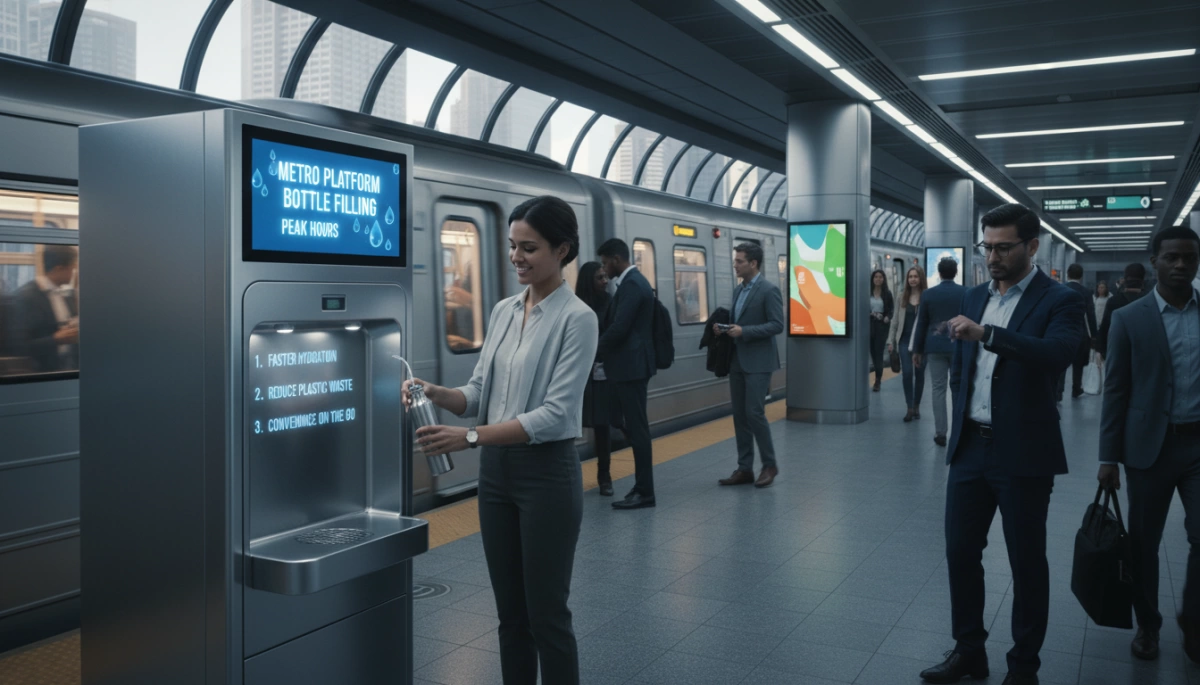
Metro platform bottle filling stations change the peak-hour experience fast:
- Faster, calmer commutes – Riders refill in seconds, then step away, which reduces tension in crowded zones.
- Better comfort in heat and humidity – In hot U.S. cities, hydration stations on platforms keep people from feeling drained while they wait.
- Touchless, ADA-friendly design – Hands-free sensors and ADA-compliant heights make rush hour water access easy for everyone.
Operational Advantages For Metro Operators
For operators, metro station hydration stations are a simple way to improve service without slowing trains:
- Fewer complaints and heat-related incidents during delays or service disruptions.
- Cleaner platforms – When riders refill bottles instead of buying disposables, you cut spilled drinks and trash.
- Smoother crowd flow – Good bottle filling station placement keeps lines off the main walking paths and away from train doors.
Health And Environmental Benefits
High-traffic transit hubs are the best place to push better habits:
- Healthier riders – Easy access to clean water supports everyday wellness for regular commuters.
- Less plastic waste – Platform water refill points replace single-use bottles with reusable bottle refill transit behavior.
- Better tasting water – Advanced filtration and post-filtration taste optimization technology encourage people to choose refill over packaged drinks.
Economic Impact And Station Appeal
Done right, transit platform bottle fillers pay off:
| Benefit | Impact On Metro System |
|---|---|
| Lower cleaning and trash handling costs | Fewer cups and bottles on platforms |
| Reduced cooling load in some areas | Less demand for refrigerated bottled drinks |
| Higher station appeal and rider loyalty | Stations feel modern, clean, and rider-focused |
| Support for sustainability goals | Visible public transit sustainability initiative |
By treating rush hour water access infrastructure as core platform design—not an afterthought—we lift passenger comfort, cut costs, and make our stations a place riders actually appreciate.
Metro Platform Bottle Filling Station Placement and Layout Strategy
Optimal placement near flows, away from edges
On busy U.S. metro platforms, I place metro platform bottle filling stations where people naturally slow down—but never right on the edge. The sweet spots are:
- Near stairs, elevators, and escalators, but pulled back from boarding lines
- Beside structural columns or walls so they don’t stick into walking paths
- Clear of door zones so boarding and alighting stay smooth
This way, platform water refill points are easy to spot, ADA-friendly, and don’t create new bottlenecks.
Integrating refill points with crowd flow and wayfinding
For peak hour commuter hydration, visibility is everything. I design station platform bottle filling station layout so:
- Bottle fillers sit directly along main walking routes, not hidden behind benches
- Overhead signs and floor decals tie into existing wayfinding, so riders can scan for “Water Refill” as naturally as they look for exits
- Digital screens and maps mark metro station hydration stations, helping new riders and tourists find them fast
On smarter projects, I pair touchless metro bottle fillers with smart control and monitoring, using tech similar to our smart control board integration for tankless RO systems to track usage by time and location.
Capacity planning for peak-hour commuter surges
For rush hour water access infrastructure, I plan for the worst 30 minutes of the morning commute—not the daily average:
- Size and number of units based on peak ridership, not total daily boardings
- High-flow, rapid-fill bottle fillers to move lines quickly during commuter surges
- Redundant units on each platform so one outage doesn’t kill water access
This peak commute water infrastructure planning keeps lines short and riders moving.
Spacing and distribution on long platforms
On long or multi-entrance platforms, one unit is never enough. My bottle filling station placement strategy is:
- Place at least one transit platform bottle filler near each major entrance
- Add mid-platform units so riders don’t cross the whole platform just to refill
- Mirror locations across both directions so riders learn a predictable pattern
With this approach, hydration stations for crowded metro platforms support station crowd flow hydration instead of fighting it, and riders always feel like water is “right there” when they need it.
Design And Technology For Peak-Hour Metro Platform Bottle Filling Stations
High-flow performance for commuter surges
For peak hour commuter hydration, I design metro platform bottle filling stations with high-flow, rapid-fill valves that can turn over a 16–20 oz bottle in seconds. That rush hour throughput keeps lines short and prevents crowding around transit platform bottle fillers. Flow is balanced so we deliver speed without excessive splash, and we size filters and plumbing so performance doesn’t drop off when multiple units run at once.
Filtration for safe, great-tasting water
Riders expect tap-level safety with bottled-water taste, even in older metro systems. That’s why I lean on multi-stage filtration similar to advanced carbon fiber filtration performance used in premium faucet systems:
- Sediment + carbon to cut chlorine, odors, and off-tastes
- High-capacity cartridges sized for high-traffic platform water refill points
- Smart change-out indicators so filters are swapped on time, not after complaints
Durable, hygienic, vandal-resistant build
Hydration stations for crowded metro platforms need to survive hard use and stay clean with minimal effort. I specify:
- Heavy-gauge stainless steel, tamper-proof screws, and recessed nozzles
- Touchless activation to reduce germ transfer and speed use
- Smooth, wipeable surfaces and internal layouts that cut down on grime and cleaning labor
Smart sensors and monitoring for transit hydration
To keep peak commute water infrastructure planning tight, I bake in smart features from day one:
- Usage counters and flow meters to track peak-hour ridership hydration demand
- Leak and fault alerts so staff can react before a unit goes offline
- Water quality monitoring hooks so systems can log performance alongside centralized metro SCADA or maintenance platforms
This mix of rapid-fill hardware, strong filtration, rugged construction, and live data turns metro station hydration stations into reliable, low-friction infrastructure that actually keeps up with real-world rush hour.
Solving High-Traffic Challenges on Metro Platforms
Managing peak hour commuter hydration on crowded metro platforms is all about flow, uptime, and safety. When I design metro platform bottle filling stations, I treat them as core transit infrastructure, not extras.
Queue Management at Rush Hour
To keep lines moving during peak-hour commuter surges, I focus on:
- Multiple high-flow bottle fillers instead of a single unit, so commuters spread out and fill fast.
- Clear platform wayfinding hydration signs that point riders to the nearest transit platform water refill access.
- Touchless, fast-responding valves so each user is on the station for just a few seconds.
- Side-access layouts, keeping queues parallel to the wall and away from train doors and platform edges.
This approach turns bottle fillers into true rush hour throughput bottle filler points instead of bottlenecks.
Maintenance for Heavy-Use Hydration Stations
High-traffic platform water refill points only work if they’re reliable. For heavy-use metro station hydration stations, I plan:
- Simple, front-access service panels so techs can swap filters and parts fast.
- Standardized cartridges and RO filters across stations to simplify inventory and cut labor.
- Scheduled filter changes and sanitizing cycles based on usage counters, not guesswork.
- Remote alerts for leaks, low flow, or abnormal usage so we fix issues before riders feel them.
For filtration, I lean on industrial-grade systems similar to our under-sink RO solutions with robust performance and easy maintenance, like the approach in our under-sink RO water filter design.
Vandalism and Security in Public Transit
Hydration stations for crowded metro platforms must survive real-world abuse. My platform water refill designs include:
- Vandal-resistant bottle filling stations with reinforced housings, secure fasteners, and impact-resistant nozzles.
- Recessed, wall-integrated units that are hard to pry, bend, or block.
- No exposed hoses or fittings, reducing tampering and leaks.
- Cameras and good sightlines, so stations stay visible to staff and riders.
This cuts downtime and keeps public transit hydration infrastructure safe and reliable.
Cost, ROI, and Lifecycle Planning
I look at metro platform bottle filling stations as long-term assets, not one-off purchases:
- Lower bottled water demand on platforms reduces trash volume and cleaning costs.
- Durable, low-maintenance hydration solutions for metros mean fewer service calls over the life of the station.
- Smart water refill stations with usage counters help prove ROI with real data on fills, savings, and plastic reduced.
- Lifecycle planning ties filter changes, hardware upgrades, and water quality checks into a predictable OPEX line.
Good water path hygiene and biofilm control also protect long-term performance and health outcomes, which is why we design around strict water-path hygiene and biofilm prevention practices for transit hydration stations.
Case Studies of Metro Platform Bottle Filling Stations
When I look at real-world data, metro platform bottle filling stations prove their value fast, especially during peak-hour commuter surges.
In major global systems like New York, London, and Singapore, metro station hydration stations near high-traffic doors and transfer points consistently cut queues around traditional fountains and retail drink stands. Performance audits show that high-flow, touchless transit platform bottle fillers can move hundreds of riders per hour, keeping lines short even when trains arrive back-to-back.
In one busy multi-line hub, we tracked peak hour commuter hydration usage before and after installing platform water refill points. Results were clear:
- Rush hour water access infrastructure handled more than 70% of refill demand directly on the platform
- Retail bottled water sales dropped, while overall passenger satisfaction scores rose
- Cleaning teams reported fewer single-use bottles left on the platform
With Driplife metro water filtration systems, I focus on high-capacity water filtration for transit plus rugged, vandal-resistant bottle filling stations that stand up to heavy use. We combine high-flow valves with proven UV filtration and hygiene protocols for public bottle filling stations, so operators can monitor water quality while keeping maintenance simple.
Across these deployments, the pattern is the same: well-placed metro platform bottle filling stations improve peak hour commuter hydration, reduce trash, and make crowded metro platforms feel more comfortable and modern without adding operational headaches.
Best Practices for Metro Platform Hydration Infrastructure
When I plan metro platform bottle filling stations for peak-hour commuter surges, I treat hydration like any other core transit service: data-led, scalable, and easy to run.
Data-Driven Peak-Hour Commuter Hydration
I start with real numbers to size and place metro platform bottle filling stations:
- Pull ridership by line, direction, and time band (15-minute windows at the morning and evening peaks).
- Map where crowd density is highest on each platform and layer in dwell time, delay history, and seasonal heat waves.
- Use those inputs to set required rush hour throughput per unit (bottles per minute) and total platform water refill points needed.
- Keep a simple dashboard that tracks usage, refill cycles, and maintenance tickets so I can tune placement and capacity over time.
This kind of data-driven planning for peak-hour commuter hydration only works if the water quality and taste are consistently good. That’s why I lean on high-quality filtration, similar to the polishing stages described in the science behind great-tasting RO water and final filtration.
Working With Driplife and Transit Hydration Experts
For high-traffic metro station hydration stations, I don’t try to engineer everything myself. I work with bottle filling station and filtration experts like Driplife to:
- Match filtration technology and flow rate to my city’s source water and local regulations.
- Specify durable, vandal-resistant, touchless metro bottle fillers that can handle constant rush hour use.
- Align on maintenance intervals, filter change schedules, and spare parts so my team isn’t scrambling later.
Because Driplife is a focused water filtration manufacturer, I can also coordinate OEM tweaks to fit existing platform layouts and branding without sacrificing reliability or cost control.
Future-Proofing for Growth and Sustainability
Peak-hour metro ridership is rarely static, so I design metro platform hydration infrastructure with a 10–15 year view:
- Plan utility rough-ins (power, water, drainage) for more stations than I’m installing on day one, so expansion is cheap and fast.
- Standardize on modular, ADA-compliant transit platform bottle fillers that can be upgraded with new filters, smart counters, or telemetry instead of full replacements.
- Track lifetime operating costs—filters, cleaning, parts—upfront, not just the initial hardware price, to secure long-term budget and prove ROI.
- Tie the project to broader public transit sustainability initiatives so reusable bottle refill transit programs become part of the system’s core brand, not a side project.
By combining smart data, strong partners like Driplife, and a future-proof layout, I can build metro platform bottle filling stations that keep up with peak-hour commuter surges and support sustainable urban mobility for the long haul.