













If you’re watching emerging markets right now, you’ve probably noticed one thing:
Basic RO units are no longer enough.
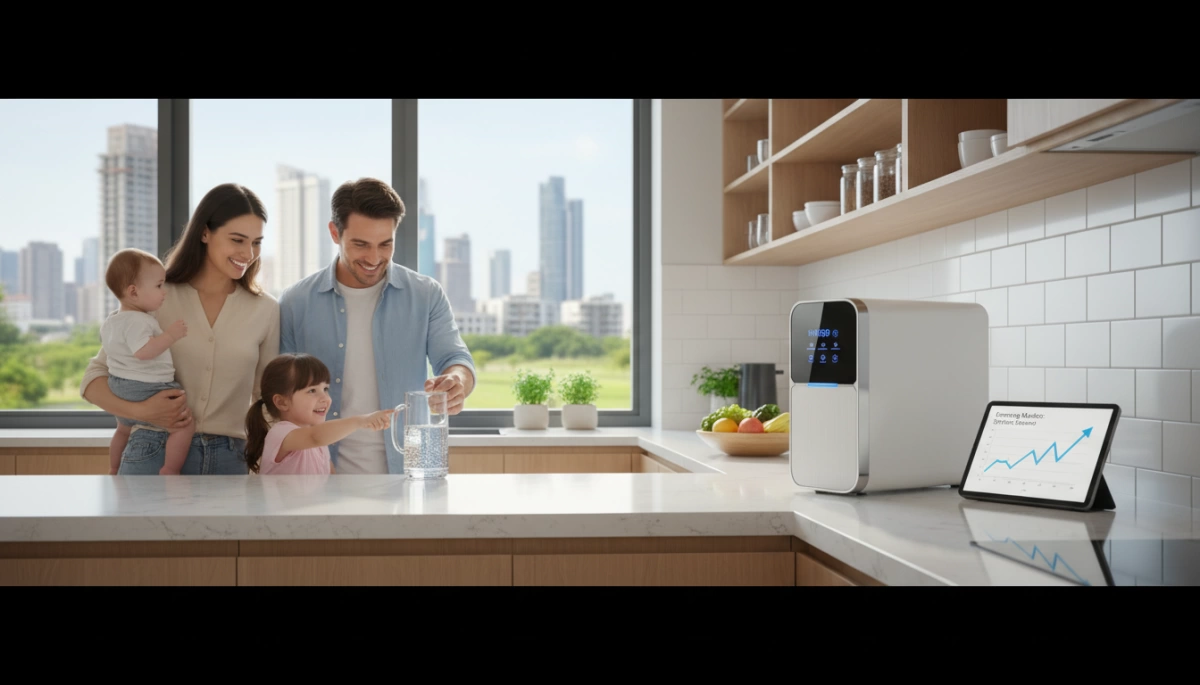
Across India, Southeast Asia, Africa, the Middle East, and Latin America, demand is shifting fast toward high GPD RO systems (typically 100+ GPD) that can handle high TDS, unreliable municipal supply, and multi-point use in larger homes, small offices, restaurants, and light commercial sites.
Why? Because water scarcity, groundwater pollution, and rapid urbanization are making high capacity RO systems less of an upgrade—and more of a necessity.
In this post, you’ll see exactly what’s driving the surge in high GPD RO demand in emerging markets, where the biggest opportunities are, and how suppliers and buyers can capture growth with reliable, scalable reverse osmosis solutions.
And if you’re looking for a trusted China-based high GPD RO supplier to support your expansion, you’ll also learn how Driplife is positioning its technology and supply chain specifically for these high-growth developing regions.
Understanding High GPD RO Systems and Their Role
When I talk with distributors and project buyers about emerging market RO demand, one question comes up fast: Why high GPD instead of standard, low-flow RO units? Let’s define it clearly.
What Is a High GPD RO System?
In the context of developing regions and urbanizing markets, I use high GPD RO systems to describe:
- Capacity range: Typically 100–800+ GPD (gallons per day)
- Use cases: High-consumption homes, small offices, restaurants, clinics, and light commercial sites
- Configuration: Multi-faucet / multi-point, often with storage tanks or buffer tanks
These are not “kitchen-only” RO purifiers. They are high capacity RO systems designed for continuous, shared use.
High GPD vs. Standard RO Units
Standard home RO (50–75 GPD) works for a single family with stable water and power. In Asia, Africa, Latin America, and the Middle East, that’s often not the reality.
Key differences:
| Feature | Standard RO Unit | High GPD RO System |
|---|---|---|
| Flow / Capacity | ~50–75 GPD | 100–800+ GPD |
| Usage | 1 kitchen tap | Multiple taps / users / points of use |
| Application | Single family | Large homes, SOHO, cafés, restaurants |
| Run Time | Intermittent | Long hours, near-continuous operation |
| Scaling Option | Limited | Modular, expandable, easy to upsize |
For commercial RO systems in emerging markets, low-flow units simply can’t keep up with demand peaks or shared usage.
Core Performance Metrics That Matter
When I evaluate or design high flow rate reverse osmosis filters for emerging market water treatment, I focus on:
- GPD (Gallons Per Day):
- Sizing for peak demand, not just daily average
- Enough margin for future growth or additional outlets
- TDS Handling:
- Stable performance at high TDS and brackish water (often 1,000–5,000+ ppm)
- Suitable membranes for borewell, municipal, or mixed sources
- Recovery Rate:
- Higher recovery = less reject water, lower operating cost
- Critical in water-scarce regions and desalination-driven markets
- Energy Use:
- Energy-efficient RO pumps to handle grid instability and high power prices
- Low-pressure and energy-optimized designs where voltage fluctuation is common
Core Applications in Real-World Use
High GPD RO systems play a key role across emerging economies where one unit often serves many people:
- Large homes / multi-family houses
- Small offices and co-working spaces
- Restaurants, cafés, and commercial kitchens
- Clinics, schools, and hostels
- Small factories and light industrial pre-treatment
This is where residential commercial RO growth in developing nations is happening fastest.
Why High GPD RO Systems Fit Developing Regions
In many developing regions, one robust, high-capacity RO unit is more practical than multiple small purifiers. The benefits are clear:
- Reliability:
- Built for heavy, daily use and variable water quality
- Less downtime than cheap, undersized units
- Scalability:
- Modular designs that can be expanded as user demand grows
- Easier to upgrade pump, membranes, or storage
- Multi-Point Use:
- One high capacity RO system can feed several taps, dispensers, or lines
- Ideal where infrastructure is weak but user density is high
For importers, distributors, and RO project buyers, this is exactly where growth market RO opportunity sits: high GPD RO systems that can handle high TDS, tough conditions, and multi-user demand in fast-growing urban and peri-urban areas.
Key Demand Drivers in Emerging Markets for High GPD RO Systems
Water Pollution and High TDS Push RO Adoption
In many emerging markets, surface water and borewell sources are loaded with high TDS, heavy metals, and microbial contamination. That’s exactly where high capacity RO systems win:
- They handle high TDS borewell water and brackish sources better than basic filters.
- High GPD RO systems give enough flow to support multi-point use – kitchens, pantries, small cafés, or offices – off a single system.
If you’re new to RO tech, it helps to understand the basics of how a reverse osmosis water filter works before scaling into higher GPD setups.
Water Scarcity, Desalination, and Brackish Water Needs
Emerging regions deal with chronic water scarcity, especially in dry belts and coastal zones. Desalination and brackish water RO demand is rising fast because:
- Municipal supply is either unreliable or too salty.
- Communities and businesses need high GPD water purifiers that can run long hours and treat difficult feed water.
High recovery rate RO membranes and energy-efficient pumps become non‑negotiable in these markets.
Urbanization, Population Growth, and Weak Infrastructure
Fast urban growth in Asia, Africa, and Latin America is outpacing water infrastructure. That gap directly fuels RO system adoption in urbanizing regions:
- Apartment complexes and large homes install high flow rate reverse osmosis filters as point-of-entry or shared systems.
- Small restaurants, clinics, and schools lean on commercial RO systems instead of waiting for municipal upgrades.
Health Awareness and Clean Water Expectations
As incomes rise, expectations around safe drinking water rise with them. Search data and dealer feedback show:
- Households are shifting from basic filters to high TDS RO purifiers that promise consistent quality.
- Small businesses want RO water for food prep, coffee, and ice to protect brand reputation and equipment.
This is the same behavior we already see in the U.S. market, just happening later and faster.
Government Programs and Regulations
Governments in emerging economies are tightening standards around drinking water, bottled water, and food service operations. That’s a tailwind for reverse osmosis demand in developing countries:
- Public schools, clinics, and government offices are adding RO units through tenders.
- Stricter local rules around TDS, microbiological limits, and industrial discharge are pushing B2B water treatment solutions.
Industrial and Commercial Growth
As light industry and services expand, so does the need for process water:
- Textile, food & beverage, pharmaceuticals, and lab facilities rely on industrial RO systems for emerging markets.
- Hotels, dark kitchens, and chain restaurants install high GPD RO systems to support centralized kitchens and multiple service points.
All of these pressures—pollution, scarcity, regulation, and growth—are converging to make high capacity RO systems one of the most resilient growth niches in the broader water treatment space.
Regional Market Trends and Growth Hotspots for High GPD RO Systems
Emerging markets are moving fast toward high capacity RO systems, and the real growth story is in a few key regions where water quality and infrastructure are under serious pressure.
Asia-Pacific: Core Growth Zone
Across Asia-Pacific, demand for high GPD RO systems is exploding as cities grow and tap water becomes less reliable.
- India: Borewell and municipal water often have high TDS and variable quality. Families are upgrading from basic filters to high flow rate reverse osmosis filters that can support multiple taps, plus small businesses like cafés, clinics, and commercial kitchens.
- China: Rapid urbanization and stricter health expectations are pushing both residential and light commercial RO growth. High GPD units are favored in apartments, small offices, and restaurants where consistent pressure and high peak demand matter.
Southeast Asia: Urban Water Stress
Countries like Indonesia, Vietnam, and the Philippines face a mix of aging pipes, intermittent supply, and microbial or sediment contamination. That’s driving strong reverse osmosis demand in developing countries where:
- Landlords and building owners install high capacity RO systems at point of entry to serve multiple apartments.
- Food service and small factories rely on commercial RO systems to protect equipment and meet customer expectations for safe drinking water.
Africa and Middle East: Water Stress and Desalination
In Africa and the Middle East, the key drivers are water scarcity, brackish groundwater, and desalination:
- Gulf countries and North Africa depend heavily on desalination RO units and brackish water treatment systems for both municipal and private use.
- High TDS and high salinity push buyers toward high recovery rate RO membranes and robust, high GPD water purifiers that can handle tough feed water with fewer interruptions.
Latin America: Infrastructure Gaps
In Brazil, Mexico, and other Latin American markets, municipal networks are often overstretched:
- Hotels, hospitals, and schools install high capacity RO systems to stabilize water quality.
- Small manufacturers and commercial kitchens use light industrial RO plants and commercial RO systems to protect their processes and meet stricter quality standards.
Why High GPD Beats Low-Flow RO in These Regions
In all these growth hotspots, high GPD RO systems consistently outperform low-flow residential units because they:
- Support multi-point use (kitchen, bar, ice machine, staff area) from one system.
- Keep up with peak demand in hot climates where people drink more water.
- Reduce downtime and tank refill issues common with small, low-flow RO units.
- Offer better total cost of ownership for businesses that need reliable, continuous purified water.
For U.S. importers and distributors looking at these markets, this is exactly where high-flow systems, smart multi-stage RO filtration, and durable components create an edge. If you want to see how advanced under-sink designs are evolving for both home and light commercial use, check out our approach to under-sink RO water filters and adapt the same high GPD logic to emerging market demand.
Challenges and Barriers to High GPD RO Adoption
Cost Sensitivity and Upfront Investment
In emerging markets, high capacity RO systems and high GPD RO systems often lose out to basic, low-flow units because of price. Large RO purifiers need bigger pumps, more membranes, and better electronics, so the upfront cost can feel steep for homes, small restaurants, and local businesses. If you’re selling into these regions, you have to show total cost of ownership—how high GPD RO cuts per‑liter water costs over time compared with bottled water or constant filter changes on cheap systems.
Maintenance in Harsh and Remote Conditions
Developing regions deal with muddy feed water, high TDS borewell water, and unreliable service networks. That means clogged pre-filters, fouled membranes, and more breakdowns if the RO design isn’t rugged. High GPD water purifiers must be:
- Easy to service with basic tools
- Designed with oversized pre-filtration for dirty water
- Built with long‑life, export‑grade RO components
Otherwise, maintenance becomes a real barrier and systems sit idle.
Power Instability and Grid Issues
High flow rate reverse osmosis filters rely on stable power for pumps and control boards. In many emerging markets, voltage spikes, low pressure, and daily outages are normal. Systems that aren’t designed for low pressure operation or wide voltage input will fail early. Energy‑efficient pumps, surge protection, and auto‑restart logic aren’t “nice to have” features here—they’re mandatory.
Low Awareness Outside Major Cities
In rural and peri‑urban areas, many families and small shops still don’t fully understand what high TDS or brackish water does to health or equipment. That slows RO system adoption in urbanizing regions and leaves room for misinformation. Dealers and distributors have to invest in:
- Simple demos and before/after TDS tests
- Clear explanations of reverse osmosis vs sediment or carbon filters
- Local language marketing and word‑of‑mouth campaigns
Cheap, Low-Quality RO Alternatives
Low-cost, low-quality RO purifiers are everywhere in developing countries. They’re attractive because of price, but they often use undersized membranes, weak pumps, and non‑certified plastics. These systems hurt the reputation of the whole RO purifier market when they fail quickly. To win, high GPD RO suppliers must:
- Prove performance with data, not claims
- Highlight membrane size, recovery rate, and build quality
- Offer visible warranties and service support
For US‑based importers, this is where branding and education really matter.
Regulatory, Import, and Certification Hurdles
Every emerging market has its own rules around water treatment products—health approvals, electrical safety, plastics compliance, and import labeling. Missing one document can delay a container at port for weeks. When I export high GPD RO systems, I make sure:
- Electrical parts meet international standards
- Plastics and metals are food‑grade where water contacts
- Test reports and factory QC records are ready for audits
Even for US customers installing RO locally, it’s smart to understand how international RO system procurement works, especially if you’re planning bulk imports or private label lines. The same mindset you’d use when you install an under-sink water filter system at home—clean layout, correct fittings, and proper flushing—scales up to how we design systems that survive customs, local inspections, and day‑to‑day use in tough environments.
Market Opportunities for High GPD RO Systems in Emerging Markets
Strong B2B Opportunities
For high GPD RO systems, the real upside is B2B. In emerging markets, high capacity RO systems are now core infrastructure for:
- Local distributors and RO dealers building product lines for homes, small offices, and restaurants
- OEM and ODM buyers who need private-label high GPD RO systems with flexible specs
- Project buyers (EPCs, developers, facility managers) handling hospitals, schools, malls, and public hydration projects
If you’re a US-based importer, this is where the demand is consistent and repeatable.
Target Customer Groups That Actually Buy
When I look at reverse osmosis demand in developing countries, the best customers usually fall into:
- Regional distributors: Want container-load pricing and stable SKUs
- Water treatment dealers: Need high flow rate reverse osmosis filters for commercial jobs
- OEM brands: Want custom-design housings, control panels, and branding
- Project contractors: Care about documentation, certifications, and fast lead times
These are the people driving emerging market RO demand and infrastructure-driven RO sales.
Niche High TDS and Desalination Segments
High GPD RO systems really shine in tough water conditions:
- High TDS borewell water filtration for peri-urban and industrial clusters
- Brackish water treatment systems in inland towns with saline groundwater
- Desalination RO units for resorts, coastal communities, and Middle East projects
If you’re positioning your brand, these high salinity water treatment niches support higher pricing and stronger margins.
Long-Term Service and Recurring Revenue
The smartest play in commercial RO systems for emerging markets isn’t just the hardware sale—it’s the lifecycle:
- Filters, membranes, and pre-filters: predictable, recurring orders
- Service contracts and retrofits: system upgrades, capacity boosts, and control panel swaps
- Refurb and retrofit programs: modernizing low-flow RO systems with high recovery rate RO membranes
This is where total cost of ownership and long-term margin really stack up.
Sustainability and ESG-Driven Projects
Sustainability is no longer a buzzword; it’s a budget line. Governments, NGOs, and corporates are backing:
- ESG-driven water treatment projects for offices, factories, and public spaces
- Public hydration and bottle filling stations with better hygiene, where combining RO with strong UV filtration and hygiene protocols is becoming standard
- Water scarcity solutions that cut plastic bottle use and improve community access
If you can show efficient, energy-efficient RO pumps, strong documentation, and measurable impact, you’re well-positioned for tenders and CSR-backed deals.
Winning Market Entry and Growth Strategies for High GPD RO Systems
Partner with Local RO Distributors and Integrators
If you want to sell high capacity RO systems in emerging markets, local partners are non‑negotiable.
Look for:
- RO distributors already selling high GPD water purifiers to dealers and small projects
- System integrators handling commercial RO systems for hotels, schools, clinics, and light industry
- Partners with installation teams and basic service capability
Offer them:
- Protected territories
- Volume-based pricing
- Marketing support and technical training
Customize for Local Water Quality and High TDS
Emerging markets rarely have “standard” water. You win when you tune high GPD RO systems to the local feed water:
- Design for high TDS borewell water, brackish sources, or municipal water with unstable quality
- Adjust pre-filtration for mud, iron, and sediment
- Use membranes rated for high TDS RO and brackish water conditions
This kind of tailoring also makes your product stand out when customers test side-by-side with low-flow RO units.
OEM and ODM Branding Options
If you’re an importer or dealer, owning the brand is a big advantage. With the right OEM/ODM partner, you can:
- Private label high GPD RO systems with your logo and packaging
- Customize layouts, colors, control panels, and features
- Build your own under-sink or commercial RO line (similar to how we guide partners in our private label under-sink RO launch guide)
This approach locks in repeat filter and membrane sales under your brand.
Multi-Channel Sales: Offline + Online
High GPD RO systems sell best when you cover both traditional and digital channels:
- Offline dealers: appliance shops, plumbing contractors, water treatment dealers
- Project sales: hotels, restaurants, schools, clinics, small factories
- E-commerce and marketplaces: regional platforms and your own site for direct B2B and B2C
Use online channels to generate leads and push serious buyers to local installers and dealers.
Trade Shows, Expos, and Tenders
If you want to scale fast in emerging markets:
- Exhibit at water, HVAC, building, and hospitality expos
- Network with EPCs, contractors, and facility managers looking for commercial RO systems
- Track public and private tenders for schools, hospitals, and municipal buildings needing high flow rate reverse osmosis filters
Bring clear spec sheets, test data, and reference projects. High GPD RO buyers are technical and compare details.
After-Sales, Training, and Spare Parts
Most high GPD RO opportunities die on service, not price. Plan support from day one:
- Stock critical spare parts: pumps, membranes, filters, valves, control boards
- Train local technicians on installation, maintenance, and basic troubleshooting
- Create simple service schedules and manuals tailored to harsh, high TDS environments
Reliable after‑sales support builds long-term contracts, retrofit work, and ongoing consumable sales for your high capacity RO systems.
Technical Requirements for High GPD RO Systems
When I design or source high GPD RO systems for emerging markets, I keep the specs tight and practical. High capacity RO systems must run hard, handle bad water, and stay easy to service.
Key Specs for High Flow Rate RO Systems
For most high GPD RO systems (100–800+ GPD), I lock in these baseline specs:
| Spec | Typical Range / Requirement |
|---|---|
| Flow rate (GPD) | 100–800+ GPD (residential, small biz, light commercial) |
| Feed TDS | Up to 2,000–5,000 ppm (brackish options higher) |
| Recovery rate | 35–60% (higher with brackish/energy-saving design) |
| Salt rejection | ≥ 96–99% |
| Operating pressure | 80–200 psi, depending on membrane and TDS |
| Power | 110–240V, 50/60Hz, surge-protected |
These high flow rate reverse osmosis filters must support:
- Continuous duty (restaurants, cafes, clinics, offices)
- Multi-point use (kitchen, ice machine, coffee, water bar)
- Simple plug-and-play installation
Membranes and Filters for High TDS & Brackish Water
Emerging market RO demand is driven heavily by high TDS borewell and brackish sources, so membranes and filters are non‑negotiable:
- High TDS RO membranes (2,000–8,000 ppm options)
- Anti-fouling, high recovery rate RO membranes for dirty or mineral-heavy water
- Multi-stage RO filtration systems with:
- Sediment (5µ / 1µ)
- Granular activated carbon (GAC)
- Block carbon
- Optional softening or anti-scalant dosing
For U.S. buyers reselling into these markets, I also like to include education content, like showing how RO can replace bottled water using the same logic as the ROI of home RO vs bottled water.
Energy-Efficient Pumps & Power-Stable Design
Power is expensive and often unstable in developing regions, so high capacity RO systems must be stingy and robust:
- Energy-efficient RO pumps with low noise and stable pressure
- Wide voltage input (e.g., 110–240V) and surge protection
- Low-pressure and high-pressure switches to protect the pump
- Optional VFD (variable frequency drive) in larger systems for extra savings
This kind of design keeps operating costs down and protects the system from brownouts and voltage spikes.
Pre-Filtration for Muddy or Contaminated Feed Water
A lot of emerging market water is muddy, rusty, or microbiologically unsafe. I always overbuild the pre-treatment:
- Stage 1: 10″ or 20″ sediment filter (10–20µ)
- Stage 2: 5µ sediment or depth filter
- Stage 3: GAC + carbon block for chlorine, odor, and color
- Optional: Iron, manganese, or turbidity filters when needed
Good pre-filtration is what keeps long life RO membrane technology working as promised.
Durability, Corrosion Resistance & Climate
Systems going into Asia, Africa, the Middle East, or Latin America face heat, humidity, and sometimes salt air. So I focus on:
- Corrosion-resistant frames (powder-coated steel or stainless)
- UV-resistant housings and tubing
- Components rated for high temp and humidity
- Simple, sealed electrical enclosures
This is just as important for U.S. customers in coastal or hot states (Texas, Florida, California) who export or install similar systems domestically.
Scalability & Modular RO Design
Emerging market RO adoption often starts small, then ramps fast. I build high GPD RO systems with modularity in mind:
- Skid or rack design that lets you:
- Add extra membranes
- Add more pumps or pressure vessels
- Stack units in parallel for higher flow
- Clear upgrade paths: 200 → 400 → 800+ GPD without redoing the whole plant
A simple modular setup makes it easy for distributors and installers to upsell capacity later, instead of replacing the entire system.
Pricing, Financing, and Total Cost of Ownership for High GPD RO Systems
When I look at emerging market RO demand for high GPD RO systems, cost and cash flow are usually the first real barriers. The goal isn’t just “cheap” – it’s the lowest total cost of ownership (TCO) over 5–10 years.
Cost structure of high capacity RO systems
For high capacity RO systems (100–800+ GPD), I break cost into four buckets:
- Core hardware
- RO membranes, housings, high‑pressure pump
- Pre‑filters, tanks, frames, control panel
- System integration
- Skids, wiring, valves, gauges, smart controls
- Local add‑ons
- Feed pumps, storage tanks, mineralizers, distribution lines
- Logistics & compliance
- Export packaging, freight, duties, certifications
On export deals, hardware and integration usually account for 70–80% of the upfront price, with logistics and duties making up the rest.
Bulk purchasing, container planning, and price breaks
For importers and distributors in Asia, Africa, Latin America, and the Middle East, container optimization is where margins get real:
- Order in tiers: Pricing normally drops at 20 ft LCL → 20 ft FCL → 40 ft FCL
- Standardize SKUs: Fewer models = better bulk RO pricing and easier stocking
- Mix high GPD and mid GPD units in one container to hit volume breaks without over‑stocking
- Use export‑grade, stackable packaging design to load more systems per container
I always recommend planning around quarterly container loads instead of small, frequent shipments when targeting commercial RO systems in emerging markets.
Operating costs: filters, membranes, energy, maintenance
Total cost of ownership is driven more by operating costs than by the initial price:
- Consumables
- Sediment and carbon filters: replaced every 3–6 months
- RO membranes: 1.5–3 years in typical high TDS RO purifiers if pre‑filtration is solid
- Energy
- High GPD units with energy‑efficient RO pumps can cut power use by 15–30%
- In high power‑cost markets, pump efficiency is a serious ROI driver
- Maintenance
- Regular flushing, O‑ring and valve replacement
- Periodic sanitizing to protect water quality and extend membrane life
Buyers who pick systems with long life RO membrane technology, automatic flushing, and robust pre‑filtration usually see their TCO fall sharply after year two.
Financing models and leasing options in emerging markets
In many developing regions, even profitable restaurants, clinics, and small factories struggle with upfront cash. That’s why I like simple, field‑friendly financing models:
- Lease‑to‑own: Monthly fee over 24–48 months, system ownership transfers at the end
- Pure leasing: Lower monthly fee; supplier retains asset ownership and does full service
- Water‑as‑a‑service:
- Customer pays per gallon/liter treated
- Supplier provides high flow rate reverse osmosis filters, maintenance, and upgrades
- Partnered micro‑finance or local banks:
- You bundle pre‑approved financing with your RO offer for small businesses
These models are especially effective in urbanizing regions where RO purifier market growth is fast but credit access is uneven.
How to calculate ROI for commercial RO installations
For B2B buyers in hotels, cafés, factories, and offices, I always frame decisions around payback time rather than sticker price. A simple ROI approach:
- Monthly savings
- (Cost of buying bottled water or trucked water)
− (Operating cost of the high GPD water purifier)
- (Cost of buying bottled water or trucked water)
- Payback period
- Payback (months) = Upfront cost ÷ Monthly savings
- ROI over system life
- ROI (%) = (Total savings over 5–7 years − Total cost) ÷ Total cost × 100
High GPD units usually win when:
- Bottled water prices are high
- Water quality is poor (so RO use is not optional)
- The system serves multiple points of use (kitchen, bar, production line)
If you’re targeting combined home/office or small commercial needs, pairing high capacity RO systems with compact solutions like countertop RO units for home and office drinking water can help you offer tiered price levels and TCO options to different customer groups in your market.
Risk Management and Quality Assurance in High GPD RO Supply
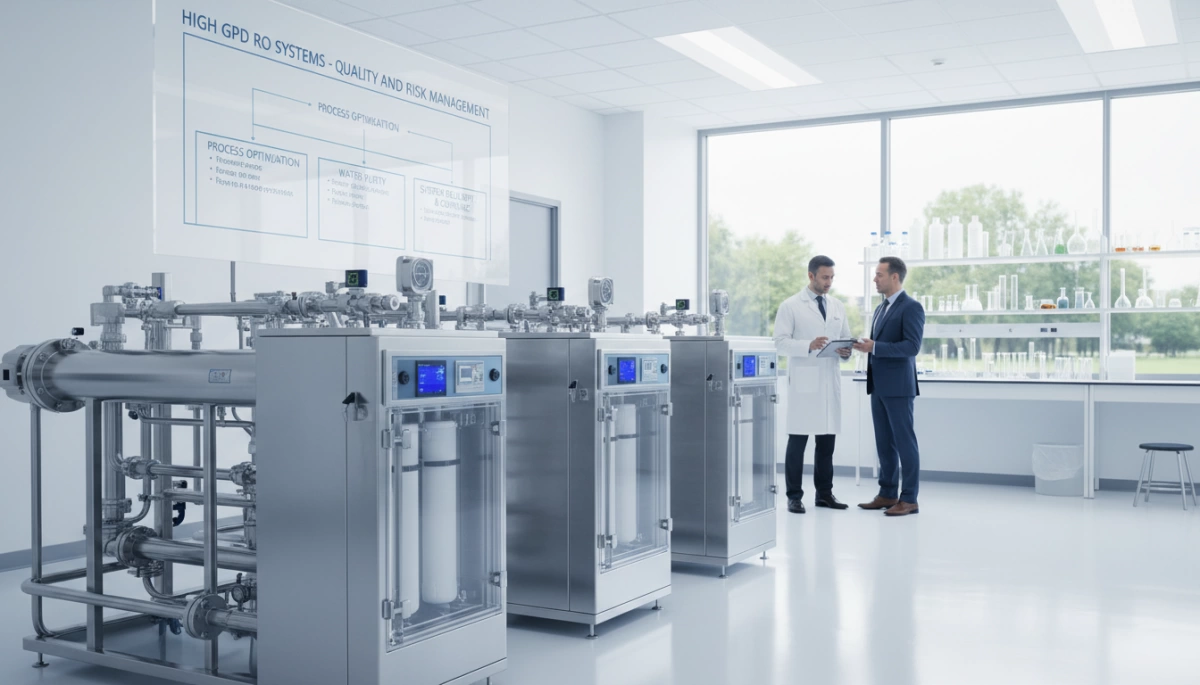
When we source or export high GPD RO systems into emerging markets, I treat risk management and quality assurance as non‑negotiable. One bad batch of components can damage your brand and wipe out your margins fast.
Avoid low‑quality and counterfeit RO components
For high capacity RO systems, the biggest risk is cheap, fake, or recycled parts:
- Work only with suppliers who can prove membrane origin, pump brand, and electrical component specs in writing.
- Demand batch numbers and datasheets for RO membranes, housings, and control valves.
- Use tamper‑evident labels and branded packaging to reduce the risk of parts being swapped in the local supply chain.
- Test random samples from every shipment—flow rate, rejection rate, and pressure tolerance must match specs for high GPD RO systems.
Certifications and compliance for RO exports
If you’re selling into regulated markets (or cross‑border in developing regions), certifications matter:
- Prioritize components that meet NSF/ANSI, ISO 9001, and where needed CE or WRAS standards.
- Make sure plastics in contact with water are food‑grade and compliant with local drinking water regulations.
- For U.S. buyers, check that materials and performance align with expectations around safe drinking water (similar to what’s discussed for household solutions like a sink faucet water filter).
Quality control, testing, and factory audits
Before I trust any high flow rate reverse osmosis supplier, I verify their process, not just their price:
- Require pre‑shipment inspection reports: pressure tests, leakage tests, and TDS rejection results.
- Ask for assembly line photos/videos, serial tracking, and standard test procedures.
- If the volume justifies it, hire a third‑party inspection firm or do an on‑site factory audit to verify real production capacity and QA systems.
Logistics, shipping, and customs risks
High GPD RO systems are sensitive to handling and environment:
- Use export‑grade packaging with corner protection, desiccant, and clear “fragile/keep dry” labels.
- For membranes and electronics, avoid long exposure to extreme heat or humidity—plan routes and storage carefully.
- Confirm HS codes, local duties, and documentation upfront to avoid delays or fines at customs.
- Insure every shipment and document contents clearly (packing lists, photos, serial numbers).
Build long‑term, trust‑based supplier relationships
The most profitable RO business isn’t built on switching suppliers every order, it’s built on consistency:
- Share your failure data and field feedback so the factory can improve future batches.
- Lock in quality standards and tolerances in your purchase contracts, not just price and quantity.
- Reward suppliers who solve problems quickly with repeat orders and longer‑term agreements.
- Communicate honestly about forecasts so they can plan raw materials and keep your quality stable.
Handled right, risk management and quality assurance in RO supply protect your customers, your brand, and your margins—especially when you’re scaling high GPD RO systems across emerging markets.
Why Source High GPD RO Systems from China-Based Manufacturers
When it comes to high GPD RO systems and other high capacity RO systems, China is the backbone of the global supply chain. Most membranes, pumps, housings, and smart controllers used worldwide are either made in China or assembled with Chinese components, which is exactly why so many U.S. brands quietly build their systems there.
Cost, Scale, and Product Variety
For U.S. importers and distributors, sourcing from China usually means:
- Lower landed cost per GPD thanks to mature supply chains and mass production
- Access to wide product lines – from 100 GPD residential units to 800+ GPD light commercial RO systems
- Better infrastructure-driven RO sales potential because you can cover more price points and flow ranges
This is what makes China so strong for international RO system procurement and bulk RO suppliers—you get price, capacity, and depth of catalog in one place.
Customization, Fast Iteration, and Private Label
If you’re building a brand in the U.S. or other emerging market RO demand regions, you need more than a generic unit. Chinese factories are set up for:
- OEM / ODM support: your logo, your packaging, your control panel UI
- Custom specs for high TDS borewell water, brackish sources, or desalination-focused markets
- Fast iteration when local feedback demands tweaks to pre-filters, pumps, or smart TDS monitoring
That level of flexibility is tough to beat if you want differentiated high flow rate reverse osmosis filters instead of just reselling commodity systems.
How to Vet and Select a Reliable Chinese RO Partner
You can’t just pick the lowest quote. To find a solid China RO system manufacturer:
- Ask for export references to the U.S., Middle East, or India residential RO market
- Confirm international certifications (NSF/ANSI components, CE, RoHS where needed)
- Review actual product designs – for example, compare their under-sink reverse osmosis filtration system to what’s selling well in your U.S. channels
- Check their ability to support B2B water treatment solutions, spare parts, and long-term cooperation (not just one-off containers)
With the right partner, you can build a durable, high-margin line of high GPD RO systems tailored for both U.S. customers and fast-growing developing regions.
Why Choose Driplife for High GPD RO Systems
If you’re serious about high GPD RO systems for emerging markets, you want a partner that understands both technology and real-world conditions. That’s where we position Driplife.
Driplife’s Core Strengths in High GPD RO Technology
We focus on high capacity RO systems built for tough water and tough environments:
- Stable high flow: 100–800+ GPD RO systems designed for sustained output, not “showroom specs.”
- High TDS handling: Membrane and pump matching for brackish, borewell, and municipal water in developing regions.
- Practical engineering: Simple layouts, easy access to filters, clear labels, and smart control options where needed.
Our team comes from the water side, not just the hardware side. We design around how people actually use water every day, similar to how we break down the basics in our guide on how a water purifier works.
Product Range: 100–800+ GPD RO Systems
We cover the main high GPD segments:
| Segment | Typical GPD Range | Main Uses |
|---|---|---|
| Large homes / villas | 100–200 GPD | Whole-family drinking + kitchen use |
| Small offices / clinics | 200–400 GPD | Staff + visitors, steady daily demand |
| Restaurants / cafés | 400–600 GPD | Cooking, ice, beverage prep |
| Light commercial / OEM | 600–800+ GPD | Small plants, multi-point, pre-process use |
All systems can be tuned for point-of-use or point-of-entry setups depending on your market.
Design Features for Emerging Market Conditions
High GPD RO systems in Asia, Africa, Latin America, and the Middle East don’t run in lab conditions. We design around:
- High sediment & rust: Robust pre-filtration and options for UF stages to cut sediment and rust in dirty lines, similar to the logic behind our UF filtration for sediment reduction.
- Unstable power: Energy-efficient, low-start pumps and control options that handle brownouts better.
- High TDS / brackish water: Membrane, pump, and recovery settings adapted for 1,000–10,000+ ppm feed water.
- Hot, humid, and coastal climates: Corrosion-resistant frames, fittings, and housings.
Support for OEM, ODM, and Branded Distributor Programs
We build high GPD RO systems that you can sell under your own brand:
- OEM: Our standard platforms + your logo, colors, packaging.
- ODM: Co-developed designs, custom specs, private molds for long-term brand play.
- Distributor-friendly: Marketing assets, spec sheets, install guides, and training support for your sales and service teams.
This is ideal if you’re a U.S.-based importer or a regional distributor building your own water brand in emerging markets.
Export Experience, Documentation, and After-Sales Support
We treat export-grade RO supply as a long-term business, not a one-off shipment:
- Export-ready documentation: CE, food-grade material declarations, test reports, and packing lists aligned with common import requirements.
- Logistics know-how: Container load optimization for high GPD RO systems to cut landed cost per unit.
- After-sales support:
- Quick-response technical support (drawings, wiring diagrams, troubleshooting)
- Long-term availability of filters, membranes, and core spare parts
- Training materials for local technicians and installers
If you’re targeting emerging market RO demand and want reliable, scalable high flow rate RO systems from a China-based manufacturer, we’ve built Driplife specifically around that need.
How Importers and Distributors Can Get Started with High GPD RO Systems
If you want to tap into emerging market demand for high GPD RO systems, you need a clear, practical launch plan—not just a container of units sitting in a warehouse.
1. Assess Local Demand and Segment Your RO Market
Start by mapping where the real volume is:
Residential high capacity RO systems
- Large homes, multi-family houses, point-of-entry systems
- Areas with high TDS borewell water or unreliable municipal supply
Small business and commercial RO systems
- Cafes, restaurants, cloud kitchens, small factories, clinics, schools
- Locations with visible water quality complaints or frequent bottled water use
Light industrial and institutional users
- Workshops, car washes, small process plants, hotels, offices
Build simple segments like:
“High TDS residential,” “Food & beverage,” “Offices & institutions,” “Light industrial.”
Then estimate monthly volume potential for each segment and focus on the top 1–2 first.
2. Define Specs and Volumes for Your First High GPD RO Order
Once you know your main segments, lock in practical specifications:
- Capacity bands: 100–200 GPD for premium homes and small offices, 300–400 GPD for restaurants and mid-size businesses, 600–800+ GPD for light commercial and centralized use.
- Feed water type:
- City water with moderate TDS
- Borewell / brackish water with high TDS
- Coastal / desalination-focused markets with very high salinity
- Core features: high recovery rate membranes, energy-efficient pumps, automatic flushing, strong pre-filtration for muddy or contaminated feed water.
For the first order, keep SKUs tight: usually 2–3 models that cover 80% of your expected demand, with a total quantity large enough for a decent price break but small enough to limit risk.
3. Use Sampling, Testing, and Pilot Projects Before Scale-Up
Never skip sampling, especially for high GPD RO systems targeting harsh conditions:
- Request sample units of each shortlisted model.
- Test them under real local water conditions (high TDS, turbidity, pressure swings).
- Run pilot installations in:
- A busy restaurant or cafe
- A small industrial site
- A high-usage home or apartment building
Collect feedback on:
- Flow rate and perceived taste/quality
- Stability under long operating hours
- Filter/membrane life and maintenance hassle
Use that data to fine-tune your final specs and marketing claims. If you’re also building a filtration portfolio for other points of use, model your RO performance messaging on the same clear health-and-safety angle you’d use for something like our explainer on why water filtration is crucial.
4. Plan Marketing, Installation, and Service from Day One
High capacity RO sales in emerging markets are service-driven, not just price-driven. Before you go big:
Marketing basics
- Position high GPD RO systems as reliable, multi-point water solutions for homes and businesses.
- Use simple, clear claims: daily output (GPD), savings vs bottled water, and health benefits.
- Work with local dealers, plumbers, and small contractors as your “feet on the street.”
Installation capability
- Standardize installation kits and guidelines.
- Train a small network of technicians on:
- Piping layouts for multiple outlets
- Pressure and drain management
- Startup, flushing, and handover to users
Service and consumables
- Pre-stock filters, membranes, pumps, and key spares for at least 6–12 months of expected volume.
- Offer service contracts to commercial users (restaurants, offices, clinics).
- Set clear service SLAs—response time and maintenance check schedules.
If you structure your launch around segment-first planning, tight specs, real-world piloting, and strong service, you’ll be positioned to grow fast and sustainably in emerging markets where demand for high GPD RO systems is only getting stronger.